

Give the Gift of Choice!
Too many options? Treat your friends and family to their favourite stores with a Bayshore Shopping Centre gift card, redeemable at participating retailers throughout the centre. Click below to purchase yours today!Purchase HereHome
A Deeper Truth: The New Science of Innovation, Human Choice and Societal Scale Behavior
Coles
Loading Inventory...
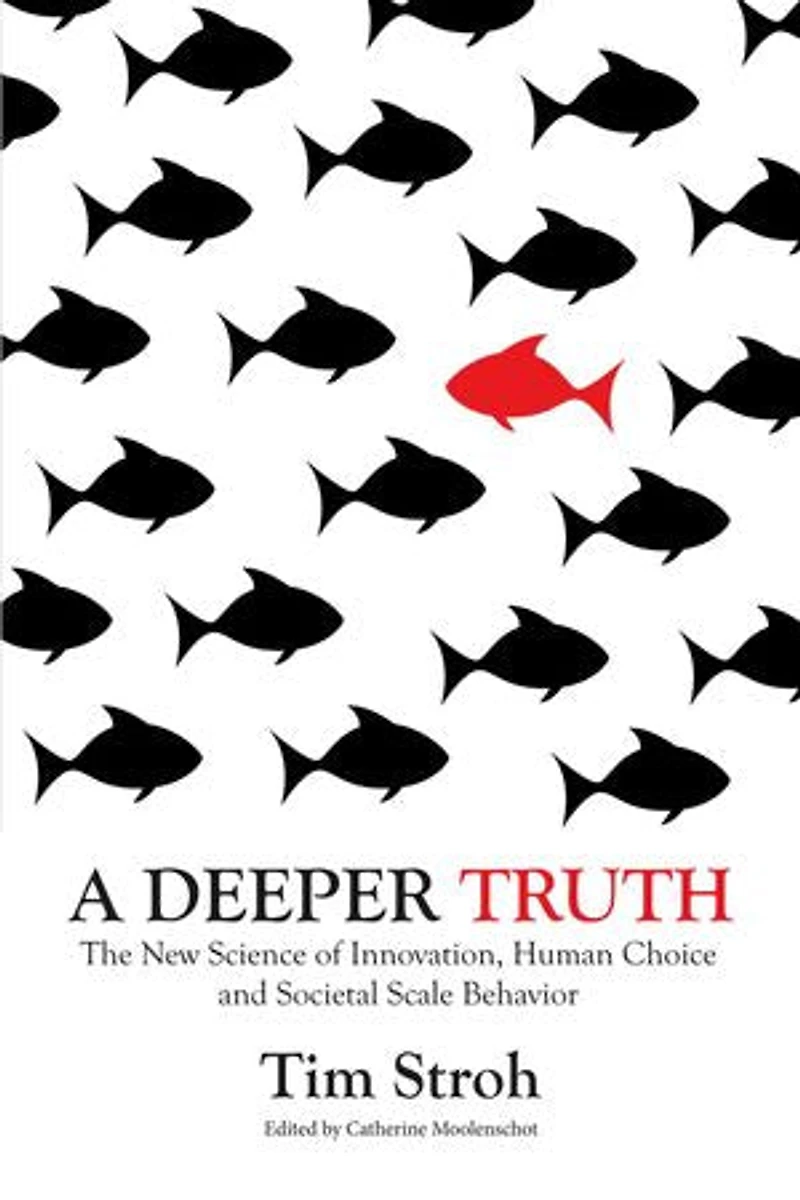
A Deeper Truth: The New Science of Innovation, Human Choice and Societal Scale Behavior in Ottawa, ON
Current price: $13.56

A Deeper Truth: The New Science of Innovation, Human Choice and Societal Scale Behavior in Ottawa, ON
Current price: $13.56
Loading Inventory...
Size: Kobo eBook
*Product information may vary - to confirm product availability, pricing, shipping and return information please contact Coles
A Deeper Truth explains why 9 out of 10 new products fail, the neuroscience behind human choice, and how disruptive successes leverage the fundamental nature of human decision-making. Backed by research across a dozen disciplines, A Deeper Truth explains how genetics and neurology impact perception, behavior, and choice. It also succeeds in providing a comprehensive explanation for disruption even in the arenas where Clayton Christensen himself acknowledges Disruption Theory fails. Filled with stories and anecdotes, this book succeeds at being entertaining while defining the neurological, social, and evolutionary forces that influence our choices to adopt or reject new things. From products to social norms, these forces are reduced to rules that can be readily applied to de-risk innovation, predict how groups will respond, and ensure the success of your next change initiative, new product, startup, or innovation.
A Deeper Truth explains why 9 out of 10 new products fail, the neuroscience behind human choice, and how disruptive successes leverage the fundamental nature of human decision-making. Backed by research across a dozen disciplines, A Deeper Truth explains how genetics and neurology impact perception, behavior, and choice. It also succeeds in providing a comprehensive explanation for disruption even in the arenas where Clayton Christensen himself acknowledges Disruption Theory fails. Filled with stories and anecdotes, this book succeeds at being entertaining while defining the neurological, social, and evolutionary forces that influence our choices to adopt or reject new things. From products to social norms, these forces are reduced to rules that can be readily applied to de-risk innovation, predict how groups will respond, and ensure the success of your next change initiative, new product, startup, or innovation.
You May Also Like











More About Coles at Bayshore Shopping Centre
Coles is renowned for its outstanding customer service and great selection of books. Along with the vast array of magazines, stationary, audio-books, children's literature, fiction, non-fiction and reference books, you can find accessories to make your reading experience more pleasurable. We can recommend the very best in reading today. We will help you search our titles for exactly what you need, and if we do not have it in stock, we will order it for you.
100 Bayshore Dr, Nepean, ON K2B 8C1, Canada
Find Coles at Bayshore Shopping Centre in Ottawa, ON
Visit Coles at Bayshore Shopping Centre in Ottawa, ON