

Give the Gift of Choice!
Too many options? Treat your friends and family to their favourite stores with a Bayshore Shopping Centre gift card, redeemable at participating retailers throughout the centre. Click below to purchase yours today!Purchase HereHome
A Divided Poet: Robert Frost, <I>North of Boston,</I> and the Drama of Disappearance
Coles
Loading Inventory...
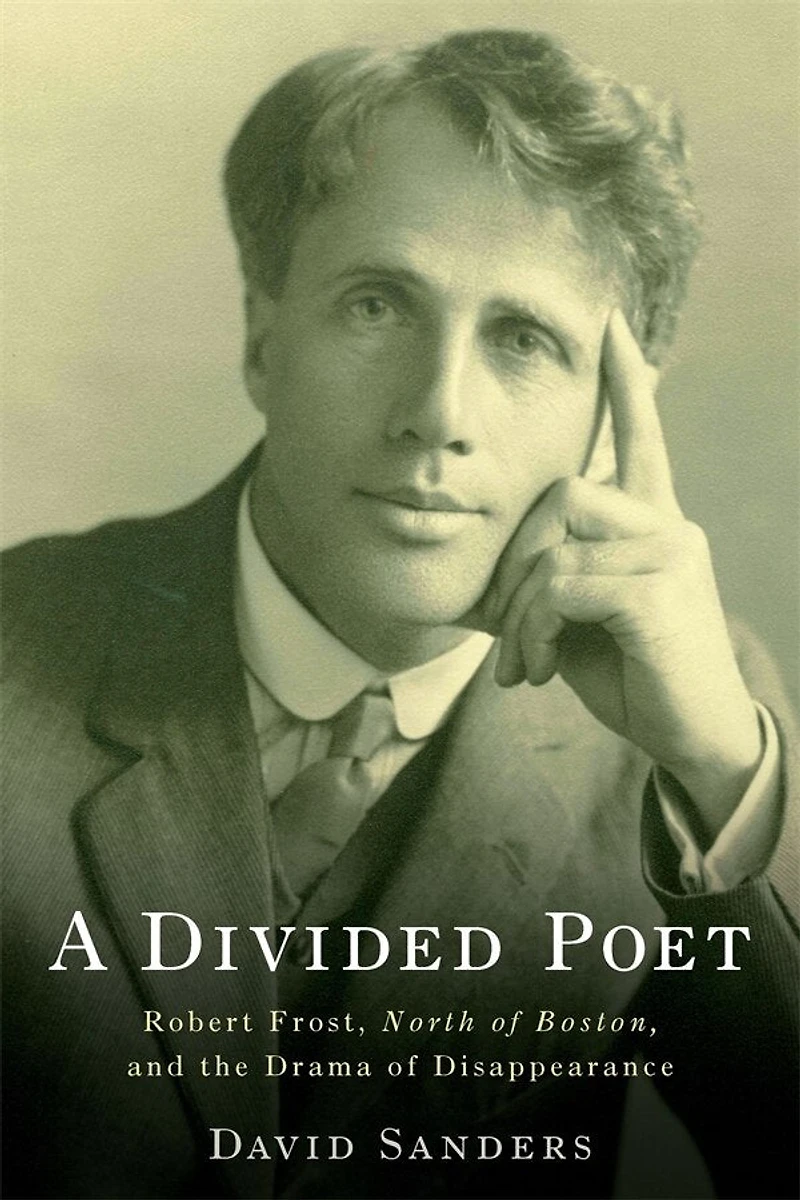
A Divided Poet: Robert Frost, <I>North of Boston,</I> and the Drama of Disappearance in Ottawa, ON
Current price: $72.05

A Divided Poet: Robert Frost, <I>North of Boston,</I> and the Drama of Disappearance in Ottawa, ON
Current price: $72.05
Loading Inventory...
Size: Hardcover
*Product information may vary - to confirm product availability, pricing, shipping and return information please contact Coles
Frost's breakthrough book of poetry seen anew as an artistic whole and in the context of the poet's career and development.
North of Boston, Robert Frost's second book of verse and arguably his greatest, brought him suddenly into national prominence in 1915. Though completed and first published in England in 1914, the book was rooted in the decade, 1900-1910, that Frost spent in Derry, New Hampshire, where he witnessed the decline of its traditional farming culture. In presenting this "drama of disappearance," twelve of the book's fifteen principal poems are literally dramatic, composed mainly of direct dialogue. Among them are three of Frost's most famous lyrics, each featuring a signature task of New England life and underlining the book's tribute to a fading culture. Collectively, the poems bring the diction and tones of a New England vernacular within a traditional metric frame, making "music," as Frost boasted, "from the sound of sense" and poetry of "a language absolutely unliterary." Such adaptations of ordinary language and experience to blank verse drama made Frost a founder of American modernism and North of Boston one of its monuments. Exploring Frost's complex connection to his poetic characters, this study provides new readingsof the individual poems and a new look at North of Boston's development. To a degree no other study has done, it addresses the book's design as an artistic whole while placing it in the context of Frost's unfolding career.
David Sanders is Professor Emeritus of English at St. John Fisher College, Rochester, New York.
Frost's breakthrough book of poetry seen anew as an artistic whole and in the context of the poet's career and development.
North of Boston, Robert Frost's second book of verse and arguably his greatest, brought him suddenly into national prominence in 1915. Though completed and first published in England in 1914, the book was rooted in the decade, 1900-1910, that Frost spent in Derry, New Hampshire, where he witnessed the decline of its traditional farming culture. In presenting this "drama of disappearance," twelve of the book's fifteen principal poems are literally dramatic, composed mainly of direct dialogue. Among them are three of Frost's most famous lyrics, each featuring a signature task of New England life and underlining the book's tribute to a fading culture. Collectively, the poems bring the diction and tones of a New England vernacular within a traditional metric frame, making "music," as Frost boasted, "from the sound of sense" and poetry of "a language absolutely unliterary." Such adaptations of ordinary language and experience to blank verse drama made Frost a founder of American modernism and North of Boston one of its monuments. Exploring Frost's complex connection to his poetic characters, this study provides new readingsof the individual poems and a new look at North of Boston's development. To a degree no other study has done, it addresses the book's design as an artistic whole while placing it in the context of Frost's unfolding career.
David Sanders is Professor Emeritus of English at St. John Fisher College, Rochester, New York.
You May Also Like











More About Coles at Bayshore Shopping Centre
Coles is renowned for its outstanding customer service and great selection of books. Along with the vast array of magazines, stationary, audio-books, children's literature, fiction, non-fiction and reference books, you can find accessories to make your reading experience more pleasurable. We can recommend the very best in reading today. We will help you search our titles for exactly what you need, and if we do not have it in stock, we will order it for you.
100 Bayshore Dr, Nepean, ON K2B 8C1, Canada
Find Coles at Bayshore Shopping Centre in Ottawa, ON
Visit Coles at Bayshore Shopping Centre in Ottawa, ON