

Give the Gift of Choice!
Too many options? Treat your friends and family to their favourite stores with a Bayshore Shopping Centre gift card, redeemable at participating retailers throughout the centre. Click below to purchase yours today!Purchase HereHome
A Journey in Brazil: A Travel Journal of Rio de Janeiro, Manaus, the Amazon River and Rainforests, Featuring Brazilian History, Food, Culture and the Native South Americans (Hardcover)
Coles
Loading Inventory...
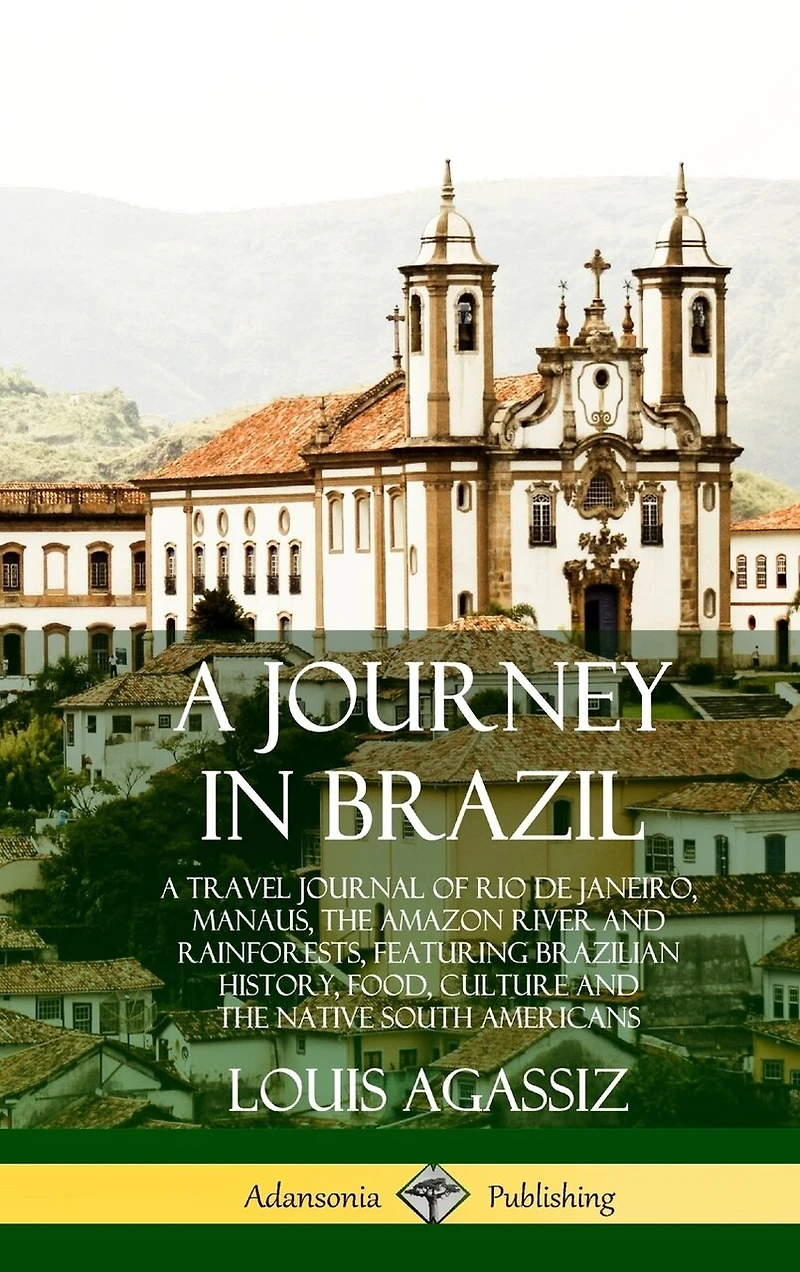
A Journey in Brazil: A Travel Journal of Rio de Janeiro, Manaus, the Amazon River and Rainforests, Featuring Brazilian History, Food, Culture and the Native South Americans (Hardcover) in Ottawa, ON
Current price: $45.50

A Journey in Brazil: A Travel Journal of Rio de Janeiro, Manaus, the Amazon River and Rainforests, Featuring Brazilian History, Food, Culture and the Native South Americans (Hardcover) in Ottawa, ON
Current price: $45.50
Loading Inventory...
Size: Hardcover
*Product information may vary - to confirm product availability, pricing, shipping and return information please contact Coles
Louis Agassiz sheds insight into Brazil's history: his travels took place in the 1860s, when the country was undergoing great change as an Empire and grappling with its this development. The author offers accounts of a Brazil now lost to time; observations of the urban culture and life, and the natural habitat of the countryside and forests, offer immense insight into the era. Most of the text is written as a narrative diary, wherein Agassiz observes and describes traversing colonial-era Rio de Janeiro, the city of Manaus, the Amazon river, various villages, and the vast rainforests. As a zoologist, Agassiz's interest in the wildlife present in Brazil form a recurring theme. However, the text is careful not to dwell on matters obscure or scientific; while the author at work, he also covers matters of culture and day-to-day life. Anecdotes include Brazil's Emperor Pedro II arranging room chairs that he sits equally with other attendees - reasoning that science does not distinguish people by position.
Louis Agassiz sheds insight into Brazil's history: his travels took place in the 1860s, when the country was undergoing great change as an Empire and grappling with its this development. The author offers accounts of a Brazil now lost to time; observations of the urban culture and life, and the natural habitat of the countryside and forests, offer immense insight into the era. Most of the text is written as a narrative diary, wherein Agassiz observes and describes traversing colonial-era Rio de Janeiro, the city of Manaus, the Amazon river, various villages, and the vast rainforests. As a zoologist, Agassiz's interest in the wildlife present in Brazil form a recurring theme. However, the text is careful not to dwell on matters obscure or scientific; while the author at work, he also covers matters of culture and day-to-day life. Anecdotes include Brazil's Emperor Pedro II arranging room chairs that he sits equally with other attendees - reasoning that science does not distinguish people by position.
You May Also Like










More About Coles at Bayshore Shopping Centre
Coles is renowned for its outstanding customer service and great selection of books. Along with the vast array of magazines, stationary, audio-books, children's literature, fiction, non-fiction and reference books, you can find accessories to make your reading experience more pleasurable. We can recommend the very best in reading today. We will help you search our titles for exactly what you need, and if we do not have it in stock, we will order it for you.
100 Bayshore Dr, Nepean, ON K2B 8C1, Canada
Find Coles at Bayshore Shopping Centre in Ottawa, ON
Visit Coles at Bayshore Shopping Centre in Ottawa, ON