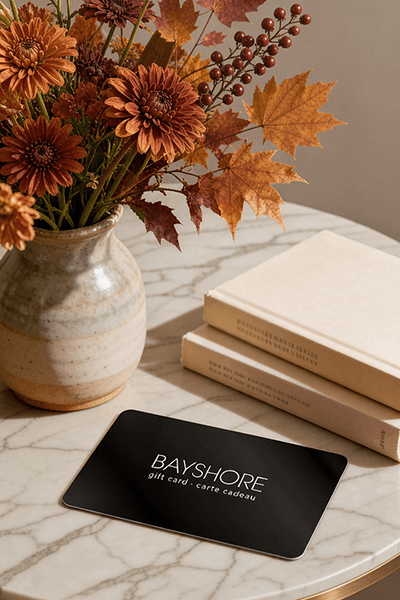
Too many options? Treat your friends and family to their favourite stores with a Bayshore Shopping Centre gift card, redeemable at participating retailers throughout the centre. Click below to purchase yours today!Purchase Here
*Product information may vary - to confirm product availability, pricing, shipping and return information please contact Coles
Guantánamo sits at the center of two of the most vexing issues of US policy of the past century: relations with Cuba and the Global War on Terror. It is a contested, extralegal space. In A New No-Man’s-Land , Esther Whitfield explores a multilingual archive of materials produced both at the US naval base and in neighboring Cuban communities and proposes an understanding of Guantánamo as a coherent borderland region, where experiences of isolation are opportunities to find common ground. She analyzes poetry, art, memoirs, and documentary films produced on both sides of the border. Authors and artists include prisoners, guards, linguists, chaplains, lawyers, and journalists, as well as Cuban artists and dissidents. Their work reveals surprising similarities: limited access to power and self-representation, mobility restricted by geography if not captivity, and immersion in political languages that have ascribed them rigid roles. Read together, the work of these disparate communities traces networks that extend among individuals in the Guantánamo region, inward to Cuba, and outward to the Caribbean, the Americas, Europe, and the Middle East.
Guantánamo sits at the center of two of the most vexing issues of US policy of the past century: relations with Cuba and the Global War on Terror. It is a contested, extralegal space. In A New No-Man’s-Land , Esther Whitfield explores a multilingual archive of materials produced both at the US naval base and in neighboring Cuban communities and proposes an understanding of Guantánamo as a coherent borderland region, where experiences of isolation are opportunities to find common ground. She analyzes poetry, art, memoirs, and documentary films produced on both sides of the border. Authors and artists include prisoners, guards, linguists, chaplains, lawyers, and journalists, as well as Cuban artists and dissidents. Their work reveals surprising similarities: limited access to power and self-representation, mobility restricted by geography if not captivity, and immersion in political languages that have ascribed them rigid roles. Read together, the work of these disparate communities traces networks that extend among individuals in the Guantánamo region, inward to Cuba, and outward to the Caribbean, the Americas, Europe, and the Middle East.
Coles is renowned for its outstanding customer service and great selection of books. Along with the vast array of magazines, stationary, audio-books, children's literature, fiction, non-fiction and reference books, you can find accessories to make your reading experience more pleasurable. We can recommend the very best in reading today. We will help you search our titles for exactly what you need, and if we do not have it in stock, we will order it for you.