

Give the Gift of Choice!
Too many options? Treat your friends and family to their favourite stores with a Bayshore Shopping Centre gift card, redeemable at participating retailers throughout the centre. Click below to purchase yours today!Purchase HereHome
A Pious Belligerence: Dialogical Warfare and the Rhetoric of Righteousness Crusading Near East
Coles
Loading Inventory...
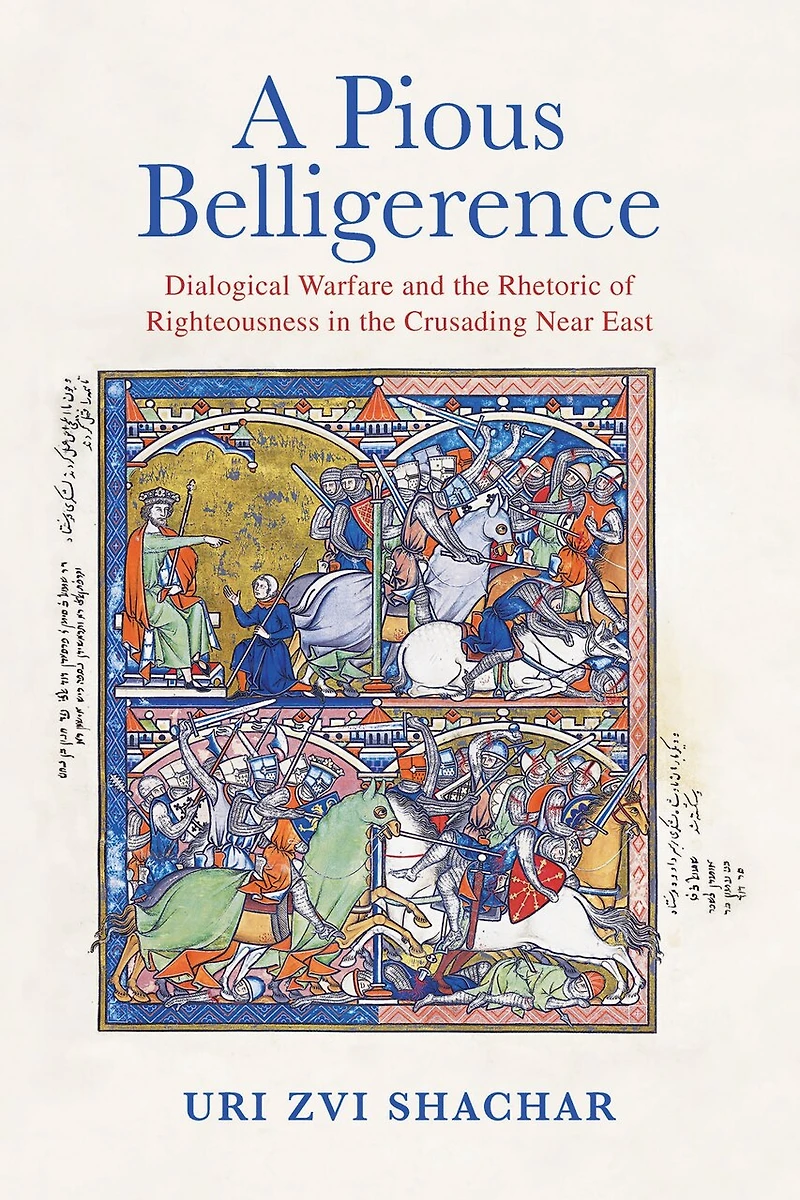
A Pious Belligerence: Dialogical Warfare and the Rhetoric of Righteousness Crusading Near East in Ottawa, ON
Current price: $84.50

A Pious Belligerence: Dialogical Warfare and the Rhetoric of Righteousness Crusading Near East in Ottawa, ON
Current price: $84.50
Loading Inventory...
Size: Hardcover
*Product information may vary - to confirm product availability, pricing, shipping and return information please contact Coles
In A Pious Belligerence Uri Zvi Shachar examines one of the most contested and ideologically loaded issues in medieval history, the clash between Christians, Muslims, and Jews that we call the Crusades. He does so not to write about the ways these three groups waged war to hold onto their distinct identities, but rather to think about how these identities were framed in relation to one another. Notions of militant piety in particular provided Muslims, Christians, and Jews paths for thinking about both cultural boundaries and codependencies. Ideas about holy warfare, Shachar contends, were not shaped along sectarian lines, but were dynamically coproduced among the three religions.
The final decades of the twelfth century saw a rapid collapse of the Frankish and Ayyubid hegemonies in the Levant, followed by struggles for political dominion that lasted for most of the thirteenth century. The fragmented political landscape gave rise to the formation of multiple coalitions across political, religious, and linguistic divides. Alongside a growing anxiety about the instability of cultural boundaries, there emerged a discourse that sought to realign and reevaluate questions of similarity and difference. Where Christians and Muslims regularly joined forces against their own coreligionists, Shachar writes, warriors were no longer assumed to mark or protect lines of physical or political separation. Contemporary authors recounting these events describe a landscape of questionable loyalties, shifting identities, and unstable appearances.
Shachar demonstrates how in chronicles, apocalyptic treatises, and a variety of literary texts in Latin, French, Arabic, Hebrew, and Judeo-Arabic holy warriors are increasingly presented as having been rhetorically and anthropologically shaped through their contacts with their neighbors and adversaries. Writers articulated their thoughts about pious warfare through rhetorical devices that crossed confessional lines, and the meaning and force of these articulations lay in their invocation of tropes and registers that had purchase in the various literary communities of the Near East. By the late twelfth century, he argues, there had emerged a notion that threads through Christian, Muslim, and Jewish texts alike: that the Holy Land itself generates a particular breed of pious warriors by virtue of the hybridity that it encompasses.
In A Pious Belligerence Uri Zvi Shachar examines one of the most contested and ideologically loaded issues in medieval history, the clash between Christians, Muslims, and Jews that we call the Crusades. He does so not to write about the ways these three groups waged war to hold onto their distinct identities, but rather to think about how these identities were framed in relation to one another. Notions of militant piety in particular provided Muslims, Christians, and Jews paths for thinking about both cultural boundaries and codependencies. Ideas about holy warfare, Shachar contends, were not shaped along sectarian lines, but were dynamically coproduced among the three religions.
The final decades of the twelfth century saw a rapid collapse of the Frankish and Ayyubid hegemonies in the Levant, followed by struggles for political dominion that lasted for most of the thirteenth century. The fragmented political landscape gave rise to the formation of multiple coalitions across political, religious, and linguistic divides. Alongside a growing anxiety about the instability of cultural boundaries, there emerged a discourse that sought to realign and reevaluate questions of similarity and difference. Where Christians and Muslims regularly joined forces against their own coreligionists, Shachar writes, warriors were no longer assumed to mark or protect lines of physical or political separation. Contemporary authors recounting these events describe a landscape of questionable loyalties, shifting identities, and unstable appearances.
Shachar demonstrates how in chronicles, apocalyptic treatises, and a variety of literary texts in Latin, French, Arabic, Hebrew, and Judeo-Arabic holy warriors are increasingly presented as having been rhetorically and anthropologically shaped through their contacts with their neighbors and adversaries. Writers articulated their thoughts about pious warfare through rhetorical devices that crossed confessional lines, and the meaning and force of these articulations lay in their invocation of tropes and registers that had purchase in the various literary communities of the Near East. By the late twelfth century, he argues, there had emerged a notion that threads through Christian, Muslim, and Jewish texts alike: that the Holy Land itself generates a particular breed of pious warriors by virtue of the hybridity that it encompasses.
You May Also Like










More About Coles at Bayshore Shopping Centre
Coles is renowned for its outstanding customer service and great selection of books. Along with the vast array of magazines, stationary, audio-books, children's literature, fiction, non-fiction and reference books, you can find accessories to make your reading experience more pleasurable. We can recommend the very best in reading today. We will help you search our titles for exactly what you need, and if we do not have it in stock, we will order it for you.
100 Bayshore Dr, Nepean, ON K2B 8C1, Canada
Find Coles at Bayshore Shopping Centre in Ottawa, ON
Visit Coles at Bayshore Shopping Centre in Ottawa, ON