

Give the Gift of Choice!
Too many options? Treat your friends and family to their favourite stores with a Bayshore Shopping Centre gift card, redeemable at participating retailers throughout the centre. Click below to purchase yours today!Purchase HereHome
A Review Of Allan Meltzer's A History Of The Federal Reserve, Volume 2
Coles
Loading Inventory...
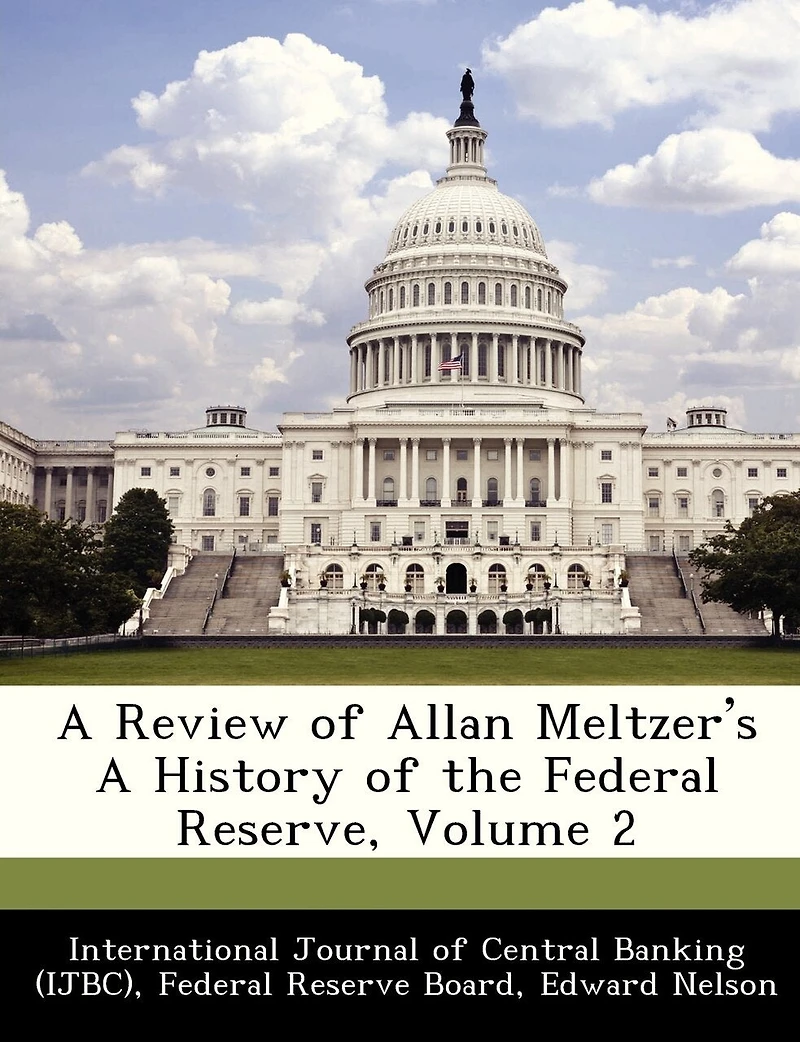
A Review Of Allan Meltzer's A History Of The Federal Reserve, Volume 2 in Ottawa, ON
Current price: $18.99

A Review Of Allan Meltzer's A History Of The Federal Reserve, Volume 2 in Ottawa, ON
Current price: $18.99
Loading Inventory...
Size: Paperback
*Product information may vary - to confirm product availability, pricing, shipping and return information please contact Coles
This paper reviews Allan H. Meltzer's A History of the Federal Reserve, Volume 2. This two-book volume covers Federal Reserve policies from 1951 to 1986. The book represents an enormous achievement in synthesizing a great amount of archival information into a historical account grounded on economic analysis. At the same time, Meltzer's interpretation of specific eras is open to question. He does not appear to acknowledge adequately the degree to which 1950s monetary policy decisions had a solid analytical foundation. Furthermore, Meltzer's account of the shift from the 1970s inflation to the 1980s disinflation implausibly stresses a shift in policymakers' objective function. The crucial change over this period, both in the United States and other countries, is more likely to have been policymakers' improved grasp of the connections between monetary policy and inflation. The review also takes issue with Meltzer's account, in his book's epilogue, of the financial crisis from 2007 to 2009. In this epilogue, Meltzer understates the degree to which the Federal Reserve's reaction to the financial crisis was in line with the historical practice of the Federal Reserve and other central banks.
This paper reviews Allan H. Meltzer's A History of the Federal Reserve, Volume 2. This two-book volume covers Federal Reserve policies from 1951 to 1986. The book represents an enormous achievement in synthesizing a great amount of archival information into a historical account grounded on economic analysis. At the same time, Meltzer's interpretation of specific eras is open to question. He does not appear to acknowledge adequately the degree to which 1950s monetary policy decisions had a solid analytical foundation. Furthermore, Meltzer's account of the shift from the 1970s inflation to the 1980s disinflation implausibly stresses a shift in policymakers' objective function. The crucial change over this period, both in the United States and other countries, is more likely to have been policymakers' improved grasp of the connections between monetary policy and inflation. The review also takes issue with Meltzer's account, in his book's epilogue, of the financial crisis from 2007 to 2009. In this epilogue, Meltzer understates the degree to which the Federal Reserve's reaction to the financial crisis was in line with the historical practice of the Federal Reserve and other central banks.
You May Also Like












More About Coles at Bayshore Shopping Centre
Coles is renowned for its outstanding customer service and great selection of books. Along with the vast array of magazines, stationary, audio-books, children's literature, fiction, non-fiction and reference books, you can find accessories to make your reading experience more pleasurable. We can recommend the very best in reading today. We will help you search our titles for exactly what you need, and if we do not have it in stock, we will order it for you.
100 Bayshore Dr, Nepean, ON K2B 8C1, Canada
Find Coles at Bayshore Shopping Centre in Ottawa, ON
Visit Coles at Bayshore Shopping Centre in Ottawa, ON