

Give the Gift of Choice!
Too many options? Treat your friends and family to their favourite stores with a Bayshore Shopping Centre gift card, redeemable at participating retailers throughout the centre. Click below to purchase yours today!Purchase HereHome
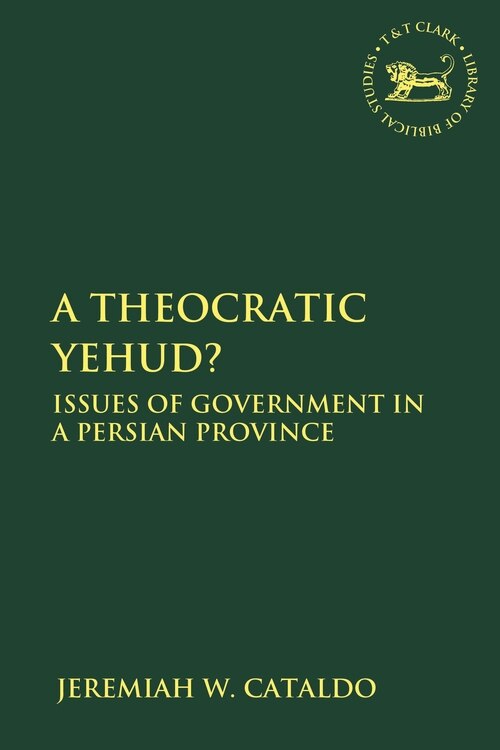
A Theocratic Yehud? by Jeremiah W. Cataldo, Hardcover | Indigo Chapters
Coles
Loading Inventory...
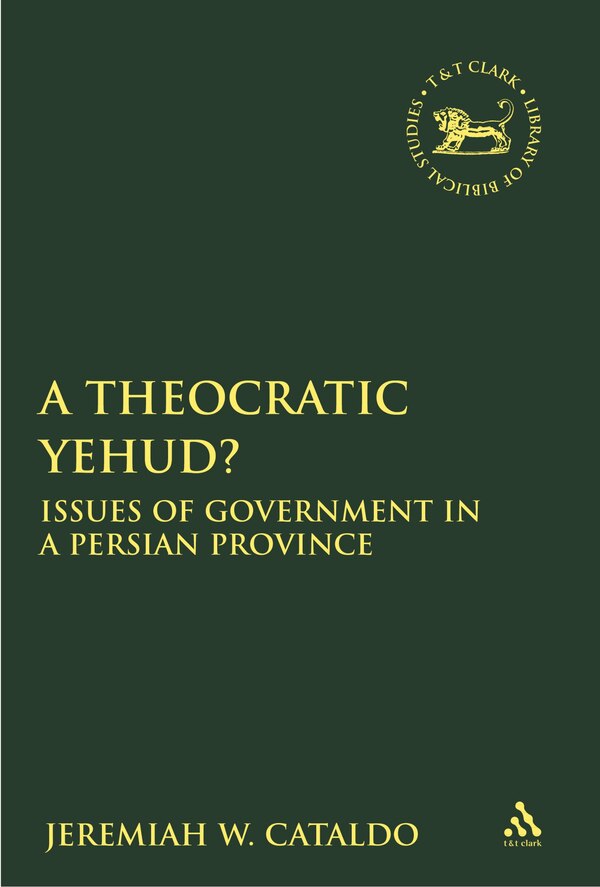
A Theocratic Yehud? by Jeremiah W. Cataldo, Hardcover | Indigo Chapters in Ottawa, ON
By Jeremiah W. Cataldo
Current price: $292.50

By Jeremiah W. Cataldo
A Theocratic Yehud? by Jeremiah W. Cataldo, Hardcover | Indigo Chapters in Ottawa, ON
Current price: $292.50
Loading Inventory...
Size: 0.95 x 9.56 x 1.11
*Product information may vary - to confirm product availability, pricing, shipping and return information please contact Coles
Among the variety of social-political reconstructions of Persian-period Yehud, one consensus stands out - one which states that the Jerusalem priesthood enjoyed a prominent level of authority, symbolized in the Jerusalem temple. Unfortunately, this leads easily into conclusions of a theocracy in Yehud. The problem, in part, is due to the immediate association of priests assumed to be authoritative with that of a theocratic governing structure. To address this problem, at least three aspects of Yehud's governing structure(s) require further attention: (1) the social implications of a particular governing structure within a society; (2) the developments of a society leading up to that governing structure; and (3) a clearly articulated definition of the term and concept of theocracy. Since many scholars appear to depend upon a theocratic structure or spirit at some point in their discussions of Persian-period Yehud, one would usualy expect to find a clear definition of theocracy. Instead, a hasty and ill-equipped definition that seems to avoid addressing the social and political complexities is often used. The conclusion is that no power or political vacuum appears to have existed allowing the priesthood to claim power in Yehud. The Persian empire did not allow territories to develop autonomous governing structures (Chapter 2). The social, economic, and political realms of Yehud functioned within the framework of Persian imperial administration (Chapter 3). And the term theocracy, when defined according to social-scientific requirements (Chapter 4), does not accurately describe the social-political context of Yehud during the Persian period (Chapter 5). | A Theocratic Yehud? by Jeremiah W. Cataldo, Hardcover | Indigo Chapters
Among the variety of social-political reconstructions of Persian-period Yehud, one consensus stands out - one which states that the Jerusalem priesthood enjoyed a prominent level of authority, symbolized in the Jerusalem temple. Unfortunately, this leads easily into conclusions of a theocracy in Yehud. The problem, in part, is due to the immediate association of priests assumed to be authoritative with that of a theocratic governing structure. To address this problem, at least three aspects of Yehud's governing structure(s) require further attention: (1) the social implications of a particular governing structure within a society; (2) the developments of a society leading up to that governing structure; and (3) a clearly articulated definition of the term and concept of theocracy. Since many scholars appear to depend upon a theocratic structure or spirit at some point in their discussions of Persian-period Yehud, one would usualy expect to find a clear definition of theocracy. Instead, a hasty and ill-equipped definition that seems to avoid addressing the social and political complexities is often used. The conclusion is that no power or political vacuum appears to have existed allowing the priesthood to claim power in Yehud. The Persian empire did not allow territories to develop autonomous governing structures (Chapter 2). The social, economic, and political realms of Yehud functioned within the framework of Persian imperial administration (Chapter 3). And the term theocracy, when defined according to social-scientific requirements (Chapter 4), does not accurately describe the social-political context of Yehud during the Persian period (Chapter 5). | A Theocratic Yehud? by Jeremiah W. Cataldo, Hardcover | Indigo Chapters
You May Also Like










More About Coles at Bayshore Shopping Centre
Coles is renowned for its outstanding customer service and great selection of books. Along with the vast array of magazines, stationary, audio-books, children's literature, fiction, non-fiction and reference books, you can find accessories to make your reading experience more pleasurable. We can recommend the very best in reading today. We will help you search our titles for exactly what you need, and if we do not have it in stock, we will order it for you.
100 Bayshore Dr, Nepean, ON K2B 8C1, Canada
Find Coles at Bayshore Shopping Centre in Ottawa, ON
Visit Coles at Bayshore Shopping Centre in Ottawa, ON