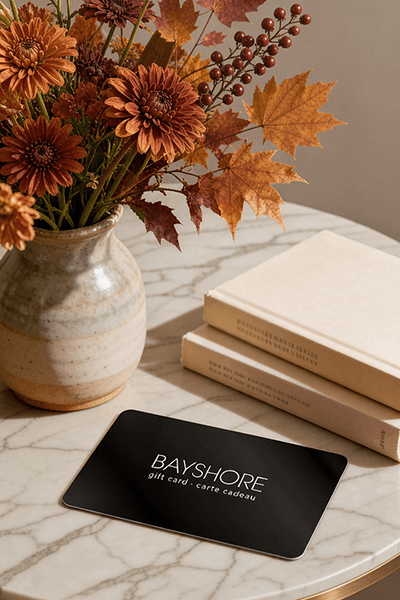
Too many options? Treat your friends and family to their favourite stores with a Bayshore Shopping Centre gift card, redeemable at participating retailers throughout the centre. Click below to purchase yours today!Purchase Here
Coles Accounting for Slavery: Masters and Management at Bayshore Shopping Centre in Ottawa, ON
*Product information may vary - to confirm product availability, pricing, shipping and return information please contact Coles
A Five Books Best Economics Book of the Year
A Politico Great Weekend Read
“Absolutely compelling.”
—Diane Coyle
“The evolution of modern management is usually associated with good old-fashioned intelligence and ingenuity…But capitalism is not just about the free market; it was also built on the backs of slaves.”
— Forbes
The story of modern management generally looks to the factories of England and New England for its genesis. But after scouring through old accounting books, Caitlin Rosenthal discovered that Southern planter-capitalists practiced an early form of scientific management. They took meticulous notes, carefully recording daily profits and productivity, and subjected their slaves to experiments and incentive strategies comprised of rewards and brutal punishment. Challenging the traditional depiction of slavery as a barrier to innovation, Accounting for Slavery shows how elite planters turned their power over enslaved people into a productivity advantage. The result is a groundbreaking investigation of business practices in Southern and West Indian plantations and an essential contribution to our understanding of slavery’s relationship with capitalism.
“Slavery in the United States was a business. A morally reprehensible—and very profitable business…Rosenthal argues that slaveholders…were using advanced management and accounting techniques long before their northern counterparts. Techniques that are still used by businesses today.”
— Marketplace
“Rosenthal pored over hundreds of account books from U.S. and West Indian plantations…She found that their owners employed advanced accounting and management tools, including depreciation and standardized efficiency metrics.”
— Harvard Business Review
A Five Books Best Economics Book of the Year
A Politico Great Weekend Read
“Absolutely compelling.”
—Diane Coyle
“The evolution of modern management is usually associated with good old-fashioned intelligence and ingenuity…But capitalism is not just about the free market; it was also built on the backs of slaves.”
— Forbes
The story of modern management generally looks to the factories of England and New England for its genesis. But after scouring through old accounting books, Caitlin Rosenthal discovered that Southern planter-capitalists practiced an early form of scientific management. They took meticulous notes, carefully recording daily profits and productivity, and subjected their slaves to experiments and incentive strategies comprised of rewards and brutal punishment. Challenging the traditional depiction of slavery as a barrier to innovation, Accounting for Slavery shows how elite planters turned their power over enslaved people into a productivity advantage. The result is a groundbreaking investigation of business practices in Southern and West Indian plantations and an essential contribution to our understanding of slavery’s relationship with capitalism.
“Slavery in the United States was a business. A morally reprehensible—and very profitable business…Rosenthal argues that slaveholders…were using advanced management and accounting techniques long before their northern counterparts. Techniques that are still used by businesses today.”
— Marketplace
“Rosenthal pored over hundreds of account books from U.S. and West Indian plantations…She found that their owners employed advanced accounting and management tools, including depreciation and standardized efficiency metrics.”
— Harvard Business Review
Coles is renowned for its outstanding customer service and great selection of books. Along with the vast array of magazines, stationary, audio-books, children's literature, fiction, non-fiction and reference books, you can find accessories to make your reading experience more pleasurable. We can recommend the very best in reading today. We will help you search our titles for exactly what you need, and if we do not have it in stock, we will order it for you.