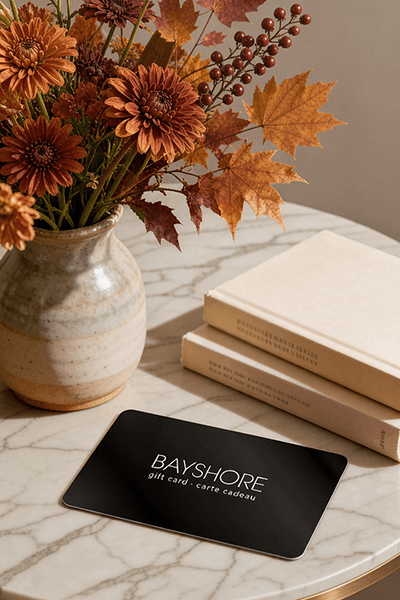
Too many options? Treat your friends and family to their favourite stores with a Bayshore Shopping Centre gift card, redeemable at participating retailers throughout the centre. Click below to purchase yours today!Purchase Here
Coles Across the Reef: The Marine Assault of Tarawa at Bayshore Shopping Centre in Ottawa, ON
*Product information may vary - to confirm product availability, pricing, shipping and return information please contact Coles
In August 1943, to meet in secret with Major General Julian C. Smith and his principal staff officers of the 2d Marine Division, Vice Admiral Raymond A. Spruance, commanding the Central Pacific Force, flew to New Zealand from Pearl Harbor. Spruance told the Marines to prepare for an amphibious assault against Japanese positions in the Gilbert Islands in November. The Marines knew about the Gilberts. The 2d Raider Battalion under Lieutenant Colonel Evans F. Carlson had attacked Makin Atoll a year earlier. Subsequent intelligence reports warned that the Japanese had fortified Betio Island in Tarawa Atoll, where elite forces guarded a new bomber strip. Spruance said Betio would be the prime target for the 2d Marine Division. General Smith's operations officer, Lieutenant Colonel David M. Shoup, studied the primitive chart of Betio and saw that the tiny island was surrounded by a barrier reef. Shoup asked Spruance if any of the Navy's experimental, shallow-draft, plastic boats could be provided. "Not available," replied the admiral, "expect only the usual wooden landing craft." Shoup frowned. General Smith could sense that Shoup's gifted mind was already formulating a plan. The results of that plan were momentous. The Tarawa operation became a tactical watershed: the first, large-scale test of American amphibious doctrine against a strongly fortified beachhead.
In August 1943, to meet in secret with Major General Julian C. Smith and his principal staff officers of the 2d Marine Division, Vice Admiral Raymond A. Spruance, commanding the Central Pacific Force, flew to New Zealand from Pearl Harbor. Spruance told the Marines to prepare for an amphibious assault against Japanese positions in the Gilbert Islands in November. The Marines knew about the Gilberts. The 2d Raider Battalion under Lieutenant Colonel Evans F. Carlson had attacked Makin Atoll a year earlier. Subsequent intelligence reports warned that the Japanese had fortified Betio Island in Tarawa Atoll, where elite forces guarded a new bomber strip. Spruance said Betio would be the prime target for the 2d Marine Division. General Smith's operations officer, Lieutenant Colonel David M. Shoup, studied the primitive chart of Betio and saw that the tiny island was surrounded by a barrier reef. Shoup asked Spruance if any of the Navy's experimental, shallow-draft, plastic boats could be provided. "Not available," replied the admiral, "expect only the usual wooden landing craft." Shoup frowned. General Smith could sense that Shoup's gifted mind was already formulating a plan. The results of that plan were momentous. The Tarawa operation became a tactical watershed: the first, large-scale test of American amphibious doctrine against a strongly fortified beachhead.
Coles is renowned for its outstanding customer service and great selection of books. Along with the vast array of magazines, stationary, audio-books, children's literature, fiction, non-fiction and reference books, you can find accessories to make your reading experience more pleasurable. We can recommend the very best in reading today. We will help you search our titles for exactly what you need, and if we do not have it in stock, we will order it for you.