

Give the Gift of Choice!
Too many options? Treat your friends and family to their favourite stores with a Bayshore Shopping Centre gift card, redeemable at participating retailers throughout the centre. Click below to purchase yours today!Purchase HereHome
Aesthetic Programming: A Handbook Of Software Studies
Coles
Loading Inventory...
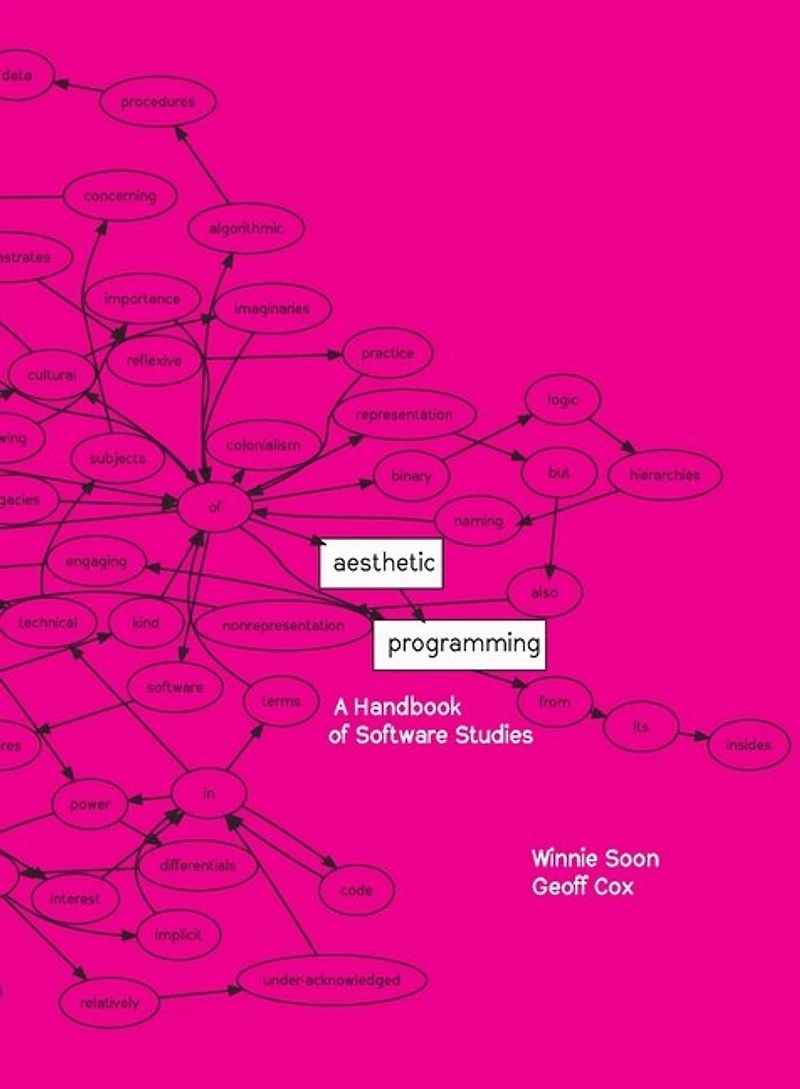
Aesthetic Programming: A Handbook Of Software Studies in Ottawa, ON
By None
Current price: $30.85

By None
Aesthetic Programming: A Handbook Of Software Studies in Ottawa, ON
Current price: $30.85
Loading Inventory...
Size: Paperback
*Product information may vary - to confirm product availability, pricing, shipping and return information please contact Coles
The book explores the technical as well as cultural imaginaries of programming from its insides. It follows the principle that the growing importance of software requires a new kind of cultural thinking - and curriculum - that can account for, and with which to better understand the politics and aesthetics of algorithmic procedures, data processing and abstraction. It takes a particular interest in power relations that are relatively under-acknowledged in technical subjects, concerning class and capitalism, gender and sexuality, as well as race and the legacies of colonialism. This is not only related to the politics of representation but also nonrepresentation: how power differentials are implicit in code in terms of binary logic, hierarchies, naming of the attributes, and how particular worldviews are reinforced and perpetuated through computation. It introduces and demonstrates the reflexive practice of aesthetic programming, engaging with learning to program as a way to understand and question existing technological objects and paradigms, and to explore the potential for reprogramming wider eco-socio-technical systems. The book itself follows this approach, and is offered as a computational object open to modification and reversioning.
The book explores the technical as well as cultural imaginaries of programming from its insides. It follows the principle that the growing importance of software requires a new kind of cultural thinking - and curriculum - that can account for, and with which to better understand the politics and aesthetics of algorithmic procedures, data processing and abstraction. It takes a particular interest in power relations that are relatively under-acknowledged in technical subjects, concerning class and capitalism, gender and sexuality, as well as race and the legacies of colonialism. This is not only related to the politics of representation but also nonrepresentation: how power differentials are implicit in code in terms of binary logic, hierarchies, naming of the attributes, and how particular worldviews are reinforced and perpetuated through computation. It introduces and demonstrates the reflexive practice of aesthetic programming, engaging with learning to program as a way to understand and question existing technological objects and paradigms, and to explore the potential for reprogramming wider eco-socio-technical systems. The book itself follows this approach, and is offered as a computational object open to modification and reversioning.
You May Also Like















More About Coles at Bayshore Shopping Centre
Coles is renowned for its outstanding customer service and great selection of books. Along with the vast array of magazines, stationary, audio-books, children's literature, fiction, non-fiction and reference books, you can find accessories to make your reading experience more pleasurable. We can recommend the very best in reading today. We will help you search our titles for exactly what you need, and if we do not have it in stock, we will order it for you.
100 Bayshore Dr, Nepean, ON K2B 8C1, Canada
Find Coles at Bayshore Shopping Centre in Ottawa, ON
Visit Coles at Bayshore Shopping Centre in Ottawa, ON