

Give the Gift of Choice!
Too many options? Treat your friends and family to their favourite stores with a Bayshore Shopping Centre gift card, redeemable at participating retailers throughout the centre. Click below to purchase yours today!Purchase HereHome
Agro Forestrium Native Fire Resistant Grass From North America (USA Canada) To Prevent Forest Wildfires & Urban Wildfires
Coles
Loading Inventory...
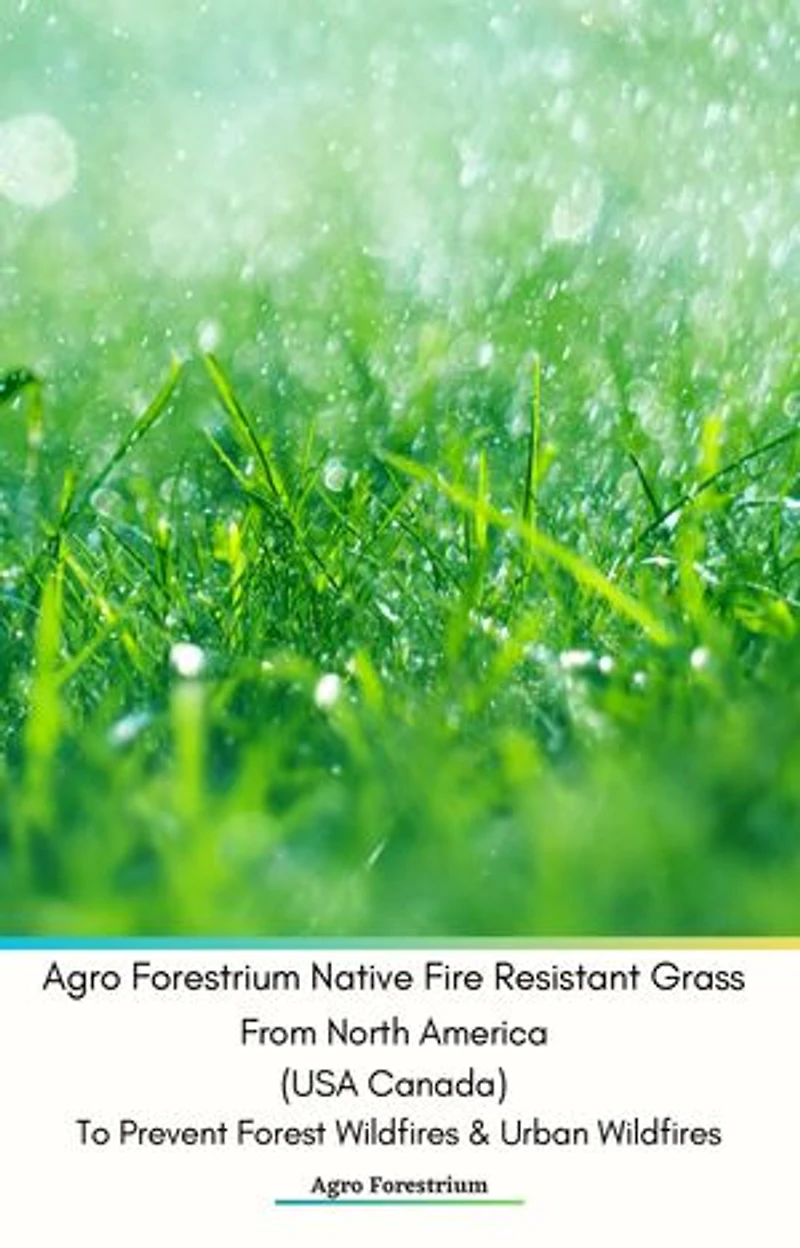
Agro Forestrium Native Fire Resistant Grass From North America (USA Canada) To Prevent Forest Wildfires & Urban Wildfires in Ottawa, ON
Current price: $1.34

Agro Forestrium Native Fire Resistant Grass From North America (USA Canada) To Prevent Forest Wildfires & Urban Wildfires in Ottawa, ON
Current price: $1.34
Loading Inventory...
Size: Kobo eBook
*Product information may vary - to confirm product availability, pricing, shipping and return information please contact Coles
Native Fire-Resistant Grass from North America (USA & Canada) to Prevent Forest and Urban Wildfires refers to naturally occurring grass species that evolved in the fire-prone landscapes of North America and possess characteristics that help reduce the intensity, speed, and spread of wildfires. These grasses are native to the United States and Canada, meaning they developed over thousands of years in balance with local climates, soils, wildlife, and natural fire cycles. Unlike invasive or highly flammable grasses, fire-resistant native grasses tend to have higher moisture content, deeper root systems, and growth patterns that do not easily carry flames. Because of these traits, they are increasingly recognized as an ecological tool for wildfire prevention rather than as fuel for fire.
In forests, grasslands, and wildland–urban interface zones, native fire-resistant grasses play a quiet but important protective role. Their dense root networks stabilize soil, retain moisture, and reduce dry surface debris that often ignites during heatwaves or droughts. Many of these grasses grow in clumps or low-lying forms, creating natural breaks in fuel continuity that slow down advancing fires. When fire does occur, these grasses tend to burn at lower temperatures and recover quickly afterward, supporting ecosystem renewal without escalating into destructive megafires. This natural resilience makes them valuable allies in sustainable land and forest management across North America.
In urban and suburban environments, especially near forests or open land, native fire-resistant grasses are used as living fire buffers. They are planted along roadsides, parks, green belts, and residential landscapes to reduce wildfire risk while maintaining ecological beauty. Because they are adapted to local conditions, they require less irrigation, fewer chemicals, and minimal maintenance compared to non-native ornamental plants. Beyond fire prevention, these grasses improve air quality, support pollinators, and enhance biodiversity. In this way, native fire-resistant grasses offer a simple, elegant, and nature-based solution for protecting both wild landscapes and human communities from the growing threat of wildfires.
Native Fire-Resistant Grass from North America (USA & Canada) to Prevent Forest and Urban Wildfires refers to naturally occurring grass species that evolved in the fire-prone landscapes of North America and possess characteristics that help reduce the intensity, speed, and spread of wildfires. These grasses are native to the United States and Canada, meaning they developed over thousands of years in balance with local climates, soils, wildlife, and natural fire cycles. Unlike invasive or highly flammable grasses, fire-resistant native grasses tend to have higher moisture content, deeper root systems, and growth patterns that do not easily carry flames. Because of these traits, they are increasingly recognized as an ecological tool for wildfire prevention rather than as fuel for fire.
In forests, grasslands, and wildland–urban interface zones, native fire-resistant grasses play a quiet but important protective role. Their dense root networks stabilize soil, retain moisture, and reduce dry surface debris that often ignites during heatwaves or droughts. Many of these grasses grow in clumps or low-lying forms, creating natural breaks in fuel continuity that slow down advancing fires. When fire does occur, these grasses tend to burn at lower temperatures and recover quickly afterward, supporting ecosystem renewal without escalating into destructive megafires. This natural resilience makes them valuable allies in sustainable land and forest management across North America.
In urban and suburban environments, especially near forests or open land, native fire-resistant grasses are used as living fire buffers. They are planted along roadsides, parks, green belts, and residential landscapes to reduce wildfire risk while maintaining ecological beauty. Because they are adapted to local conditions, they require less irrigation, fewer chemicals, and minimal maintenance compared to non-native ornamental plants. Beyond fire prevention, these grasses improve air quality, support pollinators, and enhance biodiversity. In this way, native fire-resistant grasses offer a simple, elegant, and nature-based solution for protecting both wild landscapes and human communities from the growing threat of wildfires.
You May Also Like



![Wanderings of an Artist Among the Indians of North America [microform]: From Canada to Vancouver's Island and Oregon Through the Hudson's Bay Company's Territory and Back Again](https://cdn.mall.adeptmind.ai/https%253A%252F%252Fcdn.shopify.com%252Fs%252Ffiles%252F1%252F0655%252F8980%252F5233%252Ffiles%252F1_45ddf1af-0bbb-4d6d-a872-d1c8efb65cda.jpg_medium.webp)











More About Coles at Bayshore Shopping Centre
Coles is renowned for its outstanding customer service and great selection of books. Along with the vast array of magazines, stationary, audio-books, children's literature, fiction, non-fiction and reference books, you can find accessories to make your reading experience more pleasurable. We can recommend the very best in reading today. We will help you search our titles for exactly what you need, and if we do not have it in stock, we will order it for you.
100 Bayshore Dr, Nepean, ON K2B 8C1, Canada
Find Coles at Bayshore Shopping Centre in Ottawa, ON
Visit Coles at Bayshore Shopping Centre in Ottawa, ON