

Give the Gift of Choice!
Too many options? Treat your friends and family to their favourite stores with a Bayshore Shopping Centre gift card, redeemable at participating retailers throughout the centre. Click below to purchase yours today!Purchase HereHome
Algorithmic Clairvoyance: The Illusion of Instantaneous Multiplayer: Latency, Netcode, and the Subconscious Masking of Network Lag in Competitive Online Gaming
Coles
Loading Inventory...
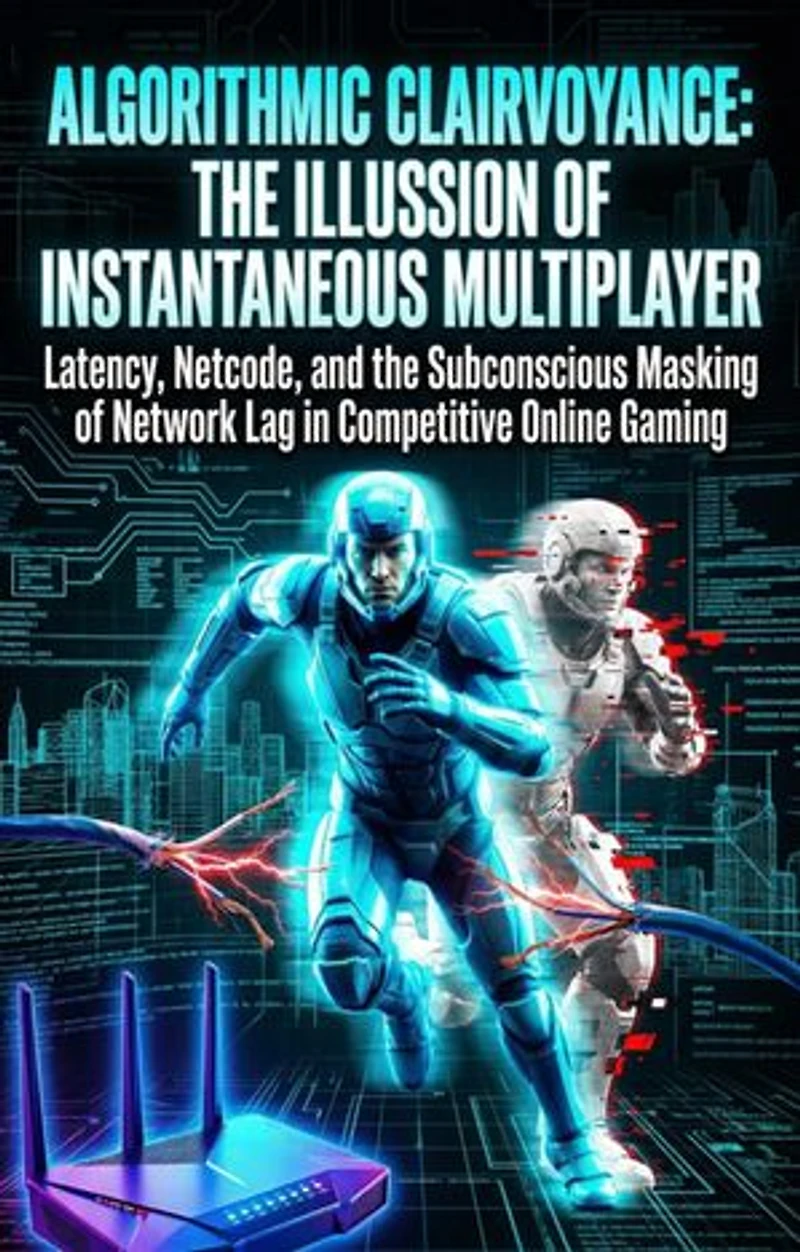
Algorithmic Clairvoyance: The Illusion of Instantaneous Multiplayer: Latency, Netcode, and the Subconscious Masking of Network Lag in Competitive Online Gaming in Ottawa, ON
By None
Current price: $7.99

By None
Algorithmic Clairvoyance: The Illusion of Instantaneous Multiplayer: Latency, Netcode, and the Subconscious Masking of Network Lag in Competitive Online Gaming in Ottawa, ON
Current price: $7.99
Loading Inventory...
Size: Kobo eBook
*Product information may vary - to confirm product availability, pricing, shipping and return information please contact Coles
When you push the joystick forward in a massive online multiplayer game, your character instantly moves on your screen. But this is a complete psychological lie. In reality, it takes dozens of milliseconds for your command to reach the central server across the globe and be confirmed. If the game waited for that confirmation, every single movement would feel sluggish, delayed, and unplayable. To mask the inescapable physical limits of the internet, game developers use Client-Side Prediction. Your local console actively guesses what the server will say, rendering your movement instantly on your screen before the data is officially validated. If the server eventually disagrees—perhaps because you were shot just as you jumped—the game violently corrects your position, snapping you back in time. This technical deep-dive unmasks the incredibly complex netcode algorithms required to simulate a seamless shared reality. We explore interpolation, server reconciliation, and the brutal mathematical tricks used to hide the speed of light from the player. Examine the greatest magic trick in software engineering. Discover how your console predicts the future to hide the inescapable delay of the internet.
When you push the joystick forward in a massive online multiplayer game, your character instantly moves on your screen. But this is a complete psychological lie. In reality, it takes dozens of milliseconds for your command to reach the central server across the globe and be confirmed. If the game waited for that confirmation, every single movement would feel sluggish, delayed, and unplayable. To mask the inescapable physical limits of the internet, game developers use Client-Side Prediction. Your local console actively guesses what the server will say, rendering your movement instantly on your screen before the data is officially validated. If the server eventually disagrees—perhaps because you were shot just as you jumped—the game violently corrects your position, snapping you back in time. This technical deep-dive unmasks the incredibly complex netcode algorithms required to simulate a seamless shared reality. We explore interpolation, server reconciliation, and the brutal mathematical tricks used to hide the speed of light from the player. Examine the greatest magic trick in software engineering. Discover how your console predicts the future to hide the inescapable delay of the internet.
You May Also Like
















More About Coles at Bayshore Shopping Centre
Coles is renowned for its outstanding customer service and great selection of books. Along with the vast array of magazines, stationary, audio-books, children's literature, fiction, non-fiction and reference books, you can find accessories to make your reading experience more pleasurable. We can recommend the very best in reading today. We will help you search our titles for exactly what you need, and if we do not have it in stock, we will order it for you.
100 Bayshore Dr, Nepean, ON K2B 8C1, Canada
Find Coles at Bayshore Shopping Centre in Ottawa, ON
Visit Coles at Bayshore Shopping Centre in Ottawa, ON