

Give the Gift of Choice!
Too many options? Treat your friends and family to their favourite stores with a Bayshore Shopping Centre gift card, redeemable at participating retailers throughout the centre. Click below to purchase yours today!Purchase HereHome
Altering Nature: Volume I: Concepts of 'Nature' and 'The Natural' Biotechnology Debates
Coles
Loading Inventory...
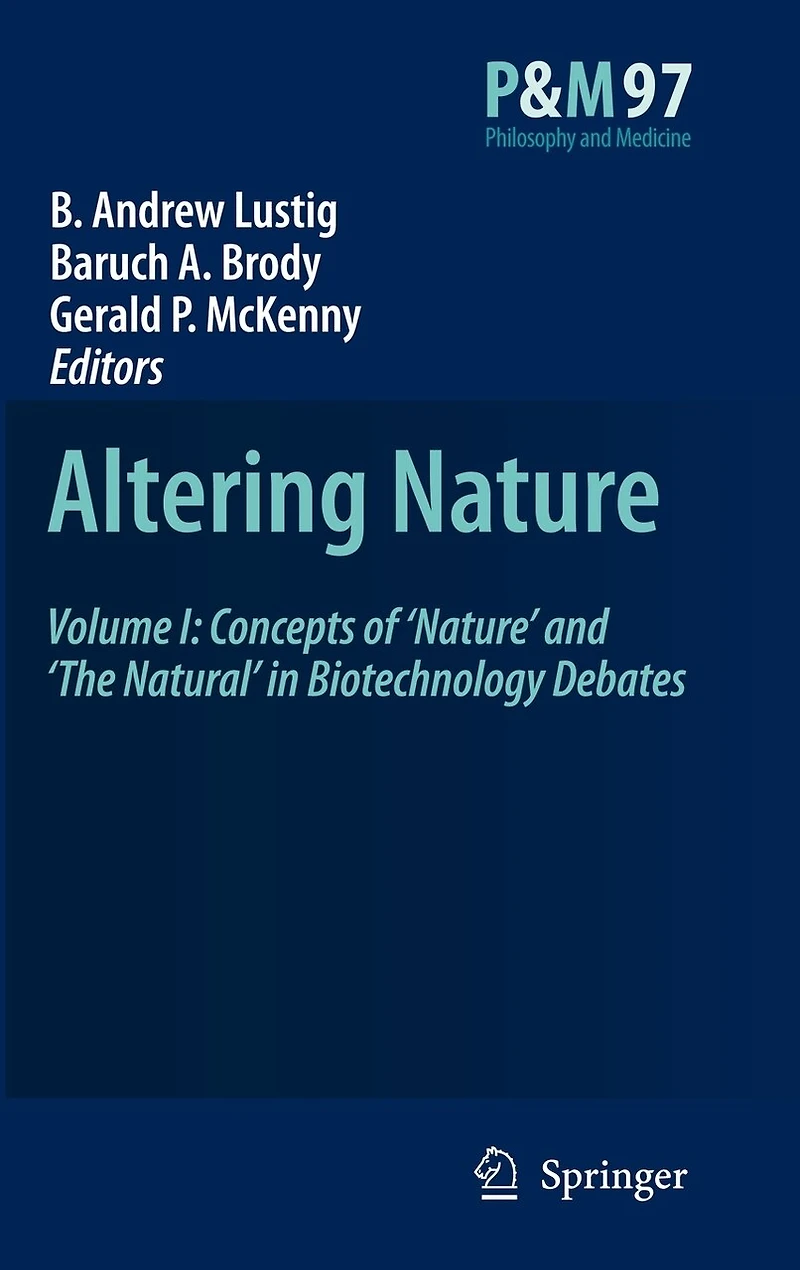
Altering Nature: Volume I: Concepts of 'Nature' and 'The Natural' Biotechnology Debates in Ottawa, ON
Current price: $248.50

Altering Nature: Volume I: Concepts of 'Nature' and 'The Natural' Biotechnology Debates in Ottawa, ON
Current price: $248.50
Loading Inventory...
Size: Hardcover
*Product information may vary - to confirm product availability, pricing, shipping and return information please contact Coles
B. Andrew Lustig, Baruch A. Brody, and Gerald P. McKenny Nearly every week the general public is treated to an announcement of another actual or potential "breakthrough" in biotechnology. Headlines trumpet advances in assisted reproduction, current or prospective experiments in cloning, and devel- ments in regenerative medicine, stem cell technologies, and tissue engineering. Scientific and popular accounts explore the perils and the possibilities of enhancing human capacities by computer-based, biomolecular, or mechanical means through advances in artificial intelligence, genetics, and nanotechnology. Reports abound concerning ever more sophisticated genetic techniques being introduced into ag- culture and animal husbandry, as well as efforts to enhance and protect biodiversity. Given the pace of such developments, many insightful commentators have proclaimed the 21st century as the "biotechnology century. " Despite a significant literature on the morality of these particular advances in biotechnology, deeper ethical analysis has often been lacking. Our preliminary review of that literature suggested that current discussions of normative issues in biotechnology have suffered from two major deficiencies. First, the discussions have been too often piecemeal in character, limited to after-the-fact analyses of particular issues that provoked the debate, and unconnected to larger concepts and themes. Second, a crucial missing element of those discussions has been the failure to reflect explicitly on the diverse disciplinary conceptions of nature and the natural that shape moral judgments about the legitimacy of specific forms of research and their applications.
B. Andrew Lustig, Baruch A. Brody, and Gerald P. McKenny Nearly every week the general public is treated to an announcement of another actual or potential "breakthrough" in biotechnology. Headlines trumpet advances in assisted reproduction, current or prospective experiments in cloning, and devel- ments in regenerative medicine, stem cell technologies, and tissue engineering. Scientific and popular accounts explore the perils and the possibilities of enhancing human capacities by computer-based, biomolecular, or mechanical means through advances in artificial intelligence, genetics, and nanotechnology. Reports abound concerning ever more sophisticated genetic techniques being introduced into ag- culture and animal husbandry, as well as efforts to enhance and protect biodiversity. Given the pace of such developments, many insightful commentators have proclaimed the 21st century as the "biotechnology century. " Despite a significant literature on the morality of these particular advances in biotechnology, deeper ethical analysis has often been lacking. Our preliminary review of that literature suggested that current discussions of normative issues in biotechnology have suffered from two major deficiencies. First, the discussions have been too often piecemeal in character, limited to after-the-fact analyses of particular issues that provoked the debate, and unconnected to larger concepts and themes. Second, a crucial missing element of those discussions has been the failure to reflect explicitly on the diverse disciplinary conceptions of nature and the natural that shape moral judgments about the legitimacy of specific forms of research and their applications.
You May Also Like
















More About Coles at Bayshore Shopping Centre
Coles is renowned for its outstanding customer service and great selection of books. Along with the vast array of magazines, stationary, audio-books, children's literature, fiction, non-fiction and reference books, you can find accessories to make your reading experience more pleasurable. We can recommend the very best in reading today. We will help you search our titles for exactly what you need, and if we do not have it in stock, we will order it for you.
100 Bayshore Dr, Nepean, ON K2B 8C1, Canada
Find Coles at Bayshore Shopping Centre in Ottawa, ON
Visit Coles at Bayshore Shopping Centre in Ottawa, ON