

Give the Gift of Choice!
Too many options? Treat your friends and family to their favourite stores with a Bayshore Shopping Centre gift card, redeemable at participating retailers throughout the centre. Click below to purchase yours today!Purchase HereHome
American Christian Programmed Quaker Ecclesiology: A Foundational Model for Future Empirical and Confessional Approaches
Coles
Loading Inventory...
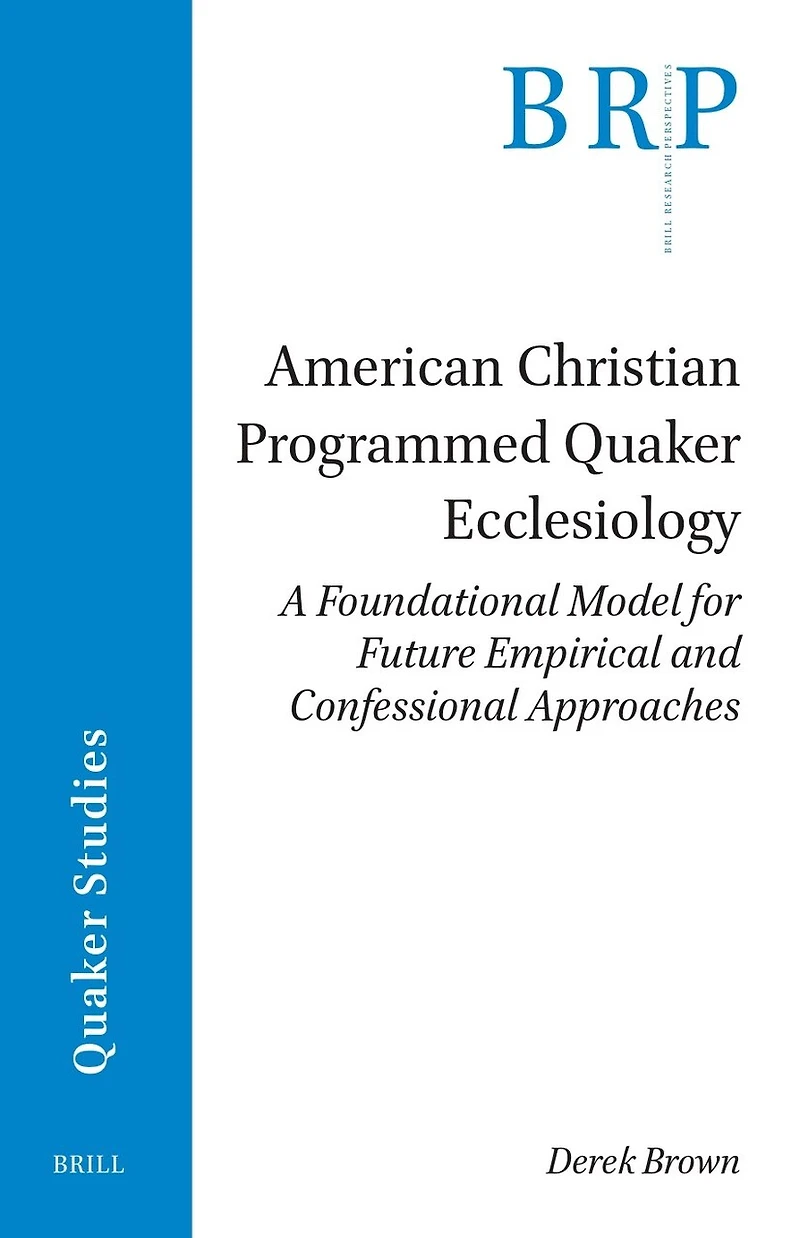
American Christian Programmed Quaker Ecclesiology: A Foundational Model for Future Empirical and Confessional Approaches in Ottawa, ON
Current price: $109.99

American Christian Programmed Quaker Ecclesiology: A Foundational Model for Future Empirical and Confessional Approaches in Ottawa, ON
Current price: $109.99
Loading Inventory...
Size: Paperback
*Product information may vary - to confirm product availability, pricing, shipping and return information please contact Coles
In American Christian Programmed Quaker Ecclesiology , Derek Brown argues that American Christian Programmed Quakerism has inherited a practical and pragmatic ecclesiology at the expense of an ontological understanding of the church. Inspired by the work of Gerben Heitink, Brown proposes a normative, deductive, ontological ecclesiology based on the biblical concept of koinonia , which would act as a 'foundational' model for future confessional, empirical, and practical efforts. To help form the proposed ecclesiology, Brown explores the ecclesiological views of George Fox and Robert Barclay, the adoption of the pastoral system, and the emergence of the Evangelical Friends Church. The ecclesiological writings of Miroslav Volf, Wolfhart Pannenberg, Hans Küng, Jennifer Buck, and C. Wess Daniels are also surveyed.
In American Christian Programmed Quaker Ecclesiology , Derek Brown argues that American Christian Programmed Quakerism has inherited a practical and pragmatic ecclesiology at the expense of an ontological understanding of the church. Inspired by the work of Gerben Heitink, Brown proposes a normative, deductive, ontological ecclesiology based on the biblical concept of koinonia , which would act as a 'foundational' model for future confessional, empirical, and practical efforts. To help form the proposed ecclesiology, Brown explores the ecclesiological views of George Fox and Robert Barclay, the adoption of the pastoral system, and the emergence of the Evangelical Friends Church. The ecclesiological writings of Miroslav Volf, Wolfhart Pannenberg, Hans Küng, Jennifer Buck, and C. Wess Daniels are also surveyed.
You May Also Like

















More About Coles at Bayshore Shopping Centre
Coles is renowned for its outstanding customer service and great selection of books. Along with the vast array of magazines, stationary, audio-books, children's literature, fiction, non-fiction and reference books, you can find accessories to make your reading experience more pleasurable. We can recommend the very best in reading today. We will help you search our titles for exactly what you need, and if we do not have it in stock, we will order it for you.
100 Bayshore Dr, Nepean, ON K2B 8C1, Canada
Find Coles at Bayshore Shopping Centre in Ottawa, ON
Visit Coles at Bayshore Shopping Centre in Ottawa, ON