

Give the Gift of Choice!
Too many options? Treat your friends and family to their favourite stores with a Bayshore Shopping Centre gift card, redeemable at participating retailers throughout the centre. Click below to purchase yours today!Purchase HereHome
An Alternative Reading of the Other Mahabharata: Celebrating Marginal
Coles
Loading Inventory...
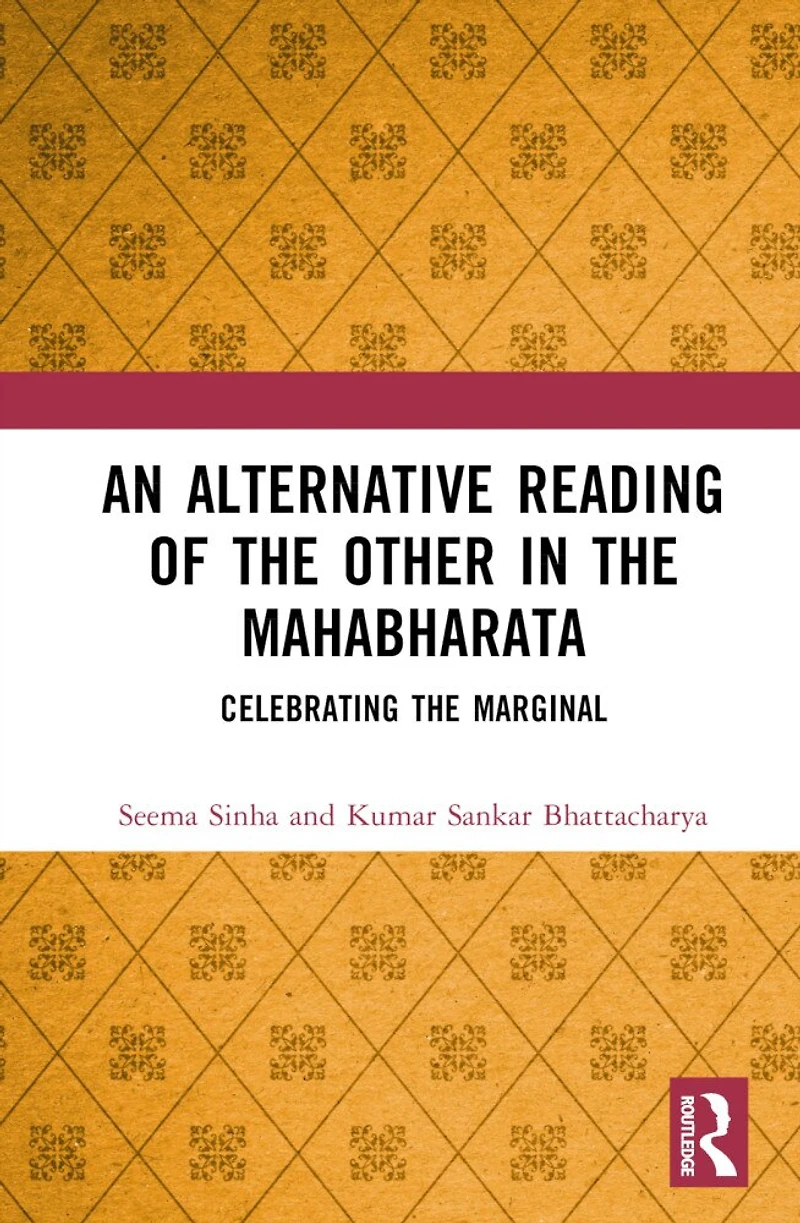
An Alternative Reading of the Other Mahabharata: Celebrating Marginal in Ottawa, ON
By None
Current price: $296.50

By None
An Alternative Reading of the Other Mahabharata: Celebrating Marginal in Ottawa, ON
Current price: $296.50
Loading Inventory...
Size: Hardcover
*Product information may vary - to confirm product availability, pricing, shipping and return information please contact Coles
This book studies gender, sexuality, and representation in The Mahabharata. Drawing on Feminist theory, Queer theory and Deconstructivist theory, it revisits the epic as a saga of agency, empowerment, and subversion, and examines how it gives the gendered marginal - the women and the queer - a voice. The authors argue that in a fluid text like The Mahabharata, there is ample scope for contradiction and conformation, as well as conflict and resolution, which gives the marginal an opportunity to document resistance. They analyse the stories of Draupadi, Kunti, Renuka, Ulupi, and Hidimba within an anti-patriarchal, non-normative, post-modern theoretical framework. They also examine liminal figures like Shikhandi, Yuvanashwa, Sudyumna and Bhangashwan, who are uniquely placed in conversation involving queer space, marginalization, and resistance. An important addition to the study of Indian epics, this book will be indispensable for scholars and researchers of cultural studies, subaltern studies, Indian literature, English literature, gender studies, sexuality studies, queer studies, women's studies, exclusion studies, and postcolonial studies.
This book studies gender, sexuality, and representation in The Mahabharata. Drawing on Feminist theory, Queer theory and Deconstructivist theory, it revisits the epic as a saga of agency, empowerment, and subversion, and examines how it gives the gendered marginal - the women and the queer - a voice. The authors argue that in a fluid text like The Mahabharata, there is ample scope for contradiction and conformation, as well as conflict and resolution, which gives the marginal an opportunity to document resistance. They analyse the stories of Draupadi, Kunti, Renuka, Ulupi, and Hidimba within an anti-patriarchal, non-normative, post-modern theoretical framework. They also examine liminal figures like Shikhandi, Yuvanashwa, Sudyumna and Bhangashwan, who are uniquely placed in conversation involving queer space, marginalization, and resistance. An important addition to the study of Indian epics, this book will be indispensable for scholars and researchers of cultural studies, subaltern studies, Indian literature, English literature, gender studies, sexuality studies, queer studies, women's studies, exclusion studies, and postcolonial studies.
You May Also Like















More About Coles at Bayshore Shopping Centre
Coles is renowned for its outstanding customer service and great selection of books. Along with the vast array of magazines, stationary, audio-books, children's literature, fiction, non-fiction and reference books, you can find accessories to make your reading experience more pleasurable. We can recommend the very best in reading today. We will help you search our titles for exactly what you need, and if we do not have it in stock, we will order it for you.
100 Bayshore Dr, Nepean, ON K2B 8C1, Canada
Find Coles at Bayshore Shopping Centre in Ottawa, ON
Visit Coles at Bayshore Shopping Centre in Ottawa, ON