

Give the Gift of Choice!
Too many options? Treat your friends and family to their favourite stores with a Bayshore Shopping Centre gift card, redeemable at participating retailers throughout the centre. Click below to purchase yours today!Purchase HereHome
An Essay on the Principle of Population, as It Affects the Future Improvement of Society: With Remarks on the Speculations of Mr Godwin, M. Condorcet, and Other Writers
Coles
Loading Inventory...
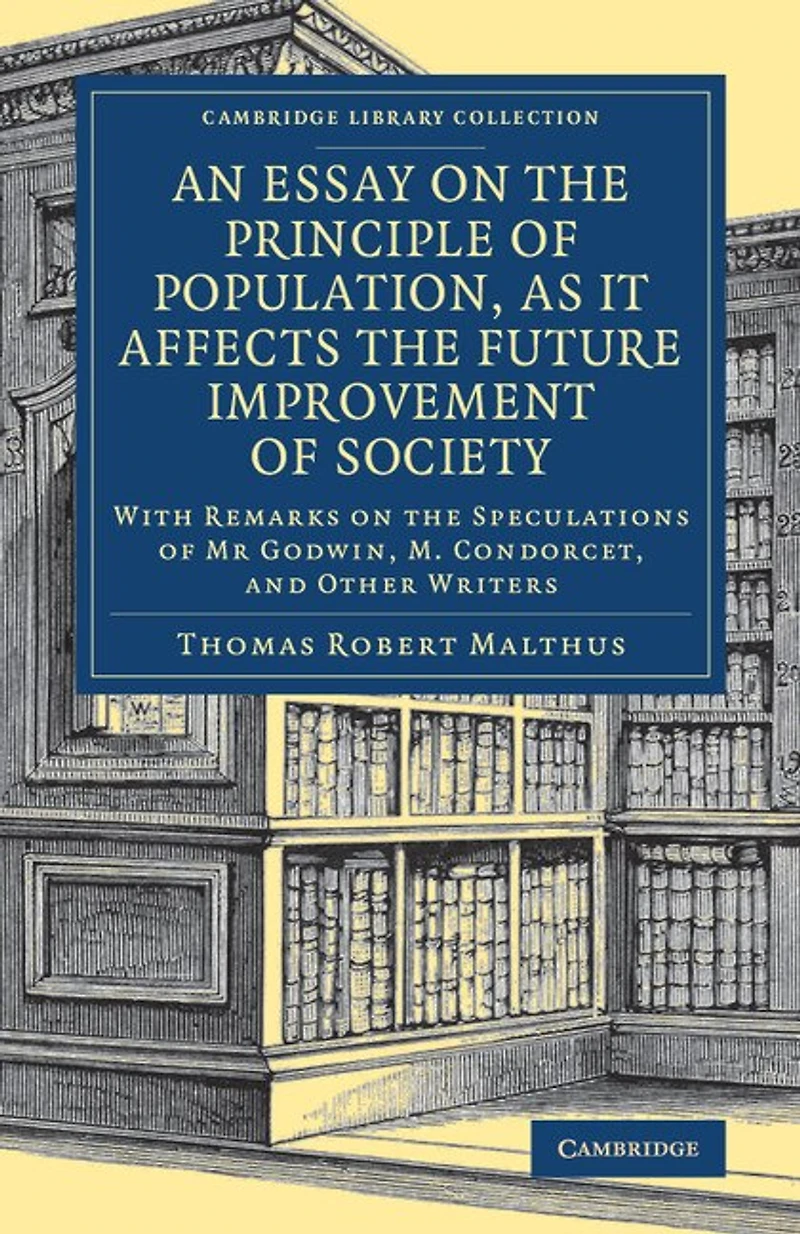
An Essay on the Principle of Population, as It Affects the Future Improvement of Society: With Remarks on the Speculations of Mr Godwin, M. Condorcet, and Other Writers in Ottawa, ON
By None
Current price: $63.80

By None
An Essay on the Principle of Population, as It Affects the Future Improvement of Society: With Remarks on the Speculations of Mr Godwin, M. Condorcet, and Other Writers in Ottawa, ON
Current price: $63.80
Loading Inventory...
Size: Paperback
*Product information may vary - to confirm product availability, pricing, shipping and return information please contact Coles
Resulting from discussions with his father on the works of Condorcet and William Godwin, Thomas Malthus (1766–1834) published anonymously in 1798 his first and most famous work. Written as a polite attack on French post-revolutionary speculations on social and human perfectibility, this remains one of the most powerful statements of the limits to human hopes set by the tension between population growth and natural resources. Central to his philosophy was the belief that 'The power of population is indefinitely greater than the power in the earth to produce subsistence for man'. The publication was extremely controversial, not only because of the discussions of prostitution, contraception and sex, but also because Malthus denied the right of the poor to be supported in the face of famine, poverty and disease. This 1798 first edition led to a riposte from Godwin, Of Population (1820), which is also reissued in this series.
Resulting from discussions with his father on the works of Condorcet and William Godwin, Thomas Malthus (1766–1834) published anonymously in 1798 his first and most famous work. Written as a polite attack on French post-revolutionary speculations on social and human perfectibility, this remains one of the most powerful statements of the limits to human hopes set by the tension between population growth and natural resources. Central to his philosophy was the belief that 'The power of population is indefinitely greater than the power in the earth to produce subsistence for man'. The publication was extremely controversial, not only because of the discussions of prostitution, contraception and sex, but also because Malthus denied the right of the poor to be supported in the face of famine, poverty and disease. This 1798 first edition led to a riposte from Godwin, Of Population (1820), which is also reissued in this series.
You May Also Like

















More About Coles at Bayshore Shopping Centre
Coles is renowned for its outstanding customer service and great selection of books. Along with the vast array of magazines, stationary, audio-books, children's literature, fiction, non-fiction and reference books, you can find accessories to make your reading experience more pleasurable. We can recommend the very best in reading today. We will help you search our titles for exactly what you need, and if we do not have it in stock, we will order it for you.
100 Bayshore Dr, Nepean, ON K2B 8C1, Canada
Find Coles at Bayshore Shopping Centre in Ottawa, ON
Visit Coles at Bayshore Shopping Centre in Ottawa, ON