

Give the Gift of Choice!
Too many options? Treat your friends and family to their favourite stores with a Bayshore Shopping Centre gift card, redeemable at participating retailers throughout the centre. Click below to purchase yours today!Purchase HereHome
Applications Du Principe Des Vitesses Virtuelles À La Poussée Des Terres Et Des Voûtes: Renfermant Un Nouveau Principe De Stabilité, Duquel On A Déduit Des Moyens De Construire, Avec Moins De Défense, Les Voûtes Et Les Revêtemens Actuellement En...
Coles
Loading Inventory...
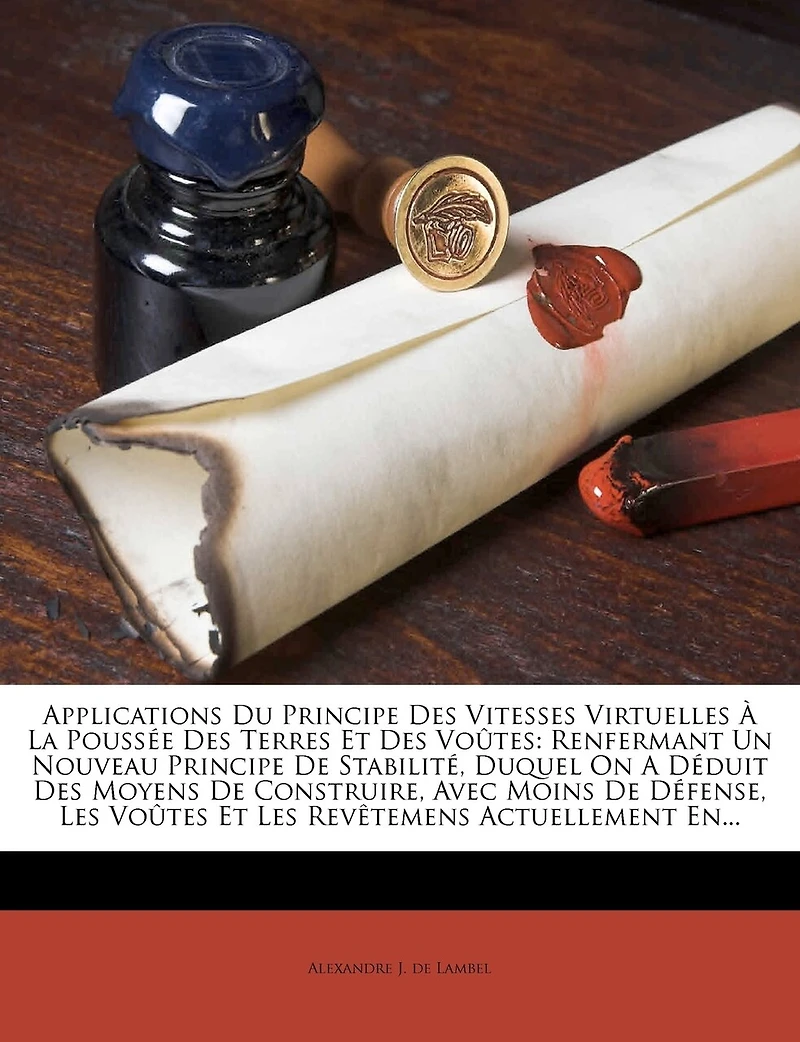
Applications Du Principe Des Vitesses Virtuelles À La Poussée Des Terres Et Des Voûtes: Renfermant Un Nouveau Principe De Stabilité, Duquel On A Déduit Des Moyens De Construire, Avec Moins De Défense, Les Voûtes Et Les Revêtemens Actuellement En... in Ottawa, ON
Current price: $18.92

Applications Du Principe Des Vitesses Virtuelles À La Poussée Des Terres Et Des Voûtes: Renfermant Un Nouveau Principe De Stabilité, Duquel On A Déduit Des Moyens De Construire, Avec Moins De Défense, Les Voûtes Et Les Revêtemens Actuellement En... in Ottawa, ON
Current price: $18.92
Loading Inventory...
Size: Paperback
*Product information may vary - to confirm product availability, pricing, shipping and return information please contact Coles
Applications Du Principe Des Vitesses Virtuelles À La Poussée Des Terres Et Des Voûtes explores the application of the principle of virtual velocities to the thrust of earth and vaults. Authored by Alexandre J. de Lambel, this work introduces a new principle of stability. From this principle, methods are derived to construct vaults and linings with less defense than currently employed. This treatise is an invaluable resource for engineers and architects seeking to understand and apply advanced principles of structural mechanics to optimize the design and construction of stable and efficient structures. The book offers insights into minimizing defensive measures in construction through a deeper understanding of virtual velocities and stability. This work has been selected by scholars as being culturally important, and is part of the knowledge base of civilization as we know it. This work was reproduced from the original artifact, and remains as true to the original work as possible. Therefore, you will see the original copyright references, library stamps (as most of these works have been housed in our most important libraries around the world), and other notations in the work. This work is in the public domain in the United States of America, and possibly other nations. Within the United States, you may freely copy and distribute this work, as no entity (individual or corporate) has a copyright on the body of the work. As a reproduction of a historical artifact, this work may contain missing or blurred pages, poor pictures, errant marks, etc. Scholars believe, and we concur, that this work is important enough to be preserved, reproduced, and made generally available to the public. We appreciate your support of the preservation process, and thank you for being an important part of keeping this knowledge alive and relevant.
Applications Du Principe Des Vitesses Virtuelles À La Poussée Des Terres Et Des Voûtes explores the application of the principle of virtual velocities to the thrust of earth and vaults. Authored by Alexandre J. de Lambel, this work introduces a new principle of stability. From this principle, methods are derived to construct vaults and linings with less defense than currently employed. This treatise is an invaluable resource for engineers and architects seeking to understand and apply advanced principles of structural mechanics to optimize the design and construction of stable and efficient structures. The book offers insights into minimizing defensive measures in construction through a deeper understanding of virtual velocities and stability. This work has been selected by scholars as being culturally important, and is part of the knowledge base of civilization as we know it. This work was reproduced from the original artifact, and remains as true to the original work as possible. Therefore, you will see the original copyright references, library stamps (as most of these works have been housed in our most important libraries around the world), and other notations in the work. This work is in the public domain in the United States of America, and possibly other nations. Within the United States, you may freely copy and distribute this work, as no entity (individual or corporate) has a copyright on the body of the work. As a reproduction of a historical artifact, this work may contain missing or blurred pages, poor pictures, errant marks, etc. Scholars believe, and we concur, that this work is important enough to be preserved, reproduced, and made generally available to the public. We appreciate your support of the preservation process, and thank you for being an important part of keeping this knowledge alive and relevant.
You May Also Like



![Réflexions Sur La Révolution De La Suisse, Sur Le Principe De L'unité Et De L'indivisibilité, Et Sur La Nécessité D'en Revenir Au Système Fédératif, [...]...](https://cdn.mall.adeptmind.ai/https%253A%252F%252Fcdn.shopify.com%252Fs%252Ffiles%252F1%252F0655%252F8980%252F5233%252Ffiles%252F1_d2db942e-0412-4702-9091-d381131b3498.jpg_medium.webp)







More About Coles at Bayshore Shopping Centre
Coles is renowned for its outstanding customer service and great selection of books. Along with the vast array of magazines, stationary, audio-books, children's literature, fiction, non-fiction and reference books, you can find accessories to make your reading experience more pleasurable. We can recommend the very best in reading today. We will help you search our titles for exactly what you need, and if we do not have it in stock, we will order it for you.
100 Bayshore Dr, Nepean, ON K2B 8C1, Canada
Find Coles at Bayshore Shopping Centre in Ottawa, ON
Visit Coles at Bayshore Shopping Centre in Ottawa, ON