

Give the Gift of Choice!
Too many options? Treat your friends and family to their favourite stores with a Bayshore Shopping Centre gift card, redeemable at participating retailers throughout the centre. Click below to purchase yours today!Purchase HereHome
Après-coup: followed by Time and the Other and Temporality and Translation & Debate on "Temporality and Translation"
Coles
Loading Inventory...
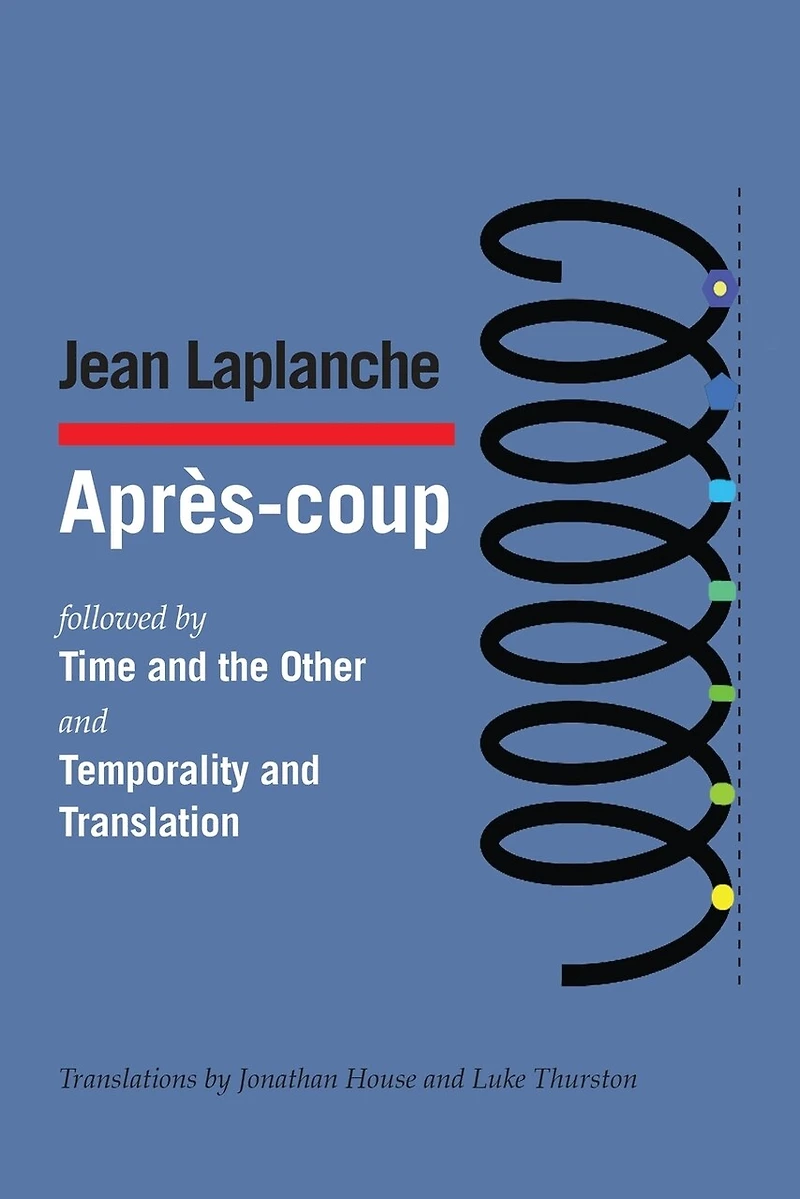
Après-coup: followed by Time and the Other and Temporality and Translation & Debate on "Temporality and Translation" in Ottawa, ON
By None
Current price: $54.99

By None
Après-coup: followed by Time and the Other and Temporality and Translation & Debate on "Temporality and Translation" in Ottawa, ON
Current price: $54.99
Loading Inventory...
Size: Paperback
*Product information may vary - to confirm product availability, pricing, shipping and return information please contact Coles
Publication of these lectures from the 1989-90 seminar on après-coup completes the English translation of the three major works from a period of Laplanche's greatest synthetic creativity, the other two being New Foundations for Psychoanalysis (1987) and The Temptation of Biology: Freud's theories of sexuality (1991-92). This volume also includes two related essays from the same period translated by Luke Thurston: "Time and the Other" and "Temporality and Translation." In "Time and the Other," first presented the month after the end of the seminar, Laplanche wrote, "après-coup is an expression taken from everyday speech and converted into a noun (Nachträglichkeit) at a specific moment in the letters to Fliess, and which Freud himself then privileges as a technical term. Everything confirms this." The lectures on après-coup are important not only because they solidify the (re)discovery of a concept fundamental to psychoanalytic metapsychology, but also because they point to what is unfinished in Laplanche's theorizing of what he called Freud's 'Unfinished Copernican Revolution.' At the center of that unfinished work is the question of the nature of the urge to translate, to understand, to make meaning. The urge to translate is at the origin of the drives. The relation of translation and après-coup is captured in this excerpt from the last lecture:
"Why then invoke a theory, a translational model of après-coup and, more generally, a translational model of the theory of seduction and even a translational model of the constitution of the human being? It is because there is no mental process that captures the double movement better than translation, the indivisible double movement of the "being carried forward" and of "referring back." The "being carried forward" is nothing other than what I designate as a "fundamental to-be-translated" a demand to translate the message of the other." - Jean Laplanche
Publication of these lectures from the 1989-90 seminar on après-coup completes the English translation of the three major works from a period of Laplanche's greatest synthetic creativity, the other two being New Foundations for Psychoanalysis (1987) and The Temptation of Biology: Freud's theories of sexuality (1991-92). This volume also includes two related essays from the same period translated by Luke Thurston: "Time and the Other" and "Temporality and Translation." In "Time and the Other," first presented the month after the end of the seminar, Laplanche wrote, "après-coup is an expression taken from everyday speech and converted into a noun (Nachträglichkeit) at a specific moment in the letters to Fliess, and which Freud himself then privileges as a technical term. Everything confirms this." The lectures on après-coup are important not only because they solidify the (re)discovery of a concept fundamental to psychoanalytic metapsychology, but also because they point to what is unfinished in Laplanche's theorizing of what he called Freud's 'Unfinished Copernican Revolution.' At the center of that unfinished work is the question of the nature of the urge to translate, to understand, to make meaning. The urge to translate is at the origin of the drives. The relation of translation and après-coup is captured in this excerpt from the last lecture:
"Why then invoke a theory, a translational model of après-coup and, more generally, a translational model of the theory of seduction and even a translational model of the constitution of the human being? It is because there is no mental process that captures the double movement better than translation, the indivisible double movement of the "being carried forward" and of "referring back." The "being carried forward" is nothing other than what I designate as a "fundamental to-be-translated" a demand to translate the message of the other." - Jean Laplanche
You May Also Like












More About Coles at Bayshore Shopping Centre
Coles is renowned for its outstanding customer service and great selection of books. Along with the vast array of magazines, stationary, audio-books, children's literature, fiction, non-fiction and reference books, you can find accessories to make your reading experience more pleasurable. We can recommend the very best in reading today. We will help you search our titles for exactly what you need, and if we do not have it in stock, we will order it for you.
100 Bayshore Dr, Nepean, ON K2B 8C1, Canada
Find Coles at Bayshore Shopping Centre in Ottawa, ON
Visit Coles at Bayshore Shopping Centre in Ottawa, ON