

Give the Gift of Choice!
Too many options? Treat your friends and family to their favourite stores with a Bayshore Shopping Centre gift card, redeemable at participating retailers throughout the centre. Click below to purchase yours today!Purchase HereHome
Architecture and AI: Controlling the Hallucination
Coles
Loading Inventory...

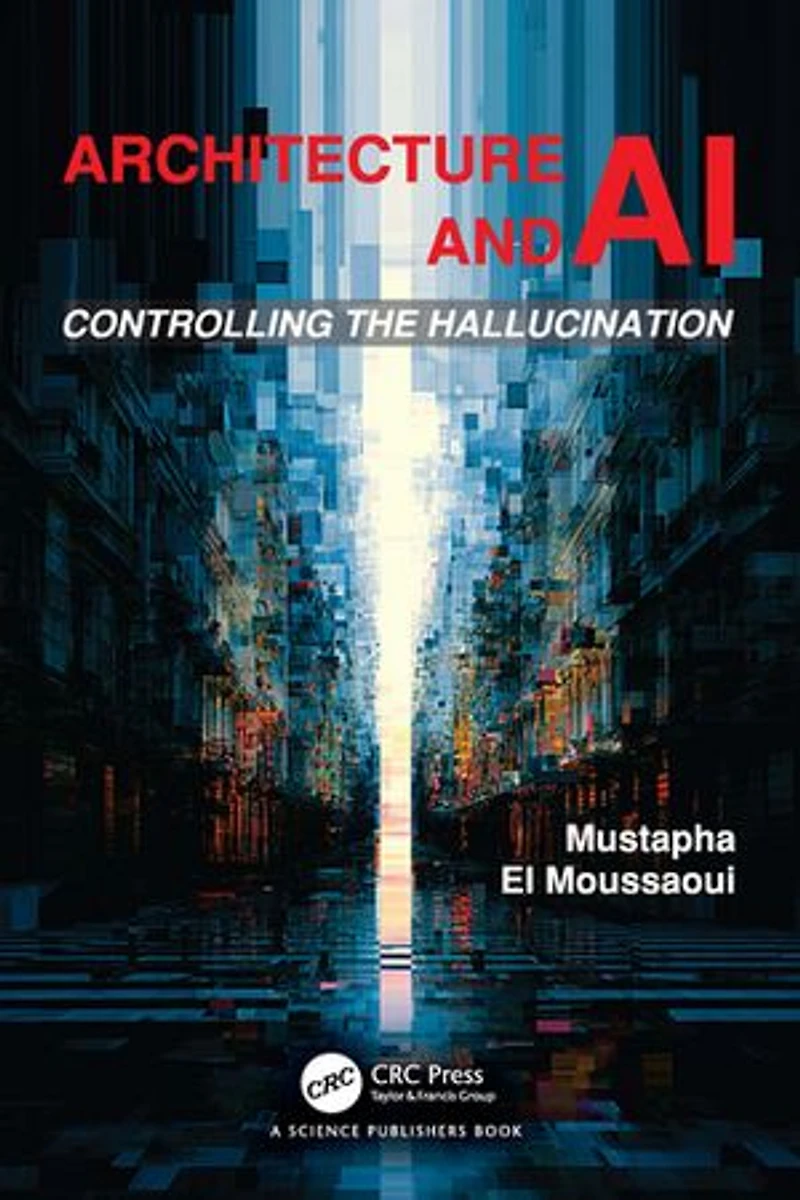
Architecture and AI: Controlling the Hallucination in Ottawa, ON
Current price: $266.50

Architecture and AI: Controlling the Hallucination in Ottawa, ON
Current price: $266.50
Loading Inventory...
Size: Hardcover
*Product information may vary - to confirm product availability, pricing, shipping and return information please contact Coles
This book addresses the growing need for architects and designers to critically engage with artificial intelligence in visual and spatial production. It offers a systematic approach to understanding, directing, and constraining generative models. Combining theoretical insights with technical instructions, the book explains how contemporary AI tools such as latent diffusion models can be employed effectively and responsibly. Rather than relying on AI as an automatic image generator, the book proposes a methodology grounded in control, feedback, and authorship. It introduces practical workflows using platforms - like ComfyUI, MidJourney, Grasshopper and others - to explore constrains, prompt structure, and how procedural logic can be harnessed to produce intentional, coherent results. Intended for architects, educators, researchers, and students, this volume positions AI not as a substitute for design expertise, but as a configurable system that must be shaped by the disciplinary and ethical priorities of architecture.
This book addresses the growing need for architects and designers to critically engage with artificial intelligence in visual and spatial production. It offers a systematic approach to understanding, directing, and constraining generative models. Combining theoretical insights with technical instructions, the book explains how contemporary AI tools such as latent diffusion models can be employed effectively and responsibly. Rather than relying on AI as an automatic image generator, the book proposes a methodology grounded in control, feedback, and authorship. It introduces practical workflows using platforms - like ComfyUI, MidJourney, Grasshopper and others - to explore constrains, prompt structure, and how procedural logic can be harnessed to produce intentional, coherent results. Intended for architects, educators, researchers, and students, this volume positions AI not as a substitute for design expertise, but as a configurable system that must be shaped by the disciplinary and ethical priorities of architecture.
You May Also Like













More About Coles at Bayshore Shopping Centre
Coles is renowned for its outstanding customer service and great selection of books. Along with the vast array of magazines, stationary, audio-books, children's literature, fiction, non-fiction and reference books, you can find accessories to make your reading experience more pleasurable. We can recommend the very best in reading today. We will help you search our titles for exactly what you need, and if we do not have it in stock, we will order it for you.
100 Bayshore Dr, Nepean, ON K2B 8C1, Canada
Find Coles at Bayshore Shopping Centre in Ottawa, ON
Visit Coles at Bayshore Shopping Centre in Ottawa, ON