

Give the Gift of Choice!
Too many options? Treat your friends and family to their favourite stores with a Bayshore Shopping Centre gift card, redeemable at participating retailers throughout the centre. Click below to purchase yours today!Purchase HereHome
Art, Vision, and Symmetry: The Hidden Geometry of Frank Lloyd Wright
Coles
Loading Inventory...
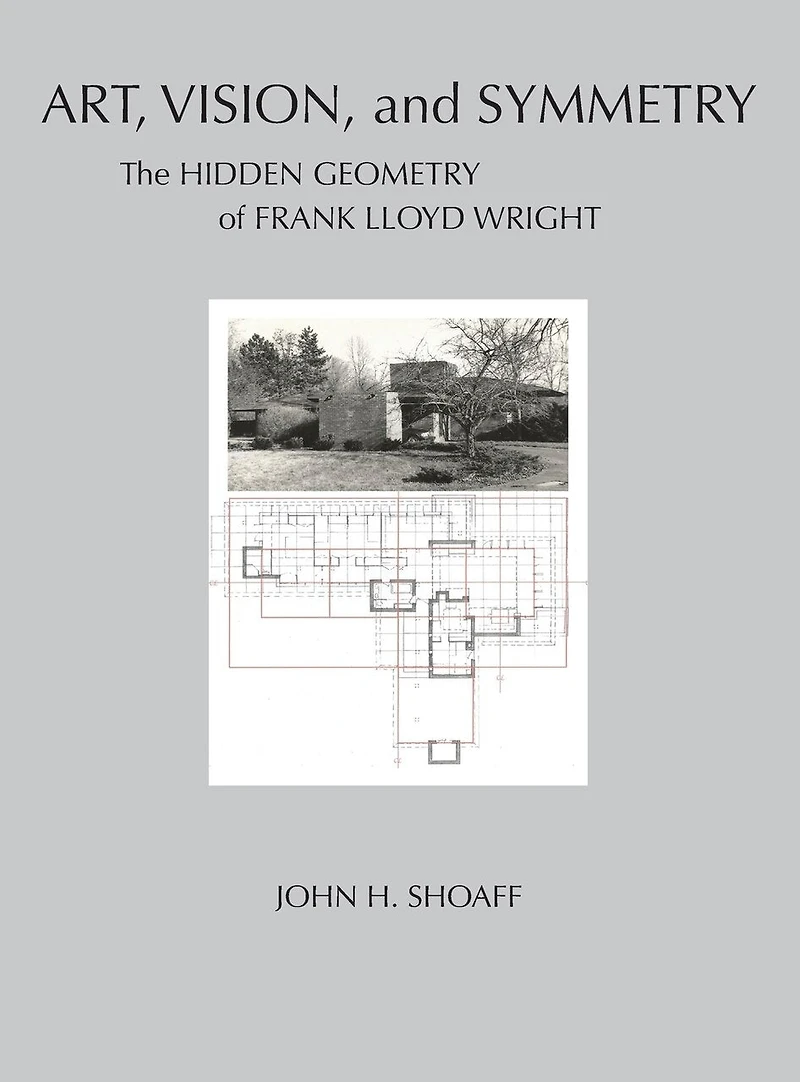
Art, Vision, and Symmetry: The Hidden Geometry of Frank Lloyd Wright in Ottawa, ON
Current price: $44.99

Art, Vision, and Symmetry: The Hidden Geometry of Frank Lloyd Wright in Ottawa, ON
Current price: $44.99
Loading Inventory...
Size: Hardcover
*Product information may vary - to confirm product availability, pricing, shipping and return information please contact Coles
Frank Lloyd Wright confronted us with two challenges when he wrote of his buildings that certain "basic principles behind the effects" "give to them all such vitality, integrity, and magic as they have." The first challenge: to uncover these principles; and, the second, to explain how they yield works of such aesthetic range and power. He gave us the first clue-each building emerges from "the differentiation of a single, certain, simple form"; but he left it for us to find the often complex process of "differentiation" that follows. This book reveals that process. In fifteen case studies it shows how simple geometries repeat, grow, crystallize, and overlap, disciplined by their internal structure, to yield "the integration that is organic" that constitutes the final masterpiece. These geometries are highlighted separately in a sequence of images. By following them the engaged amateur will enrich his understanding of Wright's works; the critic can evaluate them for himself; and the student will find in them the source of a discipline he can apply to his own efforts. In an effort to explain the aesthetic "magic," that follows from this discipline, the book then turns to the sciences of vision. It explores basic mechanisms by which the eye and mind make coherent vision possible, and concludes that the freshness, clarity, and vitality of Wright's oeuvre follow from his discovery and employment of some of the most basic mechanics of perception, by which he created for the eye maximum pleasure from least effort. From this follows a theory of aesthetics.
Frank Lloyd Wright confronted us with two challenges when he wrote of his buildings that certain "basic principles behind the effects" "give to them all such vitality, integrity, and magic as they have." The first challenge: to uncover these principles; and, the second, to explain how they yield works of such aesthetic range and power. He gave us the first clue-each building emerges from "the differentiation of a single, certain, simple form"; but he left it for us to find the often complex process of "differentiation" that follows. This book reveals that process. In fifteen case studies it shows how simple geometries repeat, grow, crystallize, and overlap, disciplined by their internal structure, to yield "the integration that is organic" that constitutes the final masterpiece. These geometries are highlighted separately in a sequence of images. By following them the engaged amateur will enrich his understanding of Wright's works; the critic can evaluate them for himself; and the student will find in them the source of a discipline he can apply to his own efforts. In an effort to explain the aesthetic "magic," that follows from this discipline, the book then turns to the sciences of vision. It explores basic mechanisms by which the eye and mind make coherent vision possible, and concludes that the freshness, clarity, and vitality of Wright's oeuvre follow from his discovery and employment of some of the most basic mechanics of perception, by which he created for the eye maximum pleasure from least effort. From this follows a theory of aesthetics.
You May Also Like













More About Coles at Bayshore Shopping Centre
Coles is renowned for its outstanding customer service and great selection of books. Along with the vast array of magazines, stationary, audio-books, children's literature, fiction, non-fiction and reference books, you can find accessories to make your reading experience more pleasurable. We can recommend the very best in reading today. We will help you search our titles for exactly what you need, and if we do not have it in stock, we will order it for you.
100 Bayshore Dr, Nepean, ON K2B 8C1, Canada
Find Coles at Bayshore Shopping Centre in Ottawa, ON
Visit Coles at Bayshore Shopping Centre in Ottawa, ON