

Give the Gift of Choice!
Too many options? Treat your friends and family to their favourite stores with a Bayshore Shopping Centre gift card, redeemable at participating retailers throughout the centre. Click below to purchase yours today!Purchase HereHome
Artificial Intelligence Economics and Managment: An Edited Proceedings on the Fourth International Workshop: AIEM4 Tel-Aviv, Israel, January 8-10, 1996
Coles
Loading Inventory...
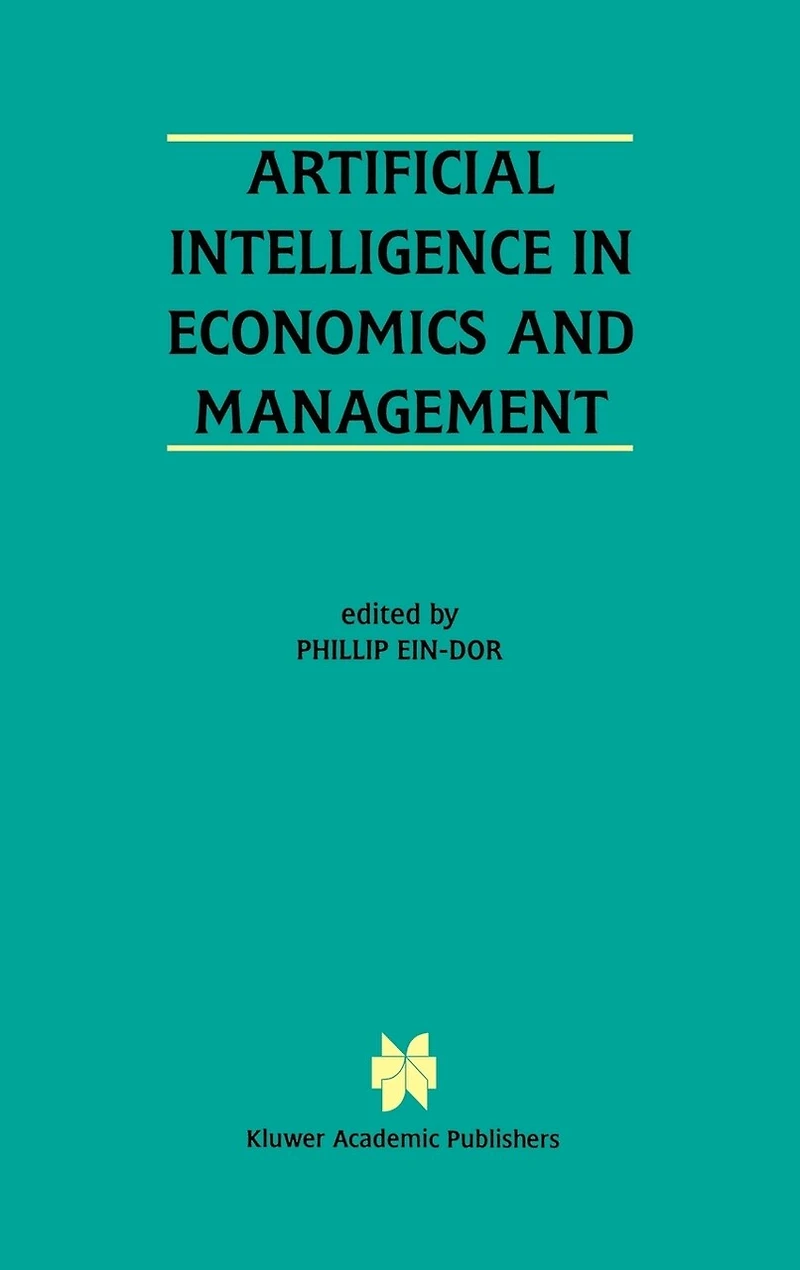
Artificial Intelligence Economics and Managment: An Edited Proceedings on the Fourth International Workshop: AIEM4 Tel-Aviv, Israel, January 8-10, 1996 in Ottawa, ON
Current price: $142.95

Artificial Intelligence Economics and Managment: An Edited Proceedings on the Fourth International Workshop: AIEM4 Tel-Aviv, Israel, January 8-10, 1996 in Ottawa, ON
Current price: $142.95
Loading Inventory...
Size: Hardcover
*Product information may vary - to confirm product availability, pricing, shipping and return information please contact Coles
In the past decades several researchers have developed statistical models for the prediction of corporate bankruptcy, e. g. Altman (1968) and Bilderbeek (1983). A model for predicting corporate bankruptcy aims to describe the relation between bankruptcy and a number of explanatory financial ratios. These ratios can be calculated from the information contained in a company's annual report. The is to obtain a method for timely prediction of bankruptcy, a so ultimate purpose called "early warning" system. More recently, this subject has attracted the attention of researchers in the area of machine learning, e. g. Shaw and Gentry (1990), Fletcher and Goss (1993), and Tam and Kiang (1992). This research is usually directed at the comparison of machine learning methods, such as induction of classification trees and neural networks, with the "standard" statistical methods of linear discriminant analysis and logistic regression. In earlier research, Feelders et al. (1994) performed a similar comparative analysis. The methods used were linear discriminant analysis, decision trees and neural networks. We used a data set which contained 139 annual reports of Dutch industrial and trading companies. The experiments showed that the estimated prediction error of both the decision tree and neural network were below the estimated error of the linear discriminant. Thus it seems that we can gain by replacing the "traditionally" used linear discriminant by a more flexible classification method to predict corporate bankruptcy. The data set used in these experiments was very small however.
In the past decades several researchers have developed statistical models for the prediction of corporate bankruptcy, e. g. Altman (1968) and Bilderbeek (1983). A model for predicting corporate bankruptcy aims to describe the relation between bankruptcy and a number of explanatory financial ratios. These ratios can be calculated from the information contained in a company's annual report. The is to obtain a method for timely prediction of bankruptcy, a so ultimate purpose called "early warning" system. More recently, this subject has attracted the attention of researchers in the area of machine learning, e. g. Shaw and Gentry (1990), Fletcher and Goss (1993), and Tam and Kiang (1992). This research is usually directed at the comparison of machine learning methods, such as induction of classification trees and neural networks, with the "standard" statistical methods of linear discriminant analysis and logistic regression. In earlier research, Feelders et al. (1994) performed a similar comparative analysis. The methods used were linear discriminant analysis, decision trees and neural networks. We used a data set which contained 139 annual reports of Dutch industrial and trading companies. The experiments showed that the estimated prediction error of both the decision tree and neural network were below the estimated error of the linear discriminant. Thus it seems that we can gain by replacing the "traditionally" used linear discriminant by a more flexible classification method to predict corporate bankruptcy. The data set used in these experiments was very small however.
You May Also Like











More About Coles at Bayshore Shopping Centre
Coles is renowned for its outstanding customer service and great selection of books. Along with the vast array of magazines, stationary, audio-books, children's literature, fiction, non-fiction and reference books, you can find accessories to make your reading experience more pleasurable. We can recommend the very best in reading today. We will help you search our titles for exactly what you need, and if we do not have it in stock, we will order it for you.
100 Bayshore Dr, Nepean, ON K2B 8C1, Canada
Find Coles at Bayshore Shopping Centre in Ottawa, ON
Visit Coles at Bayshore Shopping Centre in Ottawa, ON