

Give the Gift of Choice!
Too many options? Treat your friends and family to their favourite stores with a Bayshore Shopping Centre gift card, redeemable at participating retailers throughout the centre. Click below to purchase yours today!Purchase HereHome
Assisted Human Reproduction: Psychological and Ethical Dilemmas
Coles
Loading Inventory...
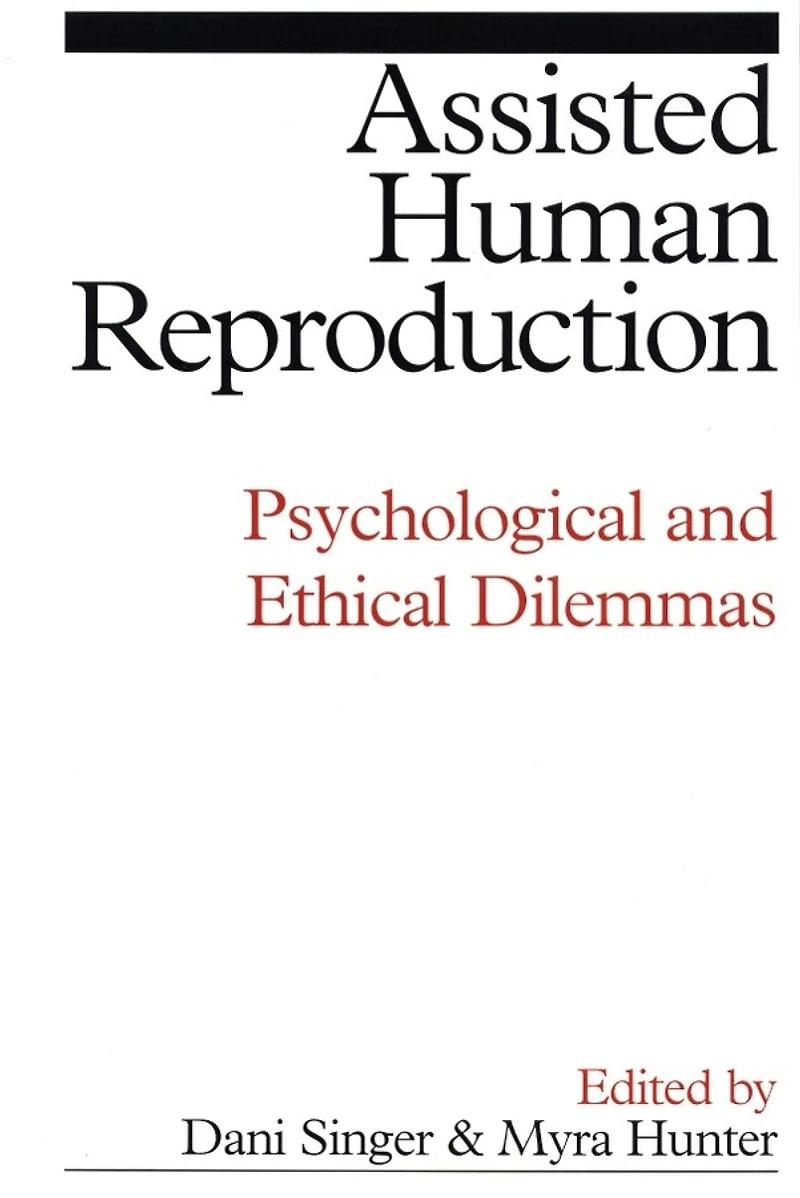
Assisted Human Reproduction: Psychological and Ethical Dilemmas in Ottawa, ON
By None
Current price: $103.95

By None
Assisted Human Reproduction: Psychological and Ethical Dilemmas in Ottawa, ON
Current price: $103.95
Loading Inventory...
Size: Paperback
*Product information may vary - to confirm product availability, pricing, shipping and return information please contact Coles
With contributions from: Eric Blyth, Ken Daniels, Julia Feast, Robert Lee, Nina Martin, Alexina McWhinnie, Derek Morgan, Clare Murray, Sharon Pettle, Claire Potter, Jim Richards and Francoise Shenfield The separation of procreation from conception has broadened notions of parenthood and created novel dilemmas. A woman may carry a foetus derived from gametes neither or only one of which came from her or her partner; or she may carry a foetus created using in vitro fertilisation (IVF) with the purpose of handing it to two other parents one, neither or both of whom may be genetically related to the prospective child. Parents may consist of single-sex couples, only one of them genetically related to the child; the prospective mother may be past her menopause; and genetic parenthood after death is now achievable. In a world increasingly reliant on medical science, how can the argument that equates traditional with natural and novel with unnatural/unethical be justified? Should there be legislation, which is notoriously slow to change, in a field driven by dazzling new possibilities at ever faster rate; particularly when restrictions differ from country to country, so that those who can afford it travel elsewhere for their treatment of choice? Whose rights are paramount - the adults hoping to build a family or the prospective child(ren)s future well being? On what basis can apparently competing rights be regulated or adjudicated and how and to what extent can these be enforced in practice?
With contributions from: Eric Blyth, Ken Daniels, Julia Feast, Robert Lee, Nina Martin, Alexina McWhinnie, Derek Morgan, Clare Murray, Sharon Pettle, Claire Potter, Jim Richards and Francoise Shenfield The separation of procreation from conception has broadened notions of parenthood and created novel dilemmas. A woman may carry a foetus derived from gametes neither or only one of which came from her or her partner; or she may carry a foetus created using in vitro fertilisation (IVF) with the purpose of handing it to two other parents one, neither or both of whom may be genetically related to the prospective child. Parents may consist of single-sex couples, only one of them genetically related to the child; the prospective mother may be past her menopause; and genetic parenthood after death is now achievable. In a world increasingly reliant on medical science, how can the argument that equates traditional with natural and novel with unnatural/unethical be justified? Should there be legislation, which is notoriously slow to change, in a field driven by dazzling new possibilities at ever faster rate; particularly when restrictions differ from country to country, so that those who can afford it travel elsewhere for their treatment of choice? Whose rights are paramount - the adults hoping to build a family or the prospective child(ren)s future well being? On what basis can apparently competing rights be regulated or adjudicated and how and to what extent can these be enforced in practice?
You May Also Like









More About Coles at Bayshore Shopping Centre
Coles is renowned for its outstanding customer service and great selection of books. Along with the vast array of magazines, stationary, audio-books, children's literature, fiction, non-fiction and reference books, you can find accessories to make your reading experience more pleasurable. We can recommend the very best in reading today. We will help you search our titles for exactly what you need, and if we do not have it in stock, we will order it for you.
100 Bayshore Dr, Nepean, ON K2B 8C1, Canada
Find Coles at Bayshore Shopping Centre in Ottawa, ON
Visit Coles at Bayshore Shopping Centre in Ottawa, ON