

Give the Gift of Choice!
Too many options? Treat your friends and family to their favourite stores with a Bayshore Shopping Centre gift card, redeemable at participating retailers throughout the centre. Click below to purchase yours today!Purchase HereHome
Atlas of Informal Settlement: Understanding Self-Organized Urban Design
Coles
Loading Inventory...
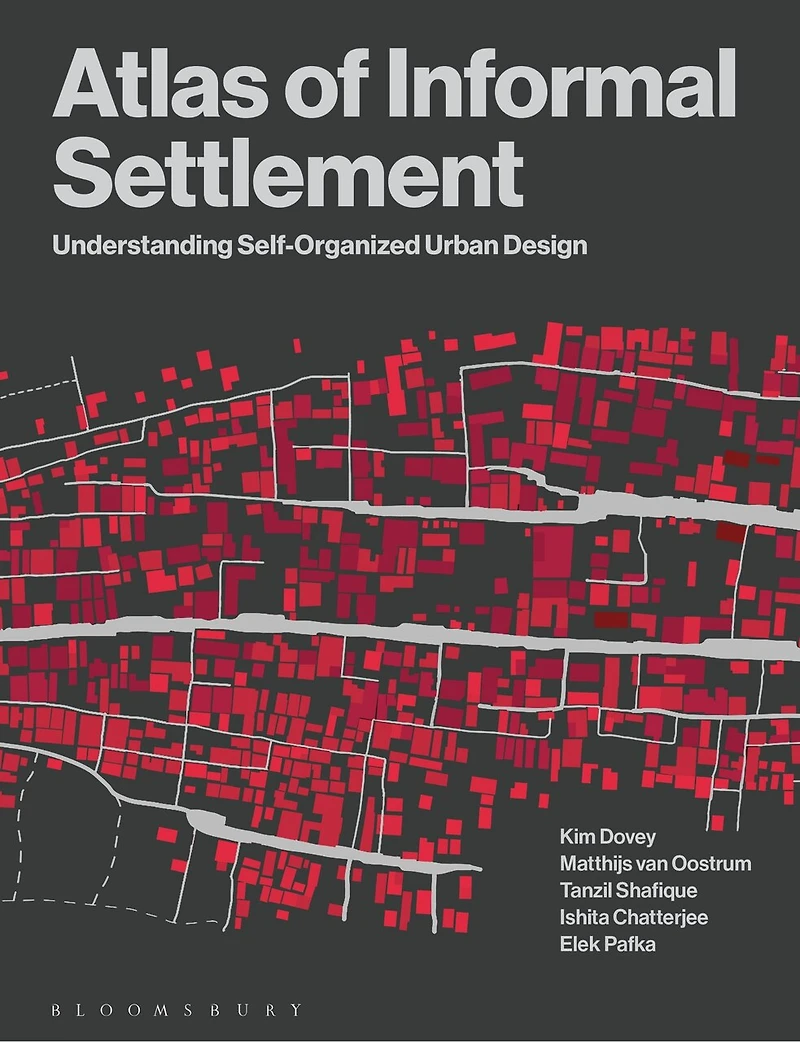
Atlas of Informal Settlement: Understanding Self-Organized Urban Design in Ottawa, ON
Current price: $160.95

Atlas of Informal Settlement: Understanding Self-Organized Urban Design in Ottawa, ON
Current price: $160.95
Loading Inventory...
Size: Hardcover
*Product information may vary - to confirm product availability, pricing, shipping and return information please contact Coles
While often seen as unplanned or spontaneous, informal settlement is better understood as a mode of production: a co-evolution of architecture, urban design and planning that embodies informal rules and shapes urban development. The Atlas of Informal Settlement is a comparative study of the spatial logic of informal settlement based on mapping and analysing the evolution of urban form (morphogenesis) in 51 contemporary settlements across the planet - the first of its kind and a fundamental change in thinking for urban studies and built environment professionals. Each of the 51 case studies uses maps and aerial photographs to examine key stages of development, showing how informal settlement adapts to different contexts of political economy, topography, culture, climate and land tenure; revealing a complex range of actors from settlers and states to land mafias and pirate developers. It demonstrates the range of design processes and formal outcomes; how the informal becomes formalized and vice versa. Interspersed with short chapters introducing key theoretical concepts, the Atlas shows how such practices may or may not produce 'slums', and how settlement is already a form of 'upgrading'. Informal settlement is the primary mode of production of affordable housing and neighbourhood infrastructure within cities of the Global South; with detailed mapping and profiling of 51 settlements this book shows how such urban morphologies emerge in terms of architecture, urban design and planning.
While often seen as unplanned or spontaneous, informal settlement is better understood as a mode of production: a co-evolution of architecture, urban design and planning that embodies informal rules and shapes urban development. The Atlas of Informal Settlement is a comparative study of the spatial logic of informal settlement based on mapping and analysing the evolution of urban form (morphogenesis) in 51 contemporary settlements across the planet - the first of its kind and a fundamental change in thinking for urban studies and built environment professionals. Each of the 51 case studies uses maps and aerial photographs to examine key stages of development, showing how informal settlement adapts to different contexts of political economy, topography, culture, climate and land tenure; revealing a complex range of actors from settlers and states to land mafias and pirate developers. It demonstrates the range of design processes and formal outcomes; how the informal becomes formalized and vice versa. Interspersed with short chapters introducing key theoretical concepts, the Atlas shows how such practices may or may not produce 'slums', and how settlement is already a form of 'upgrading'. Informal settlement is the primary mode of production of affordable housing and neighbourhood infrastructure within cities of the Global South; with detailed mapping and profiling of 51 settlements this book shows how such urban morphologies emerge in terms of architecture, urban design and planning.
You May Also Like







More About Coles at Bayshore Shopping Centre
Coles is renowned for its outstanding customer service and great selection of books. Along with the vast array of magazines, stationary, audio-books, children's literature, fiction, non-fiction and reference books, you can find accessories to make your reading experience more pleasurable. We can recommend the very best in reading today. We will help you search our titles for exactly what you need, and if we do not have it in stock, we will order it for you.
100 Bayshore Dr, Nepean, ON K2B 8C1, Canada
Find Coles at Bayshore Shopping Centre in Ottawa, ON
Visit Coles at Bayshore Shopping Centre in Ottawa, ON