

Give the Gift of Choice!
Too many options? Treat your friends and family to their favourite stores with a Bayshore Shopping Centre gift card, redeemable at participating retailers throughout the centre. Click below to purchase yours today!Purchase HereHome
Audit Sampling. Representativeness of Samples, Parameters and Monetary Unit Sampling
Coles
Loading Inventory...
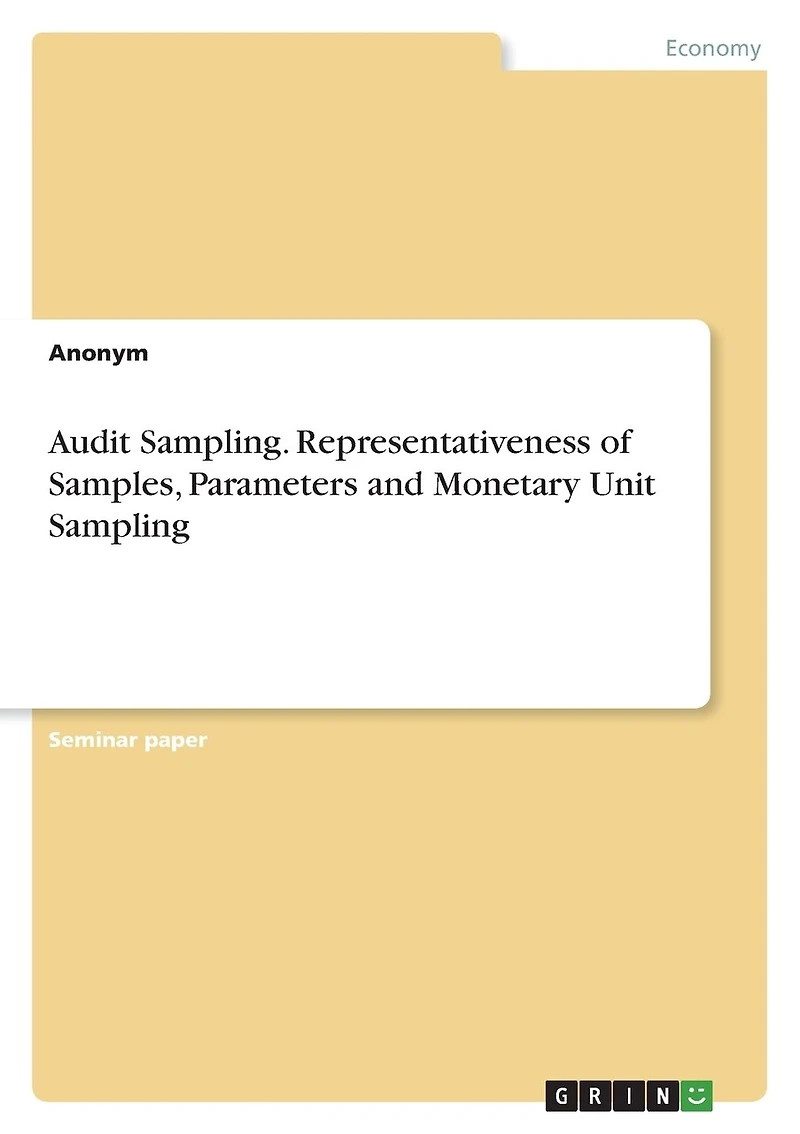
Audit Sampling. Representativeness of Samples, Parameters and Monetary Unit Sampling in Ottawa, ON
Current price: $34.95

Audit Sampling. Representativeness of Samples, Parameters and Monetary Unit Sampling in Ottawa, ON
Current price: $34.95
Loading Inventory...
Size: Paperback
*Product information may vary - to confirm product availability, pricing, shipping and return information please contact Coles
Seminar paper from the year 2016 in the subject Business economics - Revision, Auditing, University of Duisburg-Essen (Auditing, Accounting and Controlling), course: Case Study Seminar on Auditing, language: English, abstract: The rapid growth of American companies at the beginning of the twentieth century resulted in a high demand for audits which are based on selected tests of items that represent the account balances or classes of transaction. Some auditors used to include every transaction from the respective period into the examination. However, some groups of auditors begin to develop methods to apply statistical sampling in auditing processes during the 1950s. This paper is structured as follows: in the main part, audit sampling and relevant terms are discussed. Representativeness of the sample is mentioned, which is significant aspect to make proper conclusions in respect to the population. The different types of generating population and their advantages for sampling. Furthermore, different sampling methods with each other compared, and the advantages and disadvantages of sample selection methods are discussed. In the third part, the main parameters of audit sampling are discussed in detail and their effects on the sample size and overall audit process are mentioned. In the fourth part, MUS system and its benefits and restrictions are clarified. The fifth part summarizes and concludes with the help of the Excel sample.
Seminar paper from the year 2016 in the subject Business economics - Revision, Auditing, University of Duisburg-Essen (Auditing, Accounting and Controlling), course: Case Study Seminar on Auditing, language: English, abstract: The rapid growth of American companies at the beginning of the twentieth century resulted in a high demand for audits which are based on selected tests of items that represent the account balances or classes of transaction. Some auditors used to include every transaction from the respective period into the examination. However, some groups of auditors begin to develop methods to apply statistical sampling in auditing processes during the 1950s. This paper is structured as follows: in the main part, audit sampling and relevant terms are discussed. Representativeness of the sample is mentioned, which is significant aspect to make proper conclusions in respect to the population. The different types of generating population and their advantages for sampling. Furthermore, different sampling methods with each other compared, and the advantages and disadvantages of sample selection methods are discussed. In the third part, the main parameters of audit sampling are discussed in detail and their effects on the sample size and overall audit process are mentioned. In the fourth part, MUS system and its benefits and restrictions are clarified. The fifth part summarizes and concludes with the help of the Excel sample.
You May Also Like













More About Coles at Bayshore Shopping Centre
Coles is renowned for its outstanding customer service and great selection of books. Along with the vast array of magazines, stationary, audio-books, children's literature, fiction, non-fiction and reference books, you can find accessories to make your reading experience more pleasurable. We can recommend the very best in reading today. We will help you search our titles for exactly what you need, and if we do not have it in stock, we will order it for you.
100 Bayshore Dr, Nepean, ON K2B 8C1, Canada
Find Coles at Bayshore Shopping Centre in Ottawa, ON
Visit Coles at Bayshore Shopping Centre in Ottawa, ON