

Give the Gift of Choice!
Too many options? Treat your friends and family to their favourite stores with a Bayshore Shopping Centre gift card, redeemable at participating retailers throughout the centre. Click below to purchase yours today!Purchase HereHome
Ballast Tanks: Hydrodynamic Physics of Submarine Navigation: Valves, Compressed-Air, and the Absolute Buoyancy Control in Deep Ocean Military Operations
Coles
Loading Inventory...
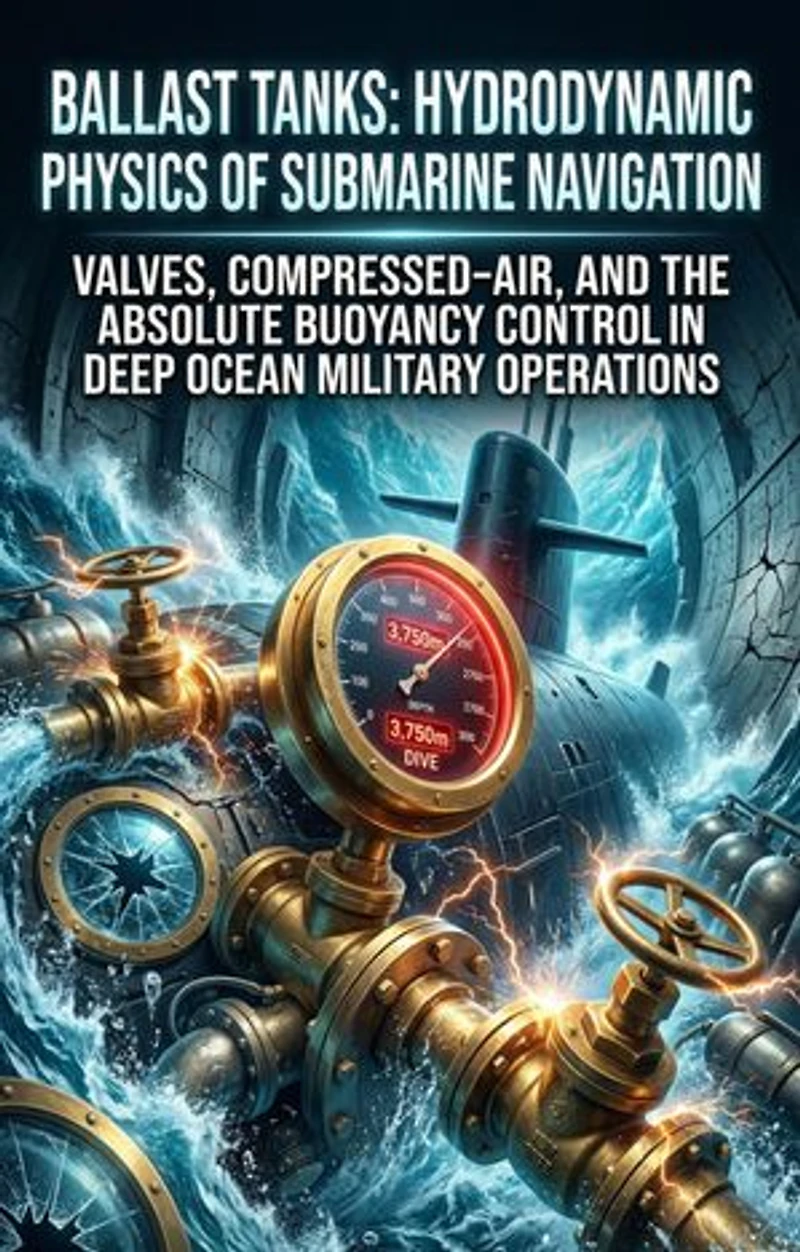
Ballast Tanks: Hydrodynamic Physics of Submarine Navigation: Valves, Compressed-Air, and the Absolute Buoyancy Control in Deep Ocean Military Operations in Ottawa, ON
Current price: $32.99

Ballast Tanks: Hydrodynamic Physics of Submarine Navigation: Valves, Compressed-Air, and the Absolute Buoyancy Control in Deep Ocean Military Operations in Ottawa, ON
Current price: $32.99
Loading Inventory...
Size: Kobo eBook
*Product information may vary - to confirm product availability, pricing, shipping and return information please contact Coles
Navigating a multi-ton cylinder of solid steel through the pitch-black, crushing depths of the ocean is a masterclass in fluid dynamics. A submarine does not simply sink; it must actively and precisely manipulate its own physical density. The invisible architecture that allows these massive military vessels to hover, dive, and surface flawlessly lies in the complex mechanics of the ballast tanks. The physics of Archimedes' principle dictate survival. To submerge, massive hydraulic valves open to allow tons of seawater to flood the outer hull chambers, displacing the trapped air and increasing the vessel's overall density until it achieves negative buoyancy. To surface, extremely high-pressure compressed air is blasted back into the tanks, violently forcing the water out and propelling the steel leviathan upward against the crushing weight of the deep ocean. This book breaks down the severe engineering tolerances of deep-sea navigation. You will explore the precise calculations of neutral buoyancy, the catastrophic dangers of pressure hull failure, and the silent, mechanical grace of modern naval hydrodynamics. Submerge into the mechanics of the deep. Discover how valves, air pressure, and raw fluid physics allow humanity to conquer the most hostile environment on Earth.
Navigating a multi-ton cylinder of solid steel through the pitch-black, crushing depths of the ocean is a masterclass in fluid dynamics. A submarine does not simply sink; it must actively and precisely manipulate its own physical density. The invisible architecture that allows these massive military vessels to hover, dive, and surface flawlessly lies in the complex mechanics of the ballast tanks. The physics of Archimedes' principle dictate survival. To submerge, massive hydraulic valves open to allow tons of seawater to flood the outer hull chambers, displacing the trapped air and increasing the vessel's overall density until it achieves negative buoyancy. To surface, extremely high-pressure compressed air is blasted back into the tanks, violently forcing the water out and propelling the steel leviathan upward against the crushing weight of the deep ocean. This book breaks down the severe engineering tolerances of deep-sea navigation. You will explore the precise calculations of neutral buoyancy, the catastrophic dangers of pressure hull failure, and the silent, mechanical grace of modern naval hydrodynamics. Submerge into the mechanics of the deep. Discover how valves, air pressure, and raw fluid physics allow humanity to conquer the most hostile environment on Earth.
You May Also Like


















More About Coles at Bayshore Shopping Centre
Coles is renowned for its outstanding customer service and great selection of books. Along with the vast array of magazines, stationary, audio-books, children's literature, fiction, non-fiction and reference books, you can find accessories to make your reading experience more pleasurable. We can recommend the very best in reading today. We will help you search our titles for exactly what you need, and if we do not have it in stock, we will order it for you.
100 Bayshore Dr, Nepean, ON K2B 8C1, Canada
Find Coles at Bayshore Shopping Centre in Ottawa, ON
Visit Coles at Bayshore Shopping Centre in Ottawa, ON