

Give the Gift of Choice!
Too many options? Treat your friends and family to their favourite stores with a Bayshore Shopping Centre gift card, redeemable at participating retailers throughout the centre. Click below to purchase yours today!Purchase HereHome
Basic Category Theory
Coles
Loading Inventory...
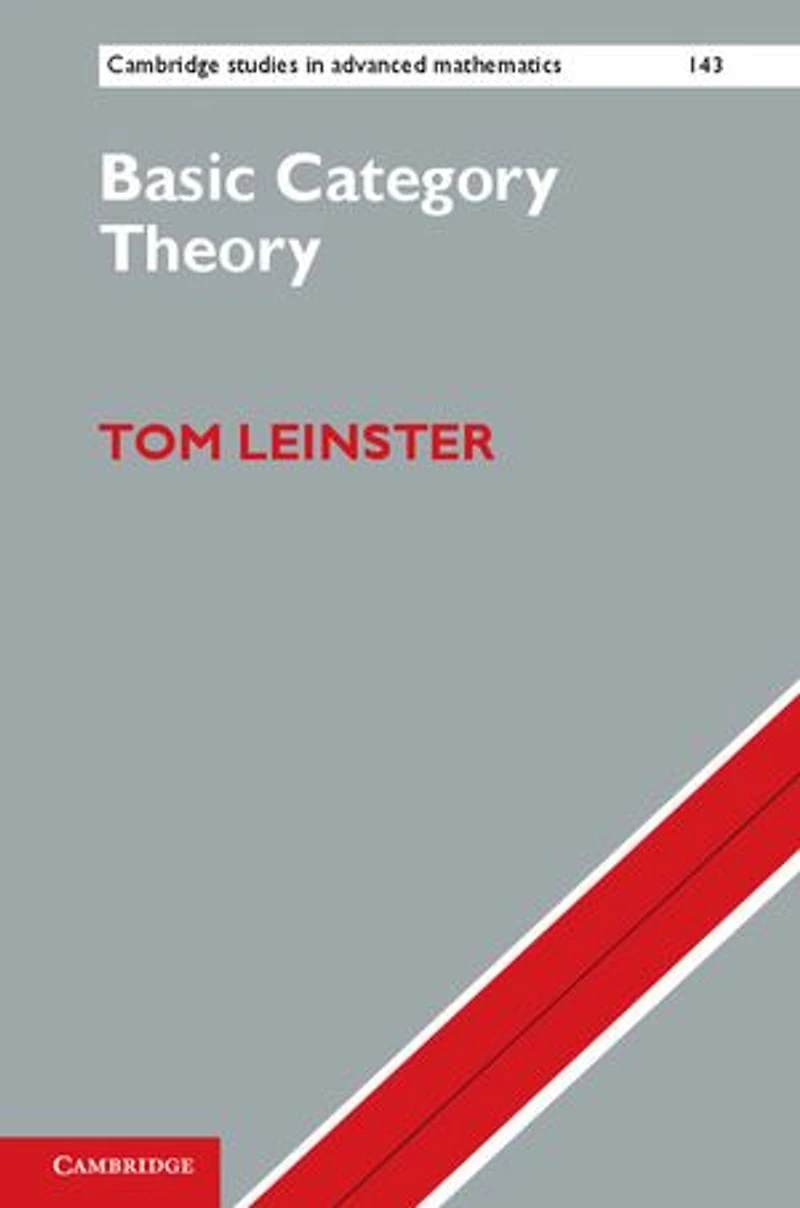
Basic Category Theory in Ottawa, ON
Current price: $71.99
Original price: $89.95

Basic Category Theory in Ottawa, ON
Current price: $71.99
Original price: $89.95
Loading Inventory...
Size: Kobo eBook
*Product information may vary - to confirm product availability, pricing, shipping and return information please contact Coles
At the heart of this short introduction to category theory is the idea of a universal property, important throughout mathematics. After an introductory chapter giving the basic definitions, separate chapters explain three ways of expressing universal properties: via adjoint functors, representable functors, and limits. A final chapter ties all three together. The book is suitable for use in courses or for independent study. Assuming relatively little mathematical background, it is ideal for beginning graduate students or advanced undergraduates learning category theory for the first time. For each new categorical concept, a generous supply of examples is provided, taken from different parts of mathematics. At points where the leap in abstraction is particularly great (such as the Yoneda lemma), the reader will find careful and extensive explanations. Copious exercises are included.
At the heart of this short introduction to category theory is the idea of a universal property, important throughout mathematics. After an introductory chapter giving the basic definitions, separate chapters explain three ways of expressing universal properties: via adjoint functors, representable functors, and limits. A final chapter ties all three together. The book is suitable for use in courses or for independent study. Assuming relatively little mathematical background, it is ideal for beginning graduate students or advanced undergraduates learning category theory for the first time. For each new categorical concept, a generous supply of examples is provided, taken from different parts of mathematics. At points where the leap in abstraction is particularly great (such as the Yoneda lemma), the reader will find careful and extensive explanations. Copious exercises are included.
You May Also Like









More About Coles at Bayshore Shopping Centre
Coles is renowned for its outstanding customer service and great selection of books. Along with the vast array of magazines, stationary, audio-books, children's literature, fiction, non-fiction and reference books, you can find accessories to make your reading experience more pleasurable. We can recommend the very best in reading today. We will help you search our titles for exactly what you need, and if we do not have it in stock, we will order it for you.
100 Bayshore Dr, Nepean, ON K2B 8C1, Canada
Find Coles at Bayshore Shopping Centre in Ottawa, ON
Visit Coles at Bayshore Shopping Centre in Ottawa, ON