

Give the Gift of Choice!
Too many options? Treat your friends and family to their favourite stores with a Bayshore Shopping Centre gift card, redeemable at participating retailers throughout the centre. Click below to purchase yours today!Purchase HereHome
Bat 21: A Case Study
Coles
Loading Inventory...
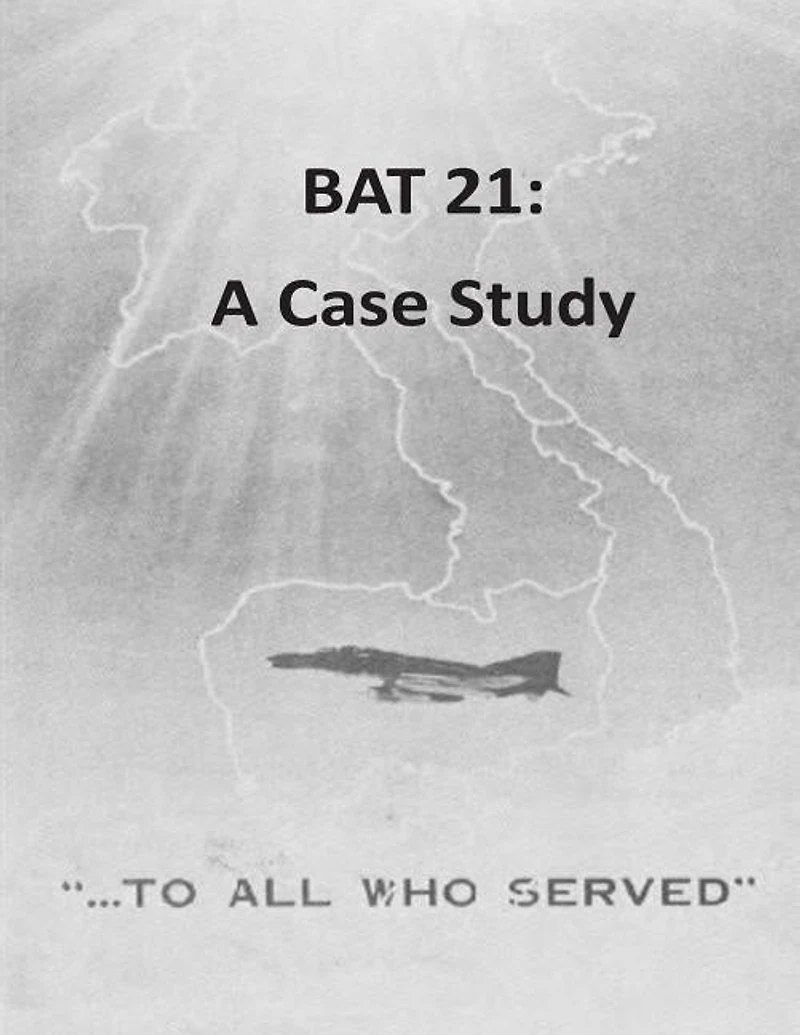
Bat 21: A Case Study in Ottawa, ON
Current price: $19.50

Bat 21: A Case Study in Ottawa, ON
Current price: $19.50
Loading Inventory...
Size: Paperback
*Product information may vary - to confirm product availability, pricing, shipping and return information please contact Coles
On Easter Sunday, 2 April 1972, Lt Col Iceal "Gene" Hambleton was shot down just South of the demilitarized zone in Vietnam. Six days of massive effort to extract him with conventional air rescue forces failed. For five more days, he evaded the enemy on a course relayed to him in the disguise of golf course holes. His saga ended with a daring special forces rescue, but also with an enormous cost in men and material. These events, their cost, and the lessons learned from them are all detailed in this case study. The case study is built on official documents and publications, plus an oral history interview with Colonel Hambleton. The lessons learned range from individual preparation, to the requirement tor better aircraft capabilities, and the need for better decision making processes for the combat search and rescue mission. A review of current rescue concepts is undertaken and compared to the historical context of Hambleton's incident. Observations are made that mission and capability may be mismatched at present, and that conventional search and rescue task force operations may be prohibited by future battlefield environments. A review of both the book and file made about Colonel Hambleton's story is appended, as is a transcript of the above mentioned interview.
On Easter Sunday, 2 April 1972, Lt Col Iceal "Gene" Hambleton was shot down just South of the demilitarized zone in Vietnam. Six days of massive effort to extract him with conventional air rescue forces failed. For five more days, he evaded the enemy on a course relayed to him in the disguise of golf course holes. His saga ended with a daring special forces rescue, but also with an enormous cost in men and material. These events, their cost, and the lessons learned from them are all detailed in this case study. The case study is built on official documents and publications, plus an oral history interview with Colonel Hambleton. The lessons learned range from individual preparation, to the requirement tor better aircraft capabilities, and the need for better decision making processes for the combat search and rescue mission. A review of current rescue concepts is undertaken and compared to the historical context of Hambleton's incident. Observations are made that mission and capability may be mismatched at present, and that conventional search and rescue task force operations may be prohibited by future battlefield environments. A review of both the book and file made about Colonel Hambleton's story is appended, as is a transcript of the above mentioned interview.









More About Coles at Bayshore Shopping Centre
Coles is renowned for its outstanding customer service and great selection of books. Along with the vast array of magazines, stationary, audio-books, children's literature, fiction, non-fiction and reference books, you can find accessories to make your reading experience more pleasurable. We can recommend the very best in reading today. We will help you search our titles for exactly what you need, and if we do not have it in stock, we will order it for you.
100 Bayshore Dr, Nepean, ON K2B 8C1, Canada
Find Coles at Bayshore Shopping Centre in Ottawa, ON
Visit Coles at Bayshore Shopping Centre in Ottawa, ON