

Give the Gift of Choice!
Too many options? Treat your friends and family to their favourite stores with a Bayshore Shopping Centre gift card, redeemable at participating retailers throughout the centre. Click below to purchase yours today!Purchase HereHome
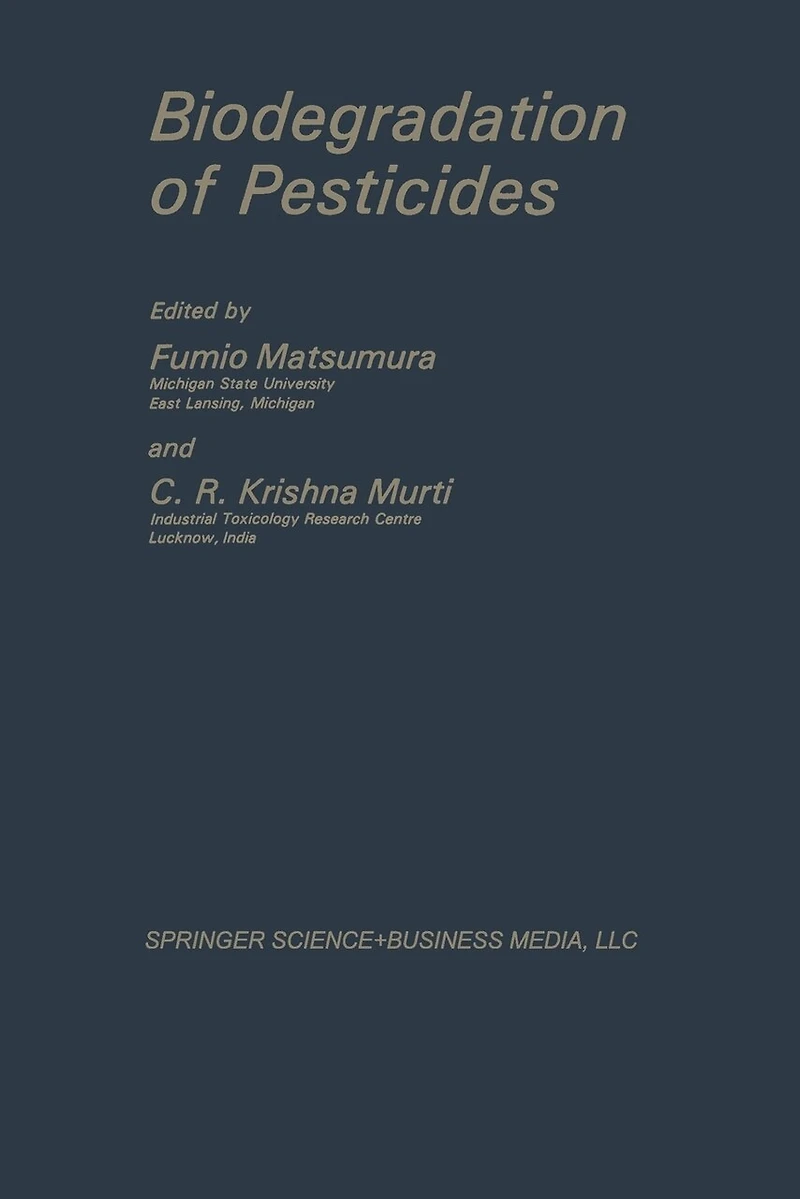
Biodegradation of Pesticides
Coles
Loading Inventory...

Biodegradation of Pesticides in Ottawa, ON
Current price: $64.49
Original price: $80.62

Biodegradation of Pesticides in Ottawa, ON
Current price: $64.49
Original price: $80.62
Loading Inventory...
Size: Kobo eBook
*Product information may vary - to confirm product availability, pricing, shipping and return information please contact Coles
When first developed, chlorinated pesticides such as DDT, dieldrin, and mirex were received with open arms, quickly becoming popular as effective, economic agents against pests. But evidence began to mount that residues of these chemicals remained in the environment, not breaking down, often appearing in plants and animals. By the late seventies many pesticides had achieved a terrible notoriety and were subsequently banned in a number of countries. Of tremendous concern, then, is the persistence of pesticides in the environment. The major thrust of research and development in the area of pesticides has properly been the creation of substances that are both effective and degradable. Yet in order to successfully promote the use of biodegradable pesticides, one must fully understand the mechanism of degradation, and it is to this vital subject that we address ourselves in the present volume. According to the Biodegradation Task Force, Safety of Chemicals Com mittee, Brussels (1978), biodegradation may be defined as the molecular degradation of an organic substance resulting from the complex action of living organisms. A substance is said to be biodegraded to an environmentally acceptable extent when environmentally undesirable properties are lost. Loss of some characteristic function or property of substance by biodegradation may be referred to as biological transformation.
When first developed, chlorinated pesticides such as DDT, dieldrin, and mirex were received with open arms, quickly becoming popular as effective, economic agents against pests. But evidence began to mount that residues of these chemicals remained in the environment, not breaking down, often appearing in plants and animals. By the late seventies many pesticides had achieved a terrible notoriety and were subsequently banned in a number of countries. Of tremendous concern, then, is the persistence of pesticides in the environment. The major thrust of research and development in the area of pesticides has properly been the creation of substances that are both effective and degradable. Yet in order to successfully promote the use of biodegradable pesticides, one must fully understand the mechanism of degradation, and it is to this vital subject that we address ourselves in the present volume. According to the Biodegradation Task Force, Safety of Chemicals Com mittee, Brussels (1978), biodegradation may be defined as the molecular degradation of an organic substance resulting from the complex action of living organisms. A substance is said to be biodegraded to an environmentally acceptable extent when environmentally undesirable properties are lost. Loss of some characteristic function or property of substance by biodegradation may be referred to as biological transformation.
You May Also Like














More About Coles at Bayshore Shopping Centre
Coles is renowned for its outstanding customer service and great selection of books. Along with the vast array of magazines, stationary, audio-books, children's literature, fiction, non-fiction and reference books, you can find accessories to make your reading experience more pleasurable. We can recommend the very best in reading today. We will help you search our titles for exactly what you need, and if we do not have it in stock, we will order it for you.
100 Bayshore Dr, Nepean, ON K2B 8C1, Canada
Find Coles at Bayshore Shopping Centre in Ottawa, ON
Visit Coles at Bayshore Shopping Centre in Ottawa, ON