

Give the Gift of Choice!
Too many options? Treat your friends and family to their favourite stores with a Bayshore Shopping Centre gift card, redeemable at participating retailers throughout the centre. Click below to purchase yours today!Purchase HereHome
BioMedical Visualization: Past Work, Current Trends, and Open Challenges
Coles
Loading Inventory...
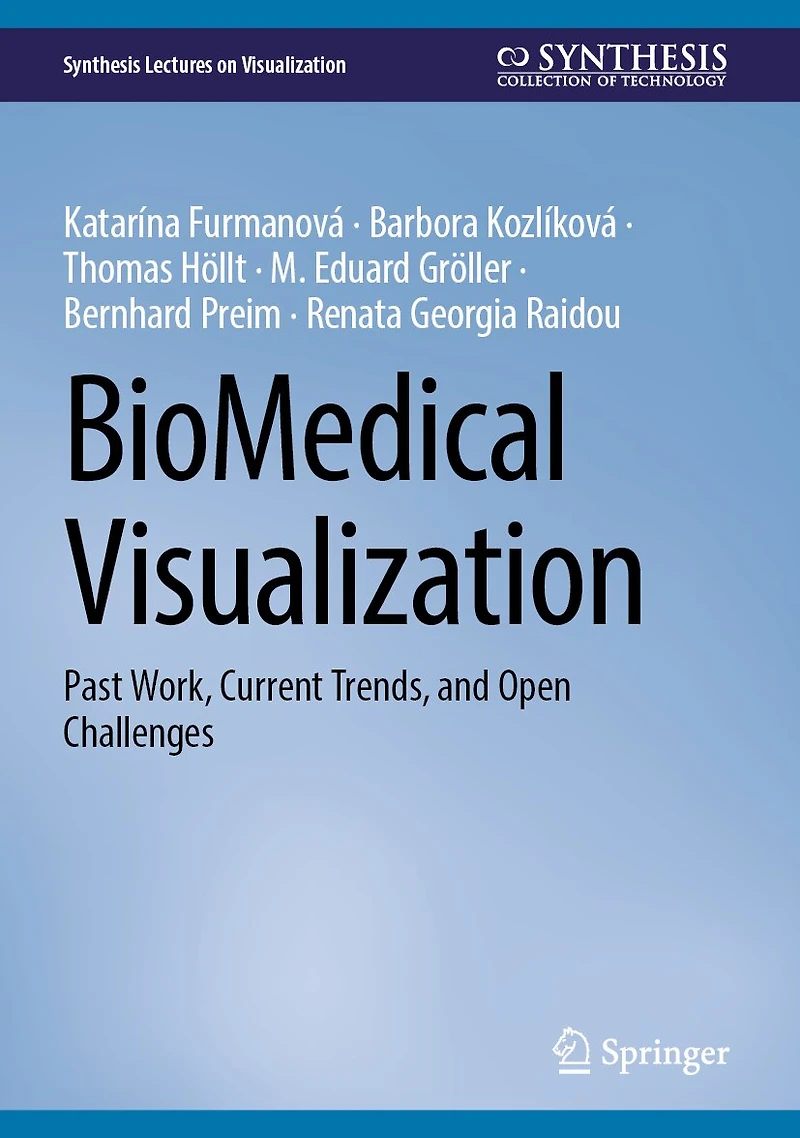
BioMedical Visualization: Past Work, Current Trends, and Open Challenges in Ottawa, ON
Current price: $65.95

BioMedical Visualization: Past Work, Current Trends, and Open Challenges in Ottawa, ON
Current price: $65.95
Loading Inventory...
Size: Hardcover
*Product information may vary - to confirm product availability, pricing, shipping and return information please contact Coles
This book provides an overview of the many visualization strategies that have been proposed in recent decades for solving problems within the disciplines of medicine and biology. It also evaluates which visualization techniques applied to various areas of biomedicine have been the most impactful and which challenges can be considered solved using visualization. The topics covered in this book include visualization research in omics, interaction networks and pathways, biological structures, tumor diagnosis and treatment, vasculature, brain, surgery, educational contexts, therapy and rehabilitation, electronic health records, and public health. One chapter is dedicated to general visualization techniques commonly used for biomedical data, such as surface and volume rendering, as well as abstract and illustrative approaches. For each of these areas, the past and present research trends are discussed, highlighting the influential works. Furthermore, the book explains how research is affected by developments in technology, data availability, and domain practice. Individual sections also summarize the typical target users, the nature of the data, and the typical tasks addressed in the given domain. With a uniquely broad scope, the book identifies research trends in biomedical visualization using a manually curated and searchable repository of more than 3,800 publications. The resultant trends are further categorized according to the application field and using natural language processing. The book also utilizes 16 interviews conducted with researchers in the field of biomedical visualization for the purpose of soliciting their opinions regarding the evolution and trends in the domain. The book handles these topics in a concise manner to help readers orient themselves in the already mature and diverse field of biomedical visualization without overwhelming them with technical details. As such, the book can help young researchers to become familiar with past challenges and identify future ones. For more senior researchers, it can serve as an insightful overview of the research field and the direction in which it is heading.
This book provides an overview of the many visualization strategies that have been proposed in recent decades for solving problems within the disciplines of medicine and biology. It also evaluates which visualization techniques applied to various areas of biomedicine have been the most impactful and which challenges can be considered solved using visualization. The topics covered in this book include visualization research in omics, interaction networks and pathways, biological structures, tumor diagnosis and treatment, vasculature, brain, surgery, educational contexts, therapy and rehabilitation, electronic health records, and public health. One chapter is dedicated to general visualization techniques commonly used for biomedical data, such as surface and volume rendering, as well as abstract and illustrative approaches. For each of these areas, the past and present research trends are discussed, highlighting the influential works. Furthermore, the book explains how research is affected by developments in technology, data availability, and domain practice. Individual sections also summarize the typical target users, the nature of the data, and the typical tasks addressed in the given domain. With a uniquely broad scope, the book identifies research trends in biomedical visualization using a manually curated and searchable repository of more than 3,800 publications. The resultant trends are further categorized according to the application field and using natural language processing. The book also utilizes 16 interviews conducted with researchers in the field of biomedical visualization for the purpose of soliciting their opinions regarding the evolution and trends in the domain. The book handles these topics in a concise manner to help readers orient themselves in the already mature and diverse field of biomedical visualization without overwhelming them with technical details. As such, the book can help young researchers to become familiar with past challenges and identify future ones. For more senior researchers, it can serve as an insightful overview of the research field and the direction in which it is heading.
You May Also Like













More About Coles at Bayshore Shopping Centre
Coles is renowned for its outstanding customer service and great selection of books. Along with the vast array of magazines, stationary, audio-books, children's literature, fiction, non-fiction and reference books, you can find accessories to make your reading experience more pleasurable. We can recommend the very best in reading today. We will help you search our titles for exactly what you need, and if we do not have it in stock, we will order it for you.
100 Bayshore Dr, Nepean, ON K2B 8C1, Canada
Find Coles at Bayshore Shopping Centre in Ottawa, ON
Visit Coles at Bayshore Shopping Centre in Ottawa, ON