

Give the Gift of Choice!
Too many options? Treat your friends and family to their favourite stores with a Bayshore Shopping Centre gift card, redeemable at participating retailers throughout the centre. Click below to purchase yours today!Purchase HereHome
Black Configurations: The Ethos of “Tradition” from Sterling Brown to Toni Morrison, Volume I
Coles
Loading Inventory...
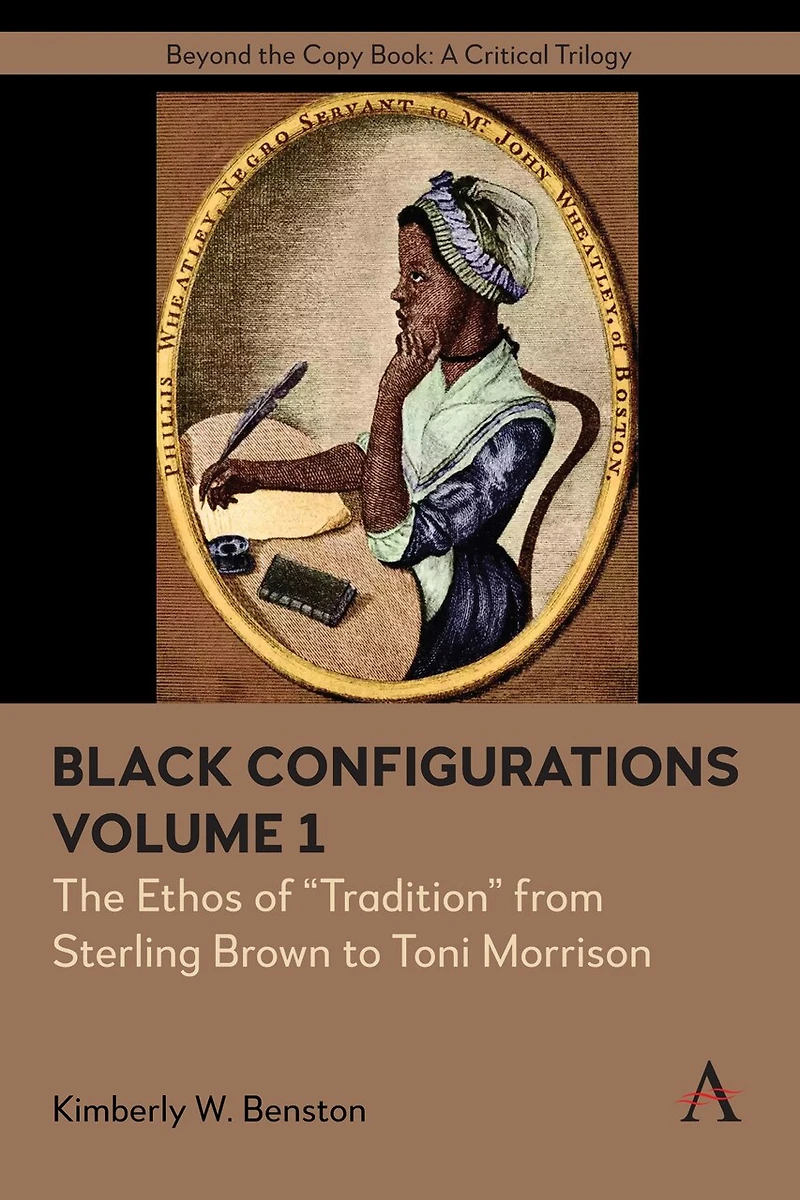
Black Configurations: The Ethos of “Tradition” from Sterling Brown to Toni Morrison, Volume I in Ottawa, ON
Current price: $142.89

Black Configurations: The Ethos of “Tradition” from Sterling Brown to Toni Morrison, Volume I in Ottawa, ON
Current price: $142.89
Loading Inventory...
Size: Hardcover
*Product information may vary - to confirm product availability, pricing, shipping and return information please contact Coles
Black Configurations is the first volume of a three-volume study that offers a fresh reading of African-American literary history by locating within the literature itself the terms for a revisionary account of black writing, terms pursued along three distinct but interlocking pathways (each to be pursued in the Impact Series format): by charting figurations of tradition among six of the most innovative practitioners of black literary expression from Sterling Brown to Toni Morrison (Volume 1); by following the haunting pathways of spectral dialogues between slavery and African-American modernism (Volume 2); and by interrogating interlocking topoi of critique and assertion (naming; facing; voicing) across the history of African-American literary expression (Volume 3). The critical trilogy presents thereby a narrative of African-American literature as a continual, dialectical process, blending confrontation with traumatic origins and the quest for expressive transformation.
This project arises from the question: how does one construe and narrate the story of a tradition for which the conventional structure of literary history—that is, the relation between discourse and its referents—is itself such a politically and thematically charged issue? On one hand, the ideological exclusion of the African-American subject from authorized spheres of meaning and signification gives value to narrating black literary tradition as the progressive emergence of a fully articulate presence, and seems to find warrant in black writing’s persistent thematization of literacy, public performance, and self-definition. On the other hand, such a narrative of fully realized agency and consciousness risks replicating the dominant ideology’s own reductive vision of identity as a predetermined totality, thus imagining some singular and final form for African-American being. The study asserts instead that African-American literature is fueled by the simultaneous workings of a desire for a totally realized subject and the constant displacement of that desire by a willingness—in contrast to the oppressive system that would deny its agency—to put its own mode of being into question.
Black Configurations is the first volume of a three-volume study that offers a fresh reading of African-American literary history by locating within the literature itself the terms for a revisionary account of black writing, terms pursued along three distinct but interlocking pathways (each to be pursued in the Impact Series format): by charting figurations of tradition among six of the most innovative practitioners of black literary expression from Sterling Brown to Toni Morrison (Volume 1); by following the haunting pathways of spectral dialogues between slavery and African-American modernism (Volume 2); and by interrogating interlocking topoi of critique and assertion (naming; facing; voicing) across the history of African-American literary expression (Volume 3). The critical trilogy presents thereby a narrative of African-American literature as a continual, dialectical process, blending confrontation with traumatic origins and the quest for expressive transformation.
This project arises from the question: how does one construe and narrate the story of a tradition for which the conventional structure of literary history—that is, the relation between discourse and its referents—is itself such a politically and thematically charged issue? On one hand, the ideological exclusion of the African-American subject from authorized spheres of meaning and signification gives value to narrating black literary tradition as the progressive emergence of a fully articulate presence, and seems to find warrant in black writing’s persistent thematization of literacy, public performance, and self-definition. On the other hand, such a narrative of fully realized agency and consciousness risks replicating the dominant ideology’s own reductive vision of identity as a predetermined totality, thus imagining some singular and final form for African-American being. The study asserts instead that African-American literature is fueled by the simultaneous workings of a desire for a totally realized subject and the constant displacement of that desire by a willingness—in contrast to the oppressive system that would deny its agency—to put its own mode of being into question.
You May Also Like









More About Coles at Bayshore Shopping Centre
Coles is renowned for its outstanding customer service and great selection of books. Along with the vast array of magazines, stationary, audio-books, children's literature, fiction, non-fiction and reference books, you can find accessories to make your reading experience more pleasurable. We can recommend the very best in reading today. We will help you search our titles for exactly what you need, and if we do not have it in stock, we will order it for you.
100 Bayshore Dr, Nepean, ON K2B 8C1, Canada
Find Coles at Bayshore Shopping Centre in Ottawa, ON
Visit Coles at Bayshore Shopping Centre in Ottawa, ON