

Give the Gift of Choice!
Too many options? Treat your friends and family to their favourite stores with a Bayshore Shopping Centre gift card, redeemable at participating retailers throughout the centre. Click below to purchase yours today!Purchase HereHome
Bouguer Gravity Regional and Residual Separation: Application to Geology and Environment
Coles
Loading Inventory...
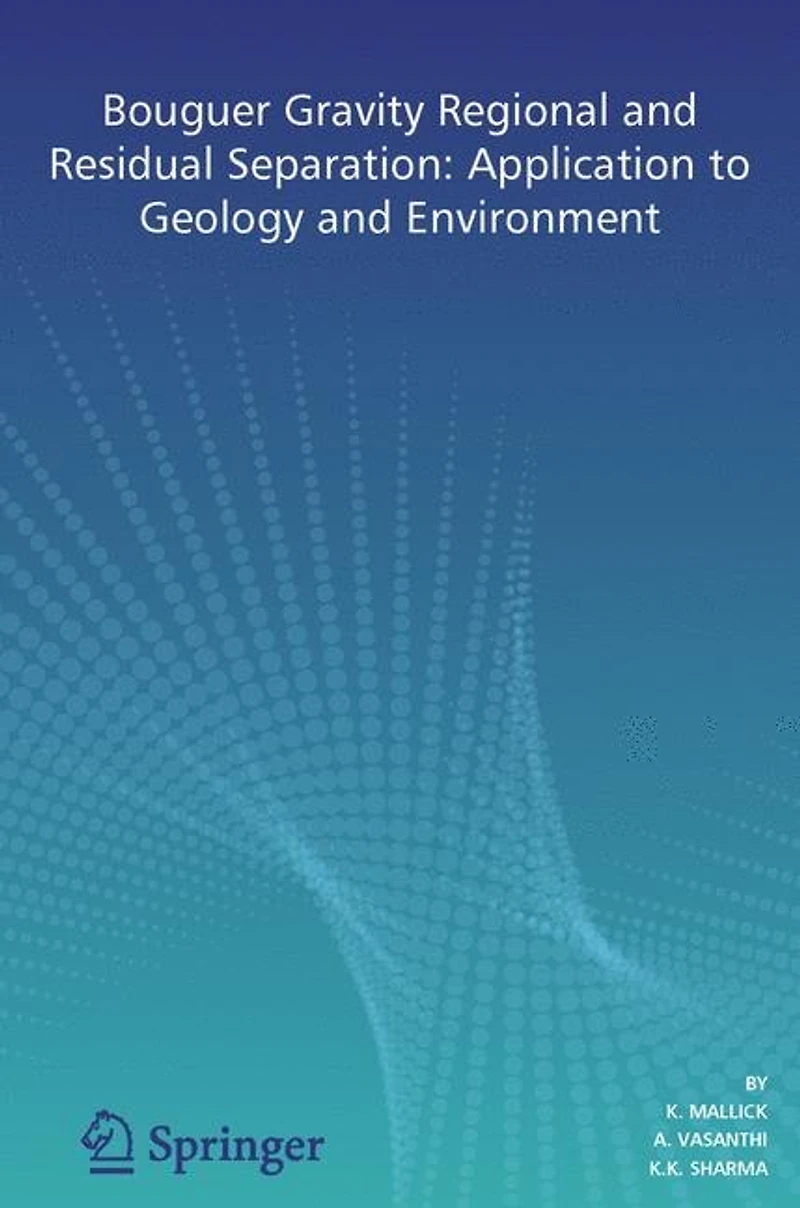
Bouguer Gravity Regional and Residual Separation: Application to Geology and Environment in Ottawa, ON
Current price: $160.95

Bouguer Gravity Regional and Residual Separation: Application to Geology and Environment in Ottawa, ON
Current price: $160.95
Loading Inventory...
Size: Hardcover
*Product information may vary - to confirm product availability, pricing, shipping and return information please contact Coles
The process of regional-residual separation in potential field is age-old. Broadly, there are two techniques for regional-residual resolution, viz., graphical and analytical. Both the techniques have their own respective shortcomings. In this book, the authors have described the technique based on finite element method in which only eight (or twelve) nodal observed gravity values are used for the regional computation, thereby eliminating the possible contamination of anomalous fields and also the technique does not assume an explicit model and physical properties like density of rocks etc. in the regional computation. The book discusses the advantages of this technique viz., it is not site-specific; the computation is independent of any prior assumptions as to the form and depth of shallow or deeper structures; it can handle data distributed at random or on a regular grid on the map space; and the neighbouring surveys join smoothly. The book focuses on application of this new technique which has been demonstrated in different fields, such as hydrocarbon, minerals and groundwater, structural studies, earthquake and engineering studies and impact structures.
The process of regional-residual separation in potential field is age-old. Broadly, there are two techniques for regional-residual resolution, viz., graphical and analytical. Both the techniques have their own respective shortcomings. In this book, the authors have described the technique based on finite element method in which only eight (or twelve) nodal observed gravity values are used for the regional computation, thereby eliminating the possible contamination of anomalous fields and also the technique does not assume an explicit model and physical properties like density of rocks etc. in the regional computation. The book discusses the advantages of this technique viz., it is not site-specific; the computation is independent of any prior assumptions as to the form and depth of shallow or deeper structures; it can handle data distributed at random or on a regular grid on the map space; and the neighbouring surveys join smoothly. The book focuses on application of this new technique which has been demonstrated in different fields, such as hydrocarbon, minerals and groundwater, structural studies, earthquake and engineering studies and impact structures.
You May Also Like







More About Coles at Bayshore Shopping Centre
Coles is renowned for its outstanding customer service and great selection of books. Along with the vast array of magazines, stationary, audio-books, children's literature, fiction, non-fiction and reference books, you can find accessories to make your reading experience more pleasurable. We can recommend the very best in reading today. We will help you search our titles for exactly what you need, and if we do not have it in stock, we will order it for you.
100 Bayshore Dr, Nepean, ON K2B 8C1, Canada
Find Coles at Bayshore Shopping Centre in Ottawa, ON
Visit Coles at Bayshore Shopping Centre in Ottawa, ON