

Give the Gift of Choice!
Too many options? Treat your friends and family to their favourite stores with a Bayshore Shopping Centre gift card, redeemable at participating retailers throughout the centre. Click below to purchase yours today!Purchase HereHome
Bounded Meaning: The Dynamics of Interpretation
Coles
Loading Inventory...
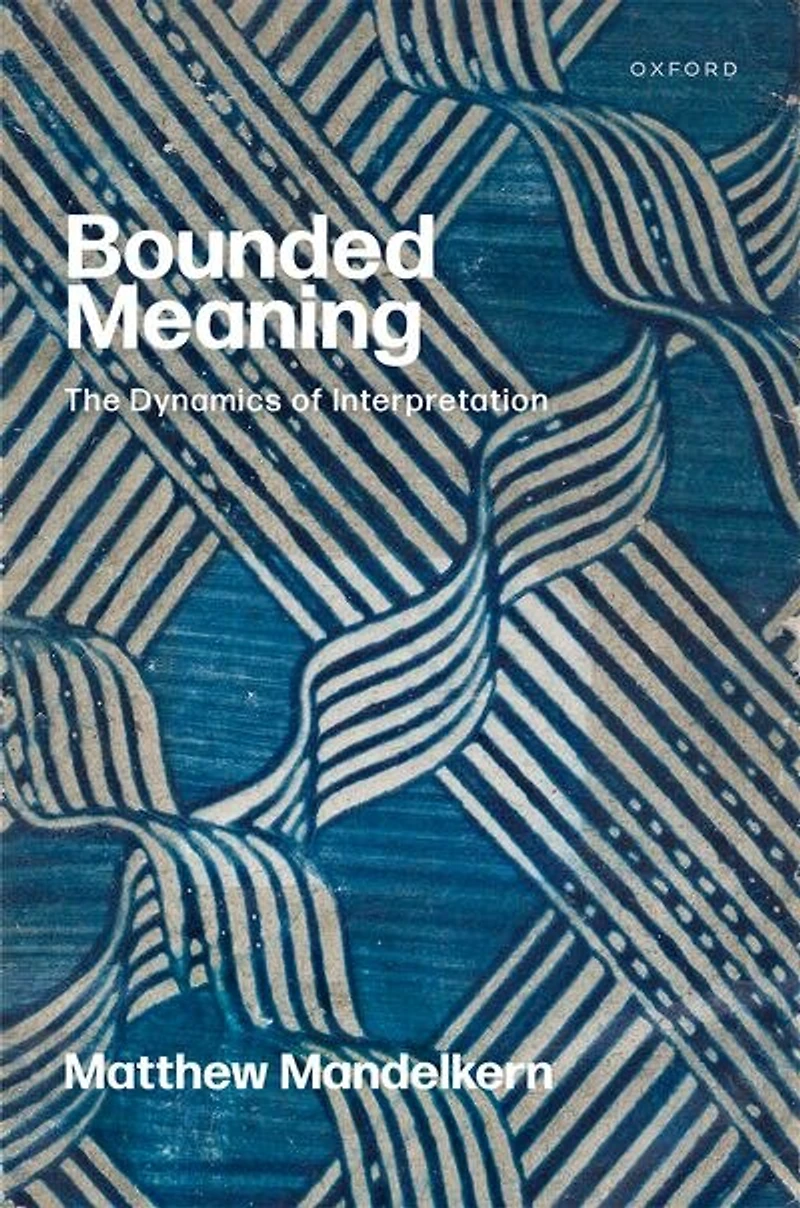

Bounded Meaning: The Dynamics of Interpretation in Ottawa, ON
Current price: $225.00

Bounded Meaning: The Dynamics of Interpretation in Ottawa, ON
Current price: $225.00
Loading Inventory...
Size: Hardcover
*Product information may vary - to confirm product availability, pricing, shipping and return information please contact Coles
Bounded Meaning investigates the dynamics of interpretation: how and why the interpretation of the building blocks of human language is sensitive, not just to the context in which the expression is used, but also to the expression's linguistic environment—in other words, how and why interpretation depends not just on global information, but also on local information. Matthew Mandelkern motivates a range of generalizations about the dynamics of interpretation, some known and some novel, involving modals, conditionals, and anaphora, and an overview of the best extant theory of those patterns, dynamic semantics, is provided. After bringing out the striking motivations and successes of that framework, the discussion turns to criticisms of dynamic semantics, focusing on its puzzling predictions about the logic of natural language. In response to these problems, Mandelkern develops a novel framework for explaining dynamic phenomena without dynamic semantics: the bounded theory of meaning. On the bounded theory, dynamic phenomena arise from the interaction of two dimensions of meaning. One dimension is a standard truth-conditional layer, which, relative to a context of use, associates each sentence with a proposition. The second dimension, the dimension of bounds, limits the admissible interpretations of an expression, relative to the expression's context of use and its local information. Bounds thus play an essential role in coordinating on the resolution of context-sensitive language, explaining dynamic effects in natural language while avoiding a variety of problematic predictions of dynamic semantics.
Bounded Meaning investigates the dynamics of interpretation: how and why the interpretation of the building blocks of human language is sensitive, not just to the context in which the expression is used, but also to the expression's linguistic environment—in other words, how and why interpretation depends not just on global information, but also on local information. Matthew Mandelkern motivates a range of generalizations about the dynamics of interpretation, some known and some novel, involving modals, conditionals, and anaphora, and an overview of the best extant theory of those patterns, dynamic semantics, is provided. After bringing out the striking motivations and successes of that framework, the discussion turns to criticisms of dynamic semantics, focusing on its puzzling predictions about the logic of natural language. In response to these problems, Mandelkern develops a novel framework for explaining dynamic phenomena without dynamic semantics: the bounded theory of meaning. On the bounded theory, dynamic phenomena arise from the interaction of two dimensions of meaning. One dimension is a standard truth-conditional layer, which, relative to a context of use, associates each sentence with a proposition. The second dimension, the dimension of bounds, limits the admissible interpretations of an expression, relative to the expression's context of use and its local information. Bounds thus play an essential role in coordinating on the resolution of context-sensitive language, explaining dynamic effects in natural language while avoiding a variety of problematic predictions of dynamic semantics.
You May Also Like










More About Coles at Bayshore Shopping Centre
Coles is renowned for its outstanding customer service and great selection of books. Along with the vast array of magazines, stationary, audio-books, children's literature, fiction, non-fiction and reference books, you can find accessories to make your reading experience more pleasurable. We can recommend the very best in reading today. We will help you search our titles for exactly what you need, and if we do not have it in stock, we will order it for you.
100 Bayshore Dr, Nepean, ON K2B 8C1, Canada
Find Coles at Bayshore Shopping Centre in Ottawa, ON
Visit Coles at Bayshore Shopping Centre in Ottawa, ON