

Give the Gift of Choice!
Too many options? Treat your friends and family to their favourite stores with a Bayshore Shopping Centre gift card, redeemable at participating retailers throughout the centre. Click below to purchase yours today!Purchase HereHome
Brain and Mathematical Cognition: Evidence from China
Coles
Loading Inventory...
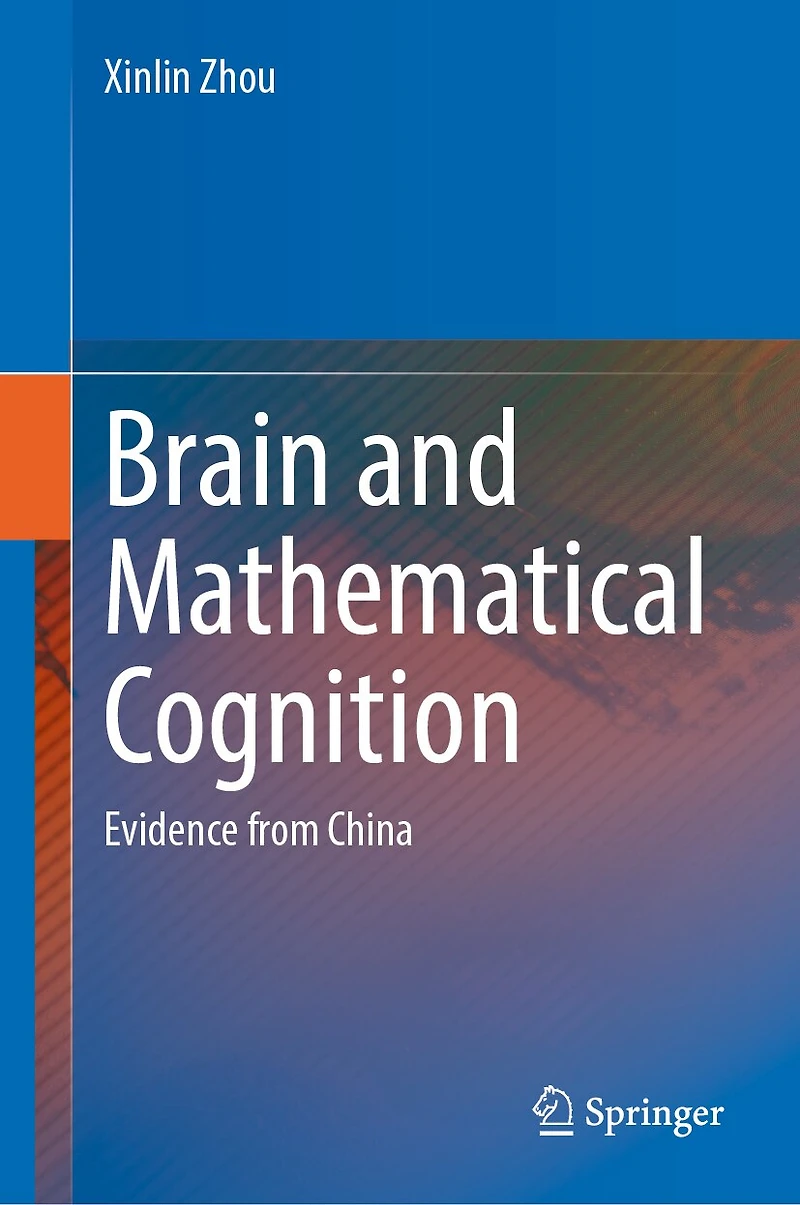
Brain and Mathematical Cognition: Evidence from China in Ottawa, ON
Current price: $248.50

Brain and Mathematical Cognition: Evidence from China in Ottawa, ON
Current price: $248.50
Loading Inventory...
Size: Hardcover
*Product information may vary - to confirm product availability, pricing, shipping and return information please contact Coles
This book intends to present a series of insights coming from in-depth investigation of brain and mathematical cognition in Chinese population. Specifically, the book introduces research on the associations among number sense, visual form perception and mathematical fluency; symbolic and non-symbolic mental number line; and the role of spatial modeling and logical inference in mathematical problem solving. The book summarizes author's previous studies on the involvement of semantic network other than visuospatial network in mathematical cognition. The three-component mathematical model that comes out of more than 10 years of research on mathematical cognition is introduced. The book presents the effect of learning experience on arithmetic-related brain system. Chinese abacus that can be used to eradicate developmental dyscalculia in classroom is briefly discussed. Special attention in this book is paid to mathematical anxiety and mathematical learning disorders in Chinese schoolchildren. Finally, gender differences in mathematical cognition are also reviewed.
This book intends to present a series of insights coming from in-depth investigation of brain and mathematical cognition in Chinese population. Specifically, the book introduces research on the associations among number sense, visual form perception and mathematical fluency; symbolic and non-symbolic mental number line; and the role of spatial modeling and logical inference in mathematical problem solving. The book summarizes author's previous studies on the involvement of semantic network other than visuospatial network in mathematical cognition. The three-component mathematical model that comes out of more than 10 years of research on mathematical cognition is introduced. The book presents the effect of learning experience on arithmetic-related brain system. Chinese abacus that can be used to eradicate developmental dyscalculia in classroom is briefly discussed. Special attention in this book is paid to mathematical anxiety and mathematical learning disorders in Chinese schoolchildren. Finally, gender differences in mathematical cognition are also reviewed.
You May Also Like
















More About Coles at Bayshore Shopping Centre
Coles is renowned for its outstanding customer service and great selection of books. Along with the vast array of magazines, stationary, audio-books, children's literature, fiction, non-fiction and reference books, you can find accessories to make your reading experience more pleasurable. We can recommend the very best in reading today. We will help you search our titles for exactly what you need, and if we do not have it in stock, we will order it for you.
100 Bayshore Dr, Nepean, ON K2B 8C1, Canada
Find Coles at Bayshore Shopping Centre in Ottawa, ON
Visit Coles at Bayshore Shopping Centre in Ottawa, ON