

Give the Gift of Choice!
Too many options? Treat your friends and family to their favourite stores with a Bayshore Shopping Centre gift card, redeemable at participating retailers throughout the centre. Click below to purchase yours today!Purchase HereHome
Broken Heart / Broken Wholeness: The Post-Holocaust Plea for Jewish Reconstruction of the Soviet Yiddish Writer Der Nister
Coles
Loading Inventory...
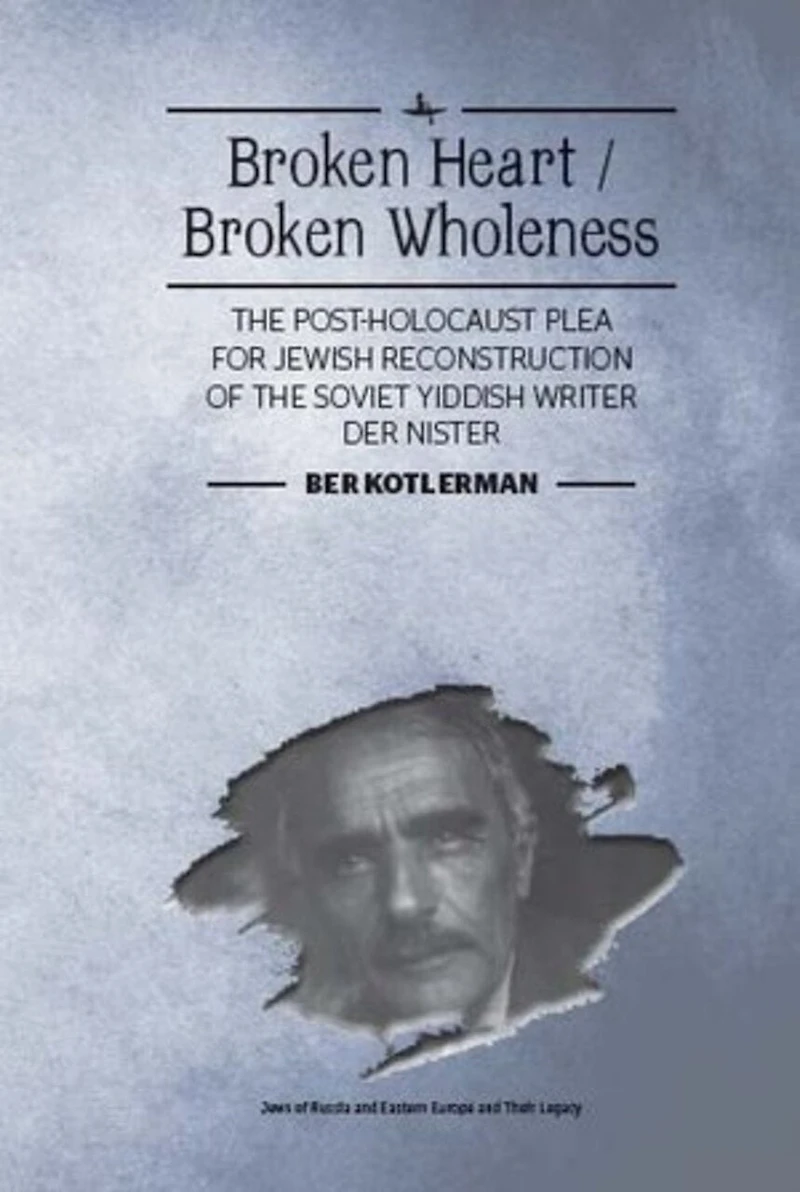
Broken Heart / Broken Wholeness: The Post-Holocaust Plea for Jewish Reconstruction of the Soviet Yiddish Writer Der Nister in Ottawa, ON
Current price: $141.99

Broken Heart / Broken Wholeness: The Post-Holocaust Plea for Jewish Reconstruction of the Soviet Yiddish Writer Der Nister in Ottawa, ON
Current price: $141.99
Loading Inventory...
Size: Hardcover
*Product information may vary - to confirm product availability, pricing, shipping and return information please contact Coles
In the summer of 1947, three years before his death in a labor camp hospital, one of the most significant Soviet Yiddish writers Der Nister (Pinkhas Kahanovitsh, 1884–1950) made a trip from Moscow to Birobidzhan, the Jewish Autonomous Region in the Russian Far East. He traveled there on a special migrant train, together with a thousand Holocaust survivors. The present study examines this journey as an original protest against the conformism of the majority of Soviet Jewish activists. In his travel notes, Der Nister described the train as the “modern Noah’s ark,” heading “to put an end to the historical silliness.” This rhetoric paraphrasing Nietzsche’s “historical sickness,” challenged the Jewish history in the Diaspora, which “broke” the people's mythical “wholeness.” Der Nister formulated his vision of a post-Holocaust Jewish reconstruction more clearly in his previously unknown notes (“Birobidzhan Manifesto”), the last that have reached us from Der Nister’s creative legacy, which are being discussed for the first time in this book. Without their own territory, he wrote, the Jews were like “a soul without a body or a body without a soul, and in either case, always a cripple.” Records of the fabricated investigation case against the “anti-Soviet nationalist grouping in Birobidzhan” reveal details about Der Nister’s thoughts and real acts. Both the records and the manifesto are being published here for the first time.
In the summer of 1947, three years before his death in a labor camp hospital, one of the most significant Soviet Yiddish writers Der Nister (Pinkhas Kahanovitsh, 1884–1950) made a trip from Moscow to Birobidzhan, the Jewish Autonomous Region in the Russian Far East. He traveled there on a special migrant train, together with a thousand Holocaust survivors. The present study examines this journey as an original protest against the conformism of the majority of Soviet Jewish activists. In his travel notes, Der Nister described the train as the “modern Noah’s ark,” heading “to put an end to the historical silliness.” This rhetoric paraphrasing Nietzsche’s “historical sickness,” challenged the Jewish history in the Diaspora, which “broke” the people's mythical “wholeness.” Der Nister formulated his vision of a post-Holocaust Jewish reconstruction more clearly in his previously unknown notes (“Birobidzhan Manifesto”), the last that have reached us from Der Nister’s creative legacy, which are being discussed for the first time in this book. Without their own territory, he wrote, the Jews were like “a soul without a body or a body without a soul, and in either case, always a cripple.” Records of the fabricated investigation case against the “anti-Soviet nationalist grouping in Birobidzhan” reveal details about Der Nister’s thoughts and real acts. Both the records and the manifesto are being published here for the first time.
You May Also Like













More About Coles at Bayshore Shopping Centre
Coles is renowned for its outstanding customer service and great selection of books. Along with the vast array of magazines, stationary, audio-books, children's literature, fiction, non-fiction and reference books, you can find accessories to make your reading experience more pleasurable. We can recommend the very best in reading today. We will help you search our titles for exactly what you need, and if we do not have it in stock, we will order it for you.
100 Bayshore Dr, Nepean, ON K2B 8C1, Canada
Find Coles at Bayshore Shopping Centre in Ottawa, ON
Visit Coles at Bayshore Shopping Centre in Ottawa, ON