

Give the Gift of Choice!
Too many options? Treat your friends and family to their favourite stores with a Bayshore Shopping Centre gift card, redeemable at participating retailers throughout the centre. Click below to purchase yours today!Purchase HereHome
Changes: Books 16, 17, 18
Coles
Loading Inventory...
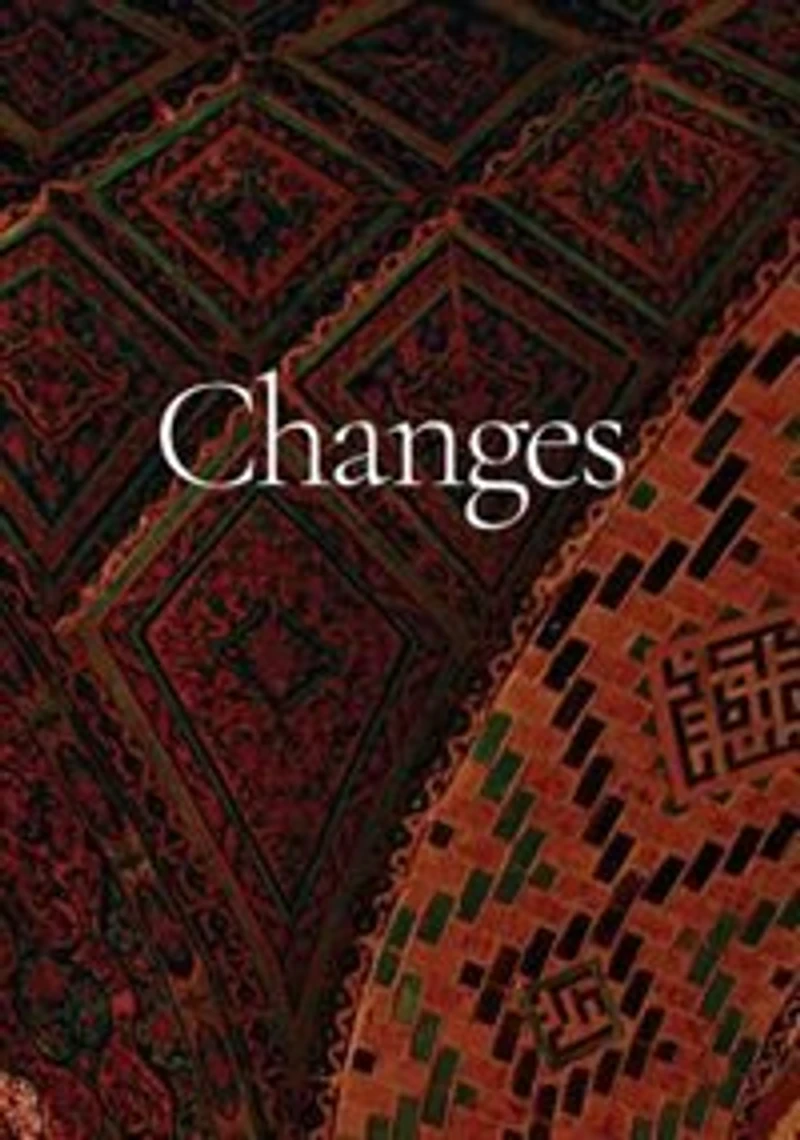
Changes: Books 16, 17, 18 in Ottawa, ON
Current price: $100.00

Changes: Books 16, 17, 18 in Ottawa, ON
Current price: $100.00
Loading Inventory...
Size: Paperback
*Product information may vary - to confirm product availability, pricing, shipping and return information please contact Coles
"Read what has been deposited in my ruled lines." With this command, Ibn al-Arabi starts to see in the Youth the structure of the 560 chapters that will become the Futuhat al-Makkiyah, which he will dictate to his circle of friends. He is recording the knowledge he found etched in light throughout the body of the Youth. The knowledge is whole cloth, but perhaps the one threat that runs throughout is love. In the chapter on love, Ibn al-Arabi explains all by love: why there is a universe, how particles and molecules come together, how letters "join together" to "reproduce" words and become meaningful sentence, and why we always long for what we don't have. The love he is talking about is "in love" in English, with other more noble and less insane forms of love being covered by other Arabic concepts. In fact the love he is speaking of is what will spread from Muslim Spain throughout Europe and beyond as chivalry and romantic love. The knight's love for the unattainable lord's lady can flourish precisely because it is not a "real" or consummated relationship. The love for what isn't characterizes God's love for the creation that isn't yet, and our love for fame and fortune which is never enough (or consummated), and our love for this or that beloved who isn't here. English seems too "bottom line" when translating these complex, layered, and intricate Arabic depictions of love. No wodner students in medieval universities were abandoning their Latin studies to learn Arabic--and read the Arabic poetry that came out of Spain and gave Europe the idea of romantic love. Dr. Eric Winkel (Shu ayb) is four years into the project to produce the first translation of Ibn al-Arabi's Futuhat al-Makkiyah. At 10,000 pages, this work is one of the most important texts of Western civilization. Ibn al-Arabi uses many languages to describe the vision of the Youth at the Kaʿbah, including grammar, mathematics, geometry, and Islamic Law, but perhaps the language of love is the most accessible to us today.
"Read what has been deposited in my ruled lines." With this command, Ibn al-Arabi starts to see in the Youth the structure of the 560 chapters that will become the Futuhat al-Makkiyah, which he will dictate to his circle of friends. He is recording the knowledge he found etched in light throughout the body of the Youth. The knowledge is whole cloth, but perhaps the one threat that runs throughout is love. In the chapter on love, Ibn al-Arabi explains all by love: why there is a universe, how particles and molecules come together, how letters "join together" to "reproduce" words and become meaningful sentence, and why we always long for what we don't have. The love he is talking about is "in love" in English, with other more noble and less insane forms of love being covered by other Arabic concepts. In fact the love he is speaking of is what will spread from Muslim Spain throughout Europe and beyond as chivalry and romantic love. The knight's love for the unattainable lord's lady can flourish precisely because it is not a "real" or consummated relationship. The love for what isn't characterizes God's love for the creation that isn't yet, and our love for fame and fortune which is never enough (or consummated), and our love for this or that beloved who isn't here. English seems too "bottom line" when translating these complex, layered, and intricate Arabic depictions of love. No wodner students in medieval universities were abandoning their Latin studies to learn Arabic--and read the Arabic poetry that came out of Spain and gave Europe the idea of romantic love. Dr. Eric Winkel (Shu ayb) is four years into the project to produce the first translation of Ibn al-Arabi's Futuhat al-Makkiyah. At 10,000 pages, this work is one of the most important texts of Western civilization. Ibn al-Arabi uses many languages to describe the vision of the Youth at the Kaʿbah, including grammar, mathematics, geometry, and Islamic Law, but perhaps the language of love is the most accessible to us today.
You May Also Like













More About Coles at Bayshore Shopping Centre
Coles is renowned for its outstanding customer service and great selection of books. Along with the vast array of magazines, stationary, audio-books, children's literature, fiction, non-fiction and reference books, you can find accessories to make your reading experience more pleasurable. We can recommend the very best in reading today. We will help you search our titles for exactly what you need, and if we do not have it in stock, we will order it for you.
100 Bayshore Dr, Nepean, ON K2B 8C1, Canada
Find Coles at Bayshore Shopping Centre in Ottawa, ON
Visit Coles at Bayshore Shopping Centre in Ottawa, ON