

Give the Gift of Choice!
Too many options? Treat your friends and family to their favourite stores with a Bayshore Shopping Centre gift card, redeemable at participating retailers throughout the centre. Click below to purchase yours today!Purchase HereHome
Chaos: A Very Short Introduction
Coles
Loading Inventory...
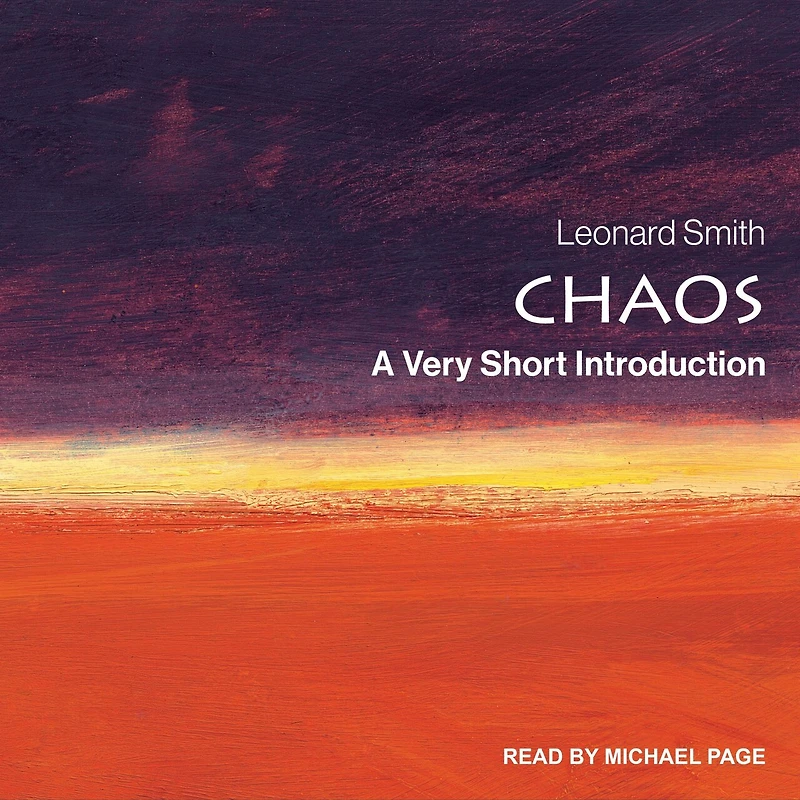

Chaos: A Very Short Introduction in Ottawa, ON
By None
Current price: $20.95

By None
Chaos: A Very Short Introduction in Ottawa, ON
Current price: $20.95
Loading Inventory...
Size: Audiobook (2021 A)
*Product information may vary - to confirm product availability, pricing, shipping and return information please contact Coles
Chaos exists in systems all around us. Even the simplest system of cause and effect can be subject to chaos, denying us accurate predictions of its behavior, and sometimes giving rise to astonishing structures of large-scale order. Our growing understanding of Chaos Theory is having fascinating applications in the real world—from technology to global warming, politics, human behavior, and even gambling on the stock market. Leonard Smith shows that we all have an intuitive understanding of chaotic systems. He uses accessible math and physics (replacing complex equations with simple examples like pendulums, railway lines, and tossing coins) to explain the theory, and points to numerous examples in philosophy and literature (Edgar Allen Poe, Chang-Tzu, Arthur Conan Doyle) that illuminate the problems. The beauty of fractal patterns and their relation to chaos, as well as the history of chaos, and its uses in the real world and implications for the philosophy of science are all discussed in this Very Short Introduction .
Chaos exists in systems all around us. Even the simplest system of cause and effect can be subject to chaos, denying us accurate predictions of its behavior, and sometimes giving rise to astonishing structures of large-scale order. Our growing understanding of Chaos Theory is having fascinating applications in the real world—from technology to global warming, politics, human behavior, and even gambling on the stock market. Leonard Smith shows that we all have an intuitive understanding of chaotic systems. He uses accessible math and physics (replacing complex equations with simple examples like pendulums, railway lines, and tossing coins) to explain the theory, and points to numerous examples in philosophy and literature (Edgar Allen Poe, Chang-Tzu, Arthur Conan Doyle) that illuminate the problems. The beauty of fractal patterns and their relation to chaos, as well as the history of chaos, and its uses in the real world and implications for the philosophy of science are all discussed in this Very Short Introduction .
You May Also Like













More About Coles at Bayshore Shopping Centre
Coles is renowned for its outstanding customer service and great selection of books. Along with the vast array of magazines, stationary, audio-books, children's literature, fiction, non-fiction and reference books, you can find accessories to make your reading experience more pleasurable. We can recommend the very best in reading today. We will help you search our titles for exactly what you need, and if we do not have it in stock, we will order it for you.
100 Bayshore Dr, Nepean, ON K2B 8C1, Canada
Find Coles at Bayshore Shopping Centre in Ottawa, ON
Visit Coles at Bayshore Shopping Centre in Ottawa, ON