

Give the Gift of Choice!
Too many options? Treat your friends and family to their favourite stores with a Bayshore Shopping Centre gift card, redeemable at participating retailers throughout the centre. Click below to purchase yours today!Purchase HereHome
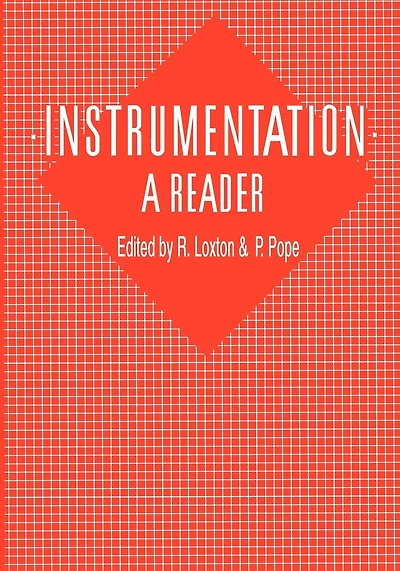
Chemical Instrumentation
Coles
Loading Inventory...

Chemical Instrumentation in Ottawa, ON
Current price: $57.95

Chemical Instrumentation in Ottawa, ON
Current price: $57.95
Loading Inventory...
Size: Paperback
*Product information may vary - to confirm product availability, pricing, shipping and return information please contact Coles
Instrumentation, often of a high sophisticated kind, lies behind many of the most interesting aspects of contemporary chemistry. Some techniques - such as NMR - owe their existance to electronic instrumentation; others have been made simpler, more reliable, and more precise. Yet undergraduates reading chemistry often have only the most rudimentry understanding to be performed.
This book aims to introduce chemists to some of the building blocks and devices that make up the most important instruments used in industry and research. It is not a book about electronics or about detailed circuit design, though the first chapter reviews the principles. Simple measuring devices are discussed before the introduction of the constituent elements of more complex devices, and emphasis is given to the enhancement of signal to noise ratios, which often lies at the heart of some of the most demanding measurements in the chemical sciences. This clearly written text will provide a basic understanding of how instrumentation works and thus help chemists use what is available both correctly and effectively.
Instrumentation, often of a high sophisticated kind, lies behind many of the most interesting aspects of contemporary chemistry. Some techniques - such as NMR - owe their existance to electronic instrumentation; others have been made simpler, more reliable, and more precise. Yet undergraduates reading chemistry often have only the most rudimentry understanding to be performed.
This book aims to introduce chemists to some of the building blocks and devices that make up the most important instruments used in industry and research. It is not a book about electronics or about detailed circuit design, though the first chapter reviews the principles. Simple measuring devices are discussed before the introduction of the constituent elements of more complex devices, and emphasis is given to the enhancement of signal to noise ratios, which often lies at the heart of some of the most demanding measurements in the chemical sciences. This clearly written text will provide a basic understanding of how instrumentation works and thus help chemists use what is available both correctly and effectively.
You May Also Like







More About Coles at Bayshore Shopping Centre
Coles is renowned for its outstanding customer service and great selection of books. Along with the vast array of magazines, stationary, audio-books, children's literature, fiction, non-fiction and reference books, you can find accessories to make your reading experience more pleasurable. We can recommend the very best in reading today. We will help you search our titles for exactly what you need, and if we do not have it in stock, we will order it for you.
100 Bayshore Dr, Nepean, ON K2B 8C1, Canada
Find Coles at Bayshore Shopping Centre in Ottawa, ON
Visit Coles at Bayshore Shopping Centre in Ottawa, ON