

Give the Gift of Choice!
Too many options? Treat your friends and family to their favourite stores with a Bayshore Shopping Centre gift card, redeemable at participating retailers throughout the centre. Click below to purchase yours today!Purchase HereHome
Children's Understanding of Death: Toward a Contextualized and Integrated Account
Coles
Loading Inventory...
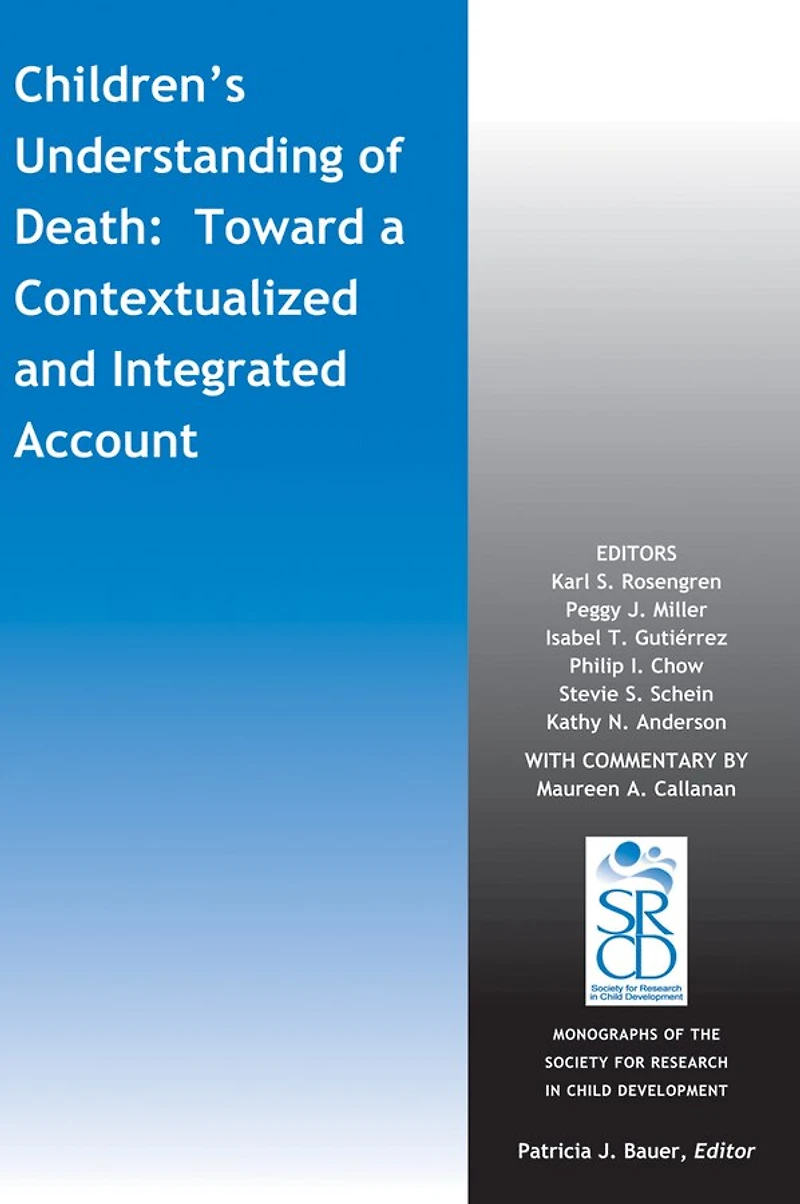
Children's Understanding of Death: Toward a Contextualized and Integrated Account in Ottawa, ON
Current price: $60.95

Children's Understanding of Death: Toward a Contextualized and Integrated Account in Ottawa, ON
Current price: $60.95
Loading Inventory...
Size: Paperback
*Product information may vary - to confirm product availability, pricing, shipping and return information please contact Coles
In this monograph we (1) provide an account of young children's socialization with respect to death and (2) develop a conception of children’s understanding of death that encompasses affective and cognitive dimensions. Conducted in a small city in the Midwest, the project involved several component studies employing quantitative and qualitative methods. Middle-class, European American children (3-6 years, N = 101) were interviewed about their cognitive/affective understandings of death; their parents (N = 71) completed questionnaires about the children's experiences and their own beliefs and practices. Other data included ethnographic observations, interviews, focus groups, and analyses of children's books. Parents and teachers shared a dominant folk theory, believing that children should be shielded from death because they lack the emotional and cognitive capacity to understand or cope with death. Even the youngest children knew basic elements of the emotional script for death, a script that paralleled messages available across socializing contexts. Similarly, they showed considerable understanding of the subconcepts of death, providing additional evidence that young children's cognitive understanding is more advanced than previously thought, and contradicting the dominant folk theory held by most parents. Although children's default model of death was biological, many children and parents used coexistence models, mixing scientific and religious elements. A preliminary study of Mexican American families (children: N = 27, parents: N = 17) cast the foregoing fi ndings in relief, illustrating a different set of socializing beliefs and practices. Mexican American children’s understanding of death differed from their European American counterparts' in ways that mirrored these differences.
In this monograph we (1) provide an account of young children's socialization with respect to death and (2) develop a conception of children’s understanding of death that encompasses affective and cognitive dimensions. Conducted in a small city in the Midwest, the project involved several component studies employing quantitative and qualitative methods. Middle-class, European American children (3-6 years, N = 101) were interviewed about their cognitive/affective understandings of death; their parents (N = 71) completed questionnaires about the children's experiences and their own beliefs and practices. Other data included ethnographic observations, interviews, focus groups, and analyses of children's books. Parents and teachers shared a dominant folk theory, believing that children should be shielded from death because they lack the emotional and cognitive capacity to understand or cope with death. Even the youngest children knew basic elements of the emotional script for death, a script that paralleled messages available across socializing contexts. Similarly, they showed considerable understanding of the subconcepts of death, providing additional evidence that young children's cognitive understanding is more advanced than previously thought, and contradicting the dominant folk theory held by most parents. Although children's default model of death was biological, many children and parents used coexistence models, mixing scientific and religious elements. A preliminary study of Mexican American families (children: N = 27, parents: N = 17) cast the foregoing fi ndings in relief, illustrating a different set of socializing beliefs and practices. Mexican American children’s understanding of death differed from their European American counterparts' in ways that mirrored these differences.
You May Also Like













More About Coles at Bayshore Shopping Centre
Coles is renowned for its outstanding customer service and great selection of books. Along with the vast array of magazines, stationary, audio-books, children's literature, fiction, non-fiction and reference books, you can find accessories to make your reading experience more pleasurable. We can recommend the very best in reading today. We will help you search our titles for exactly what you need, and if we do not have it in stock, we will order it for you.
100 Bayshore Dr, Nepean, ON K2B 8C1, Canada
Find Coles at Bayshore Shopping Centre in Ottawa, ON
Visit Coles at Bayshore Shopping Centre in Ottawa, ON