

Give the Gift of Choice!
Too many options? Treat your friends and family to their favourite stores with a Bayshore Shopping Centre gift card, redeemable at participating retailers throughout the centre. Click below to purchase yours today!Purchase HereHome
Cicero, the causa Curiana, and the Origins of Competitive Oratory
Coles
Loading Inventory...
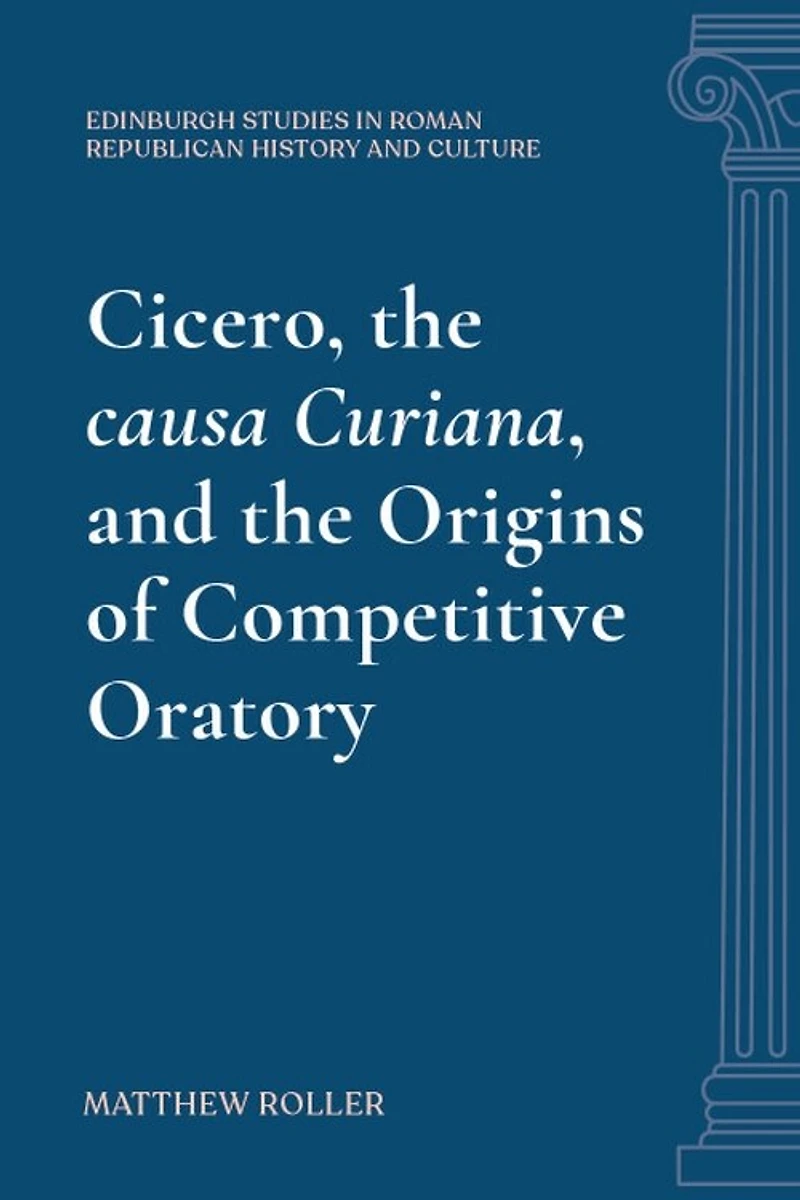
Cicero, the causa Curiana, and the Origins of Competitive Oratory in Ottawa, ON
Current price: $153.99

Cicero, the causa Curiana, and the Origins of Competitive Oratory in Ottawa, ON
Current price: $153.99
Loading Inventory...
Size: Hardcover
*Product information may vary - to confirm product availability, pricing, shipping and return information please contact Coles
In his De Oratore and Brutus , the orator and statesman Cicero introduces a trial involving a contested will, dating from his youth, that he calls the causa Curiana , or “case of Curius.” The orators advocating for the two litigants, Cicero says, employed contrasting approaches: one spoke plainly, focused on instructing the jury, and lost; the other spoke grandly, aimed at stirring the jury’s emotions, and won.
In this new study Matthew Roller examines the case and its context, addressing how Cicero presents the contrasting approaches of the orators. Roller explores the parallels between the causa Curiana and Cicero's competition with contemporary rival orators, the ‘Atticists’. The book shows how the causa Curiana gives us the (mythic) origin story in which Cicero’s “copious” style emerged triumphant over a plainer alternative, implying that it will triumph again. Through this, Roller explores how this trial’s oratory supports Cicero’s position in his political struggle with Caesar, and the Romans in their cultural rivalry with the Greeks.
In his De Oratore and Brutus , the orator and statesman Cicero introduces a trial involving a contested will, dating from his youth, that he calls the causa Curiana , or “case of Curius.” The orators advocating for the two litigants, Cicero says, employed contrasting approaches: one spoke plainly, focused on instructing the jury, and lost; the other spoke grandly, aimed at stirring the jury’s emotions, and won.
In this new study Matthew Roller examines the case and its context, addressing how Cicero presents the contrasting approaches of the orators. Roller explores the parallels between the causa Curiana and Cicero's competition with contemporary rival orators, the ‘Atticists’. The book shows how the causa Curiana gives us the (mythic) origin story in which Cicero’s “copious” style emerged triumphant over a plainer alternative, implying that it will triumph again. Through this, Roller explores how this trial’s oratory supports Cicero’s position in his political struggle with Caesar, and the Romans in their cultural rivalry with the Greeks.
You May Also Like










More About Coles at Bayshore Shopping Centre
Coles is renowned for its outstanding customer service and great selection of books. Along with the vast array of magazines, stationary, audio-books, children's literature, fiction, non-fiction and reference books, you can find accessories to make your reading experience more pleasurable. We can recommend the very best in reading today. We will help you search our titles for exactly what you need, and if we do not have it in stock, we will order it for you.
100 Bayshore Dr, Nepean, ON K2B 8C1, Canada
Find Coles at Bayshore Shopping Centre in Ottawa, ON
Visit Coles at Bayshore Shopping Centre in Ottawa, ON