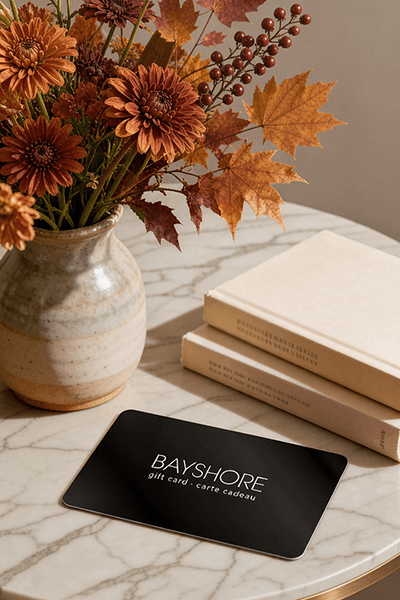
Too many options? Treat your friends and family to their favourite stores with a Bayshore Shopping Centre gift card, redeemable at participating retailers throughout the centre. Click below to purchase yours today!Purchase Here
Coles City and Modernity in Georg Simmel and Walter Benjamin: Fragments of Metropolis at Bayshore Shopping Centre in Ottawa, ON
*Product information may vary - to confirm product availability, pricing, shipping and return information please contact Coles
This book reconstructs and compares the social theories of modernity of Georg Simmel and Walter Benjamin, two classic thinkers in German social thought. The author focuses on five main topics: the historical-sociological method through which they investigate modernity; how are the concepts of history and society possible; the consequences of modern metropolis on the construction of individual subjectivity; the aestheticization of everyday life caused by the expansion of commodity culture; and the female culture as a counter-power to the domination of masculine objective culture. In the decades since Simmel and Benjamin, urban reality has undergone profound changes and we may even question the very existence of the subject of analysis: what is the city, the metropolis in today's context of globalization and capital flows? Simmel's and Benjamin's metropolis has thus become an "endless city," beyond the physical and geographical confines of urban reality.
This book reconstructs and compares the social theories of modernity of Georg Simmel and Walter Benjamin, two classic thinkers in German social thought. The author focuses on five main topics: the historical-sociological method through which they investigate modernity; how are the concepts of history and society possible; the consequences of modern metropolis on the construction of individual subjectivity; the aestheticization of everyday life caused by the expansion of commodity culture; and the female culture as a counter-power to the domination of masculine objective culture. In the decades since Simmel and Benjamin, urban reality has undergone profound changes and we may even question the very existence of the subject of analysis: what is the city, the metropolis in today's context of globalization and capital flows? Simmel's and Benjamin's metropolis has thus become an "endless city," beyond the physical and geographical confines of urban reality.
Coles is renowned for its outstanding customer service and great selection of books. Along with the vast array of magazines, stationary, audio-books, children's literature, fiction, non-fiction and reference books, you can find accessories to make your reading experience more pleasurable. We can recommend the very best in reading today. We will help you search our titles for exactly what you need, and if we do not have it in stock, we will order it for you.