

Give the Gift of Choice!
Too many options? Treat your friends and family to their favourite stores with a Bayshore Shopping Centre gift card, redeemable at participating retailers throughout the centre. Click below to purchase yours today!Purchase HereHome
Clay-Based Pharmaceutical Formulations and Drug Delivery Systems
Coles
Loading Inventory...
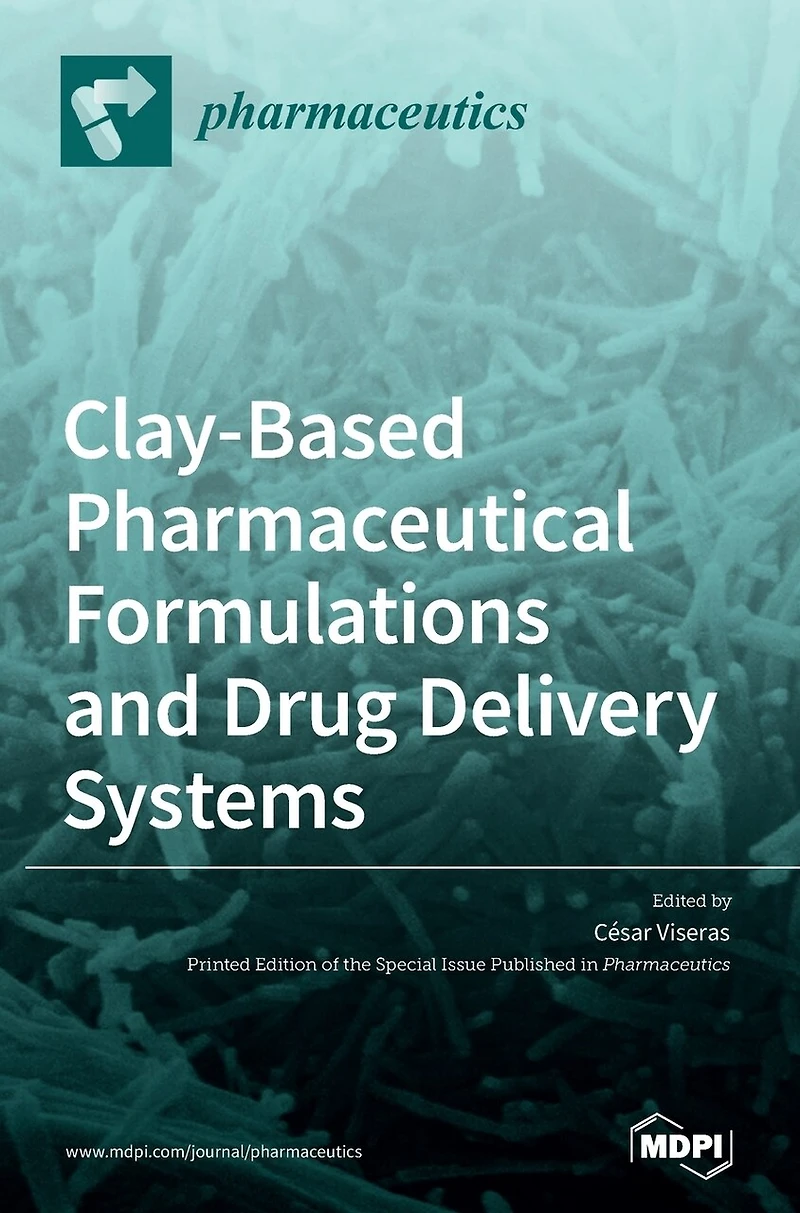
Clay-Based Pharmaceutical Formulations and Drug Delivery Systems in Ottawa, ON
Current price: $90.80

Clay-Based Pharmaceutical Formulations and Drug Delivery Systems in Ottawa, ON
Current price: $90.80
Loading Inventory...
Size: Hardcover
*Product information may vary - to confirm product availability, pricing, shipping and return information please contact Coles
This book includes recent advances in the use of clays in the design of medicinal products and medicinal devices. The pharmaceutical applications of nanoclays are far ranging, because of their distinct advantages: they are versatile (possess a wide range of mechanical, chemical and physical properties) and available at reasonable costs. Some special clays (mainly kaolinite, halloysite, montmorillonite, saponite, hectorite, palygorskite and sepiolite), as well as semi-synthetic (organoclays) or synthetic (double layer hydroxides) derivatives, are very useful materials for modulating drug delivery. In the last decade, several actives have been loaded onto nanoclays and similar inorganic excipients to increase solubility, improve stability, reduce toxicity, and enhance bioavailability, with a consequent increase in therapeutic response. Polymer/clay nanocomposites with synergic properties have been developed, showing improved mechanical properties with respect to the pristine polymer matrices and allowing modified release of loaded actives. Moreover, nanoclays have very recently demonstrated positive effects on the proliferation and migration of fibroblasts. The development of clay-based medicinal products and medicinal devices requires experience in the fields of both clay structure and properties and pharmaceutical technology design.
This book includes recent advances in the use of clays in the design of medicinal products and medicinal devices. The pharmaceutical applications of nanoclays are far ranging, because of their distinct advantages: they are versatile (possess a wide range of mechanical, chemical and physical properties) and available at reasonable costs. Some special clays (mainly kaolinite, halloysite, montmorillonite, saponite, hectorite, palygorskite and sepiolite), as well as semi-synthetic (organoclays) or synthetic (double layer hydroxides) derivatives, are very useful materials for modulating drug delivery. In the last decade, several actives have been loaded onto nanoclays and similar inorganic excipients to increase solubility, improve stability, reduce toxicity, and enhance bioavailability, with a consequent increase in therapeutic response. Polymer/clay nanocomposites with synergic properties have been developed, showing improved mechanical properties with respect to the pristine polymer matrices and allowing modified release of loaded actives. Moreover, nanoclays have very recently demonstrated positive effects on the proliferation and migration of fibroblasts. The development of clay-based medicinal products and medicinal devices requires experience in the fields of both clay structure and properties and pharmaceutical technology design.
You May Also Like











More About Coles at Bayshore Shopping Centre
Coles is renowned for its outstanding customer service and great selection of books. Along with the vast array of magazines, stationary, audio-books, children's literature, fiction, non-fiction and reference books, you can find accessories to make your reading experience more pleasurable. We can recommend the very best in reading today. We will help you search our titles for exactly what you need, and if we do not have it in stock, we will order it for you.
100 Bayshore Dr, Nepean, ON K2B 8C1, Canada
Find Coles at Bayshore Shopping Centre in Ottawa, ON
Visit Coles at Bayshore Shopping Centre in Ottawa, ON