

Give the Gift of Choice!
Too many options? Treat your friends and family to their favourite stores with a Bayshore Shopping Centre gift card, redeemable at participating retailers throughout the centre. Click below to purchase yours today!Purchase HereHome
Computer-Based Modeling of Novel Carbon Systems and Their Properties: Beyond Nanotubes
Coles
Loading Inventory...
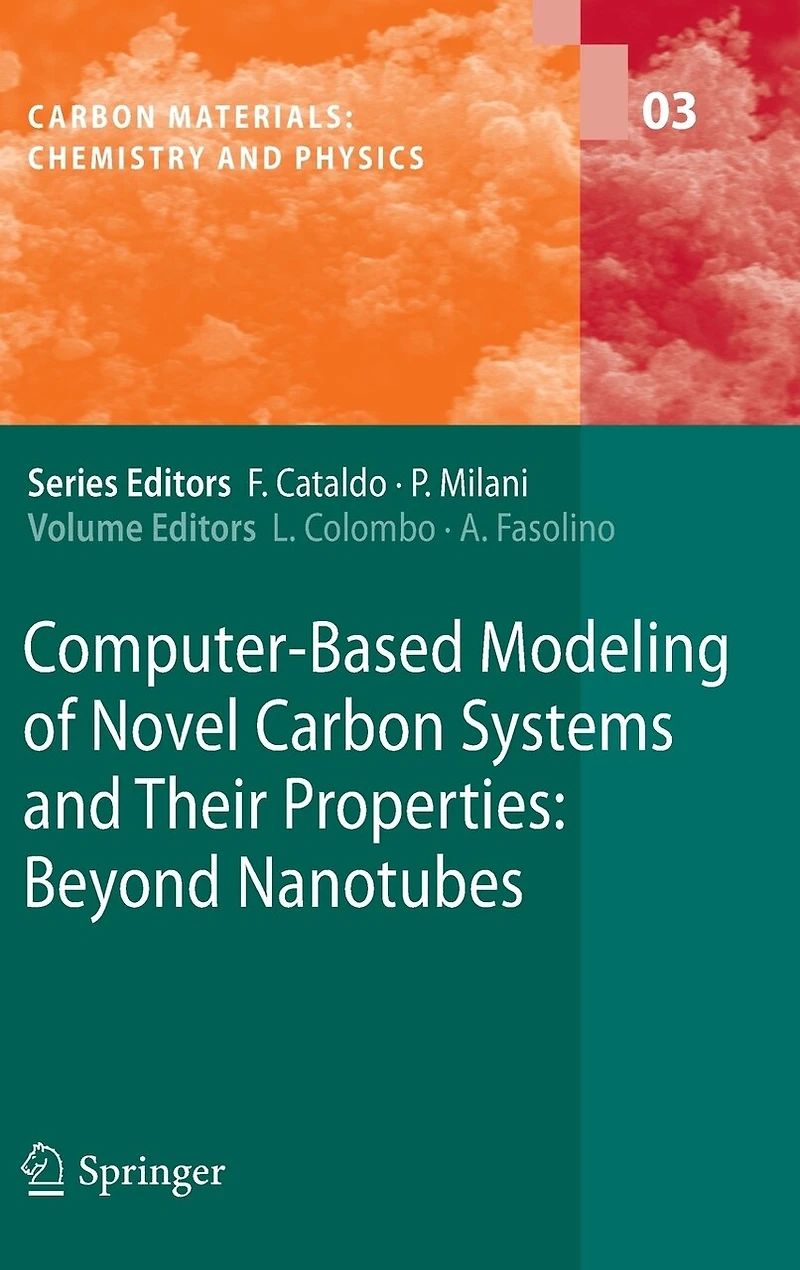
Computer-Based Modeling of Novel Carbon Systems and Their Properties: Beyond Nanotubes in Ottawa, ON
Current price: $160.95

Computer-Based Modeling of Novel Carbon Systems and Their Properties: Beyond Nanotubes in Ottawa, ON
Current price: $160.95
Loading Inventory...
Size: Hardcover
*Product information may vary - to confirm product availability, pricing, shipping and return information please contact Coles
During the last twenty years, the multiplicity of potential carbon structures has consistently posed a formidable challenge to theoretical and computational physicists. Several different methods are currently being used to study the structure and the properties of such systems. These methods include simulations based on empirical potentials, tight-binding calculations and density functional theory (DFT). A combination of these methods is needed to make significant progress in the carbon field. This volume provides the reader with a survey of state-of-the-art theoretical and computational contributions featuring novel carbon systems (excluding nanotubes). The chapters are authored by leading researchers who are all actively involved with different aspects of carbon structure and property elucidation. Consequently, a variety of methods are presented to the reader. The editors have successfully compiled an informative book that: • Showcases the latest results in carbon materials
• Demonstrates how different theoretical methods are combined
• Explains how new carbon structures are predicted Computer-Based Modeling of Novel Carbon Systems and Their Properties is aimed at advanced undergraduates, graduates, and researchers with an interest in computational nanomaterials.
During the last twenty years, the multiplicity of potential carbon structures has consistently posed a formidable challenge to theoretical and computational physicists. Several different methods are currently being used to study the structure and the properties of such systems. These methods include simulations based on empirical potentials, tight-binding calculations and density functional theory (DFT). A combination of these methods is needed to make significant progress in the carbon field. This volume provides the reader with a survey of state-of-the-art theoretical and computational contributions featuring novel carbon systems (excluding nanotubes). The chapters are authored by leading researchers who are all actively involved with different aspects of carbon structure and property elucidation. Consequently, a variety of methods are presented to the reader. The editors have successfully compiled an informative book that: • Showcases the latest results in carbon materials
• Demonstrates how different theoretical methods are combined
• Explains how new carbon structures are predicted Computer-Based Modeling of Novel Carbon Systems and Their Properties is aimed at advanced undergraduates, graduates, and researchers with an interest in computational nanomaterials.
You May Also Like









More About Coles at Bayshore Shopping Centre
Coles is renowned for its outstanding customer service and great selection of books. Along with the vast array of magazines, stationary, audio-books, children's literature, fiction, non-fiction and reference books, you can find accessories to make your reading experience more pleasurable. We can recommend the very best in reading today. We will help you search our titles for exactly what you need, and if we do not have it in stock, we will order it for you.
100 Bayshore Dr, Nepean, ON K2B 8C1, Canada
Find Coles at Bayshore Shopping Centre in Ottawa, ON
Visit Coles at Bayshore Shopping Centre in Ottawa, ON