

Give the Gift of Choice!
Too many options? Treat your friends and family to their favourite stores with a Bayshore Shopping Centre gift card, redeemable at participating retailers throughout the centre. Click below to purchase yours today!Purchase HereHome
Concentration Camps: A Global History
Coles
Loading Inventory...
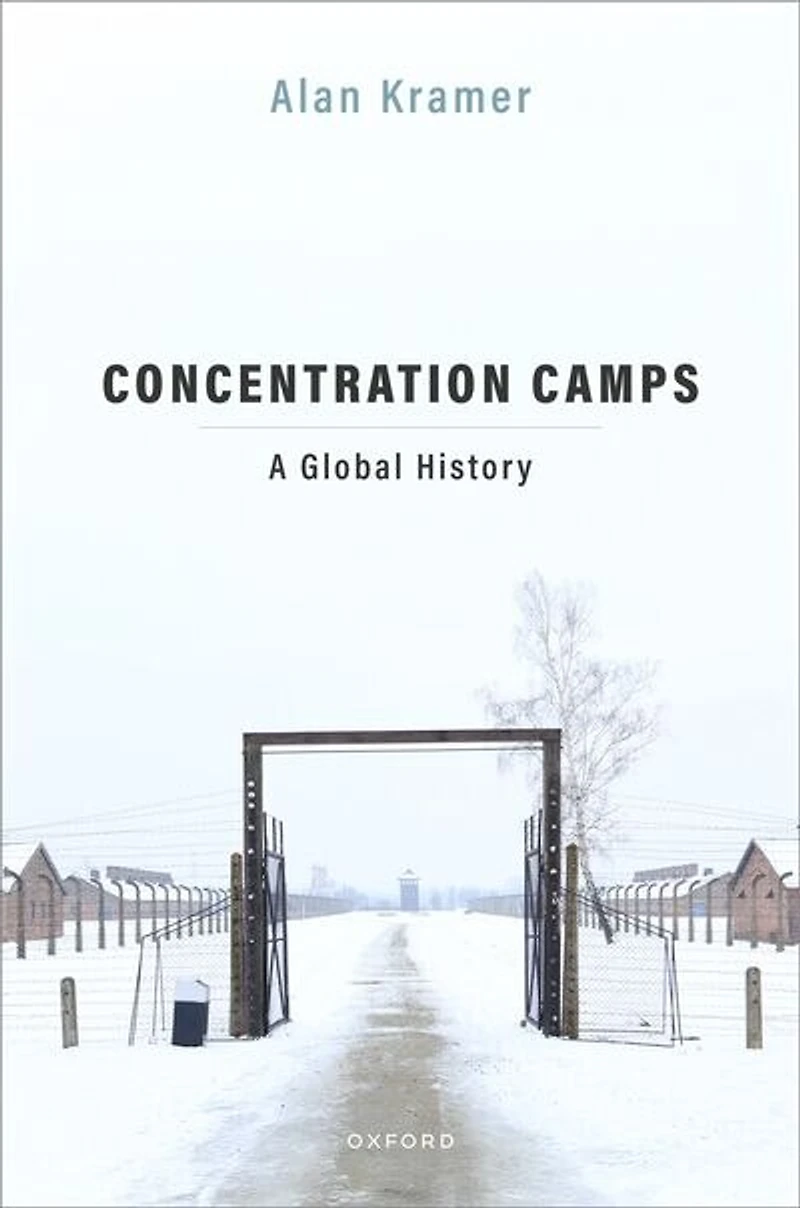
Concentration Camps: A Global History in Ottawa, ON
Current price: $84.00

Concentration Camps: A Global History in Ottawa, ON
Current price: $84.00
Loading Inventory...
Size: Hardcover
*Product information may vary - to confirm product availability, pricing, shipping and return information please contact Coles
A global and comprehensive history of a modern institution of inhumanity. In popular perception concentration camps are synonymous with genocide and Nazi racial extermination. Yet concentration camps were and are a global phenomenon, not restricted to Nazi Germany, used at times even by democracies, with an astonishing range of functions. Drawing together a wide range of multi-lingual archival research and synthesising a broad secondary literature, Alan Kramer provides here a comprehensive history of concentration camps, charting their first establishment at the beginning of the twentieth century on the colonial periphery, through their most extreme and inhuman instances in the mid-twentieth century, to their continued use today. Concentration camps are shown to be a truly transnational phenomenon that emerged both simultaneously (within and between imperial spheres—Britain, Spain, the USA, and Germany around 1900), and diachronically (from then to the First World War, the Gulag, and Nazi camps). Such camps existed (and exist) under a variety of regimes, often concomitant with empire-building by revolutionary dictatorships, as sites of genocide, mass murder, and performative violence, but also as central elements of utopian schemes of social and racial transformation. Integrating the perspective of perpetrators and the victims and contextualising them within the historiography of other carceral institutions, the book will reshape the way we think about concentration camps as part of modern civilization, past and present.
A global and comprehensive history of a modern institution of inhumanity. In popular perception concentration camps are synonymous with genocide and Nazi racial extermination. Yet concentration camps were and are a global phenomenon, not restricted to Nazi Germany, used at times even by democracies, with an astonishing range of functions. Drawing together a wide range of multi-lingual archival research and synthesising a broad secondary literature, Alan Kramer provides here a comprehensive history of concentration camps, charting their first establishment at the beginning of the twentieth century on the colonial periphery, through their most extreme and inhuman instances in the mid-twentieth century, to their continued use today. Concentration camps are shown to be a truly transnational phenomenon that emerged both simultaneously (within and between imperial spheres—Britain, Spain, the USA, and Germany around 1900), and diachronically (from then to the First World War, the Gulag, and Nazi camps). Such camps existed (and exist) under a variety of regimes, often concomitant with empire-building by revolutionary dictatorships, as sites of genocide, mass murder, and performative violence, but also as central elements of utopian schemes of social and racial transformation. Integrating the perspective of perpetrators and the victims and contextualising them within the historiography of other carceral institutions, the book will reshape the way we think about concentration camps as part of modern civilization, past and present.
You May Also Like














More About Coles at Bayshore Shopping Centre
Coles is renowned for its outstanding customer service and great selection of books. Along with the vast array of magazines, stationary, audio-books, children's literature, fiction, non-fiction and reference books, you can find accessories to make your reading experience more pleasurable. We can recommend the very best in reading today. We will help you search our titles for exactly what you need, and if we do not have it in stock, we will order it for you.
100 Bayshore Dr, Nepean, ON K2B 8C1, Canada
Find Coles at Bayshore Shopping Centre in Ottawa, ON
Visit Coles at Bayshore Shopping Centre in Ottawa, ON