

Give the Gift of Choice!
Too many options? Treat your friends and family to their favourite stores with a Bayshore Shopping Centre gift card, redeemable at participating retailers throughout the centre. Click below to purchase yours today!Purchase HereHome
Constructions and Compositionality: Cognitive Computational Explorations
Coles
Loading Inventory...
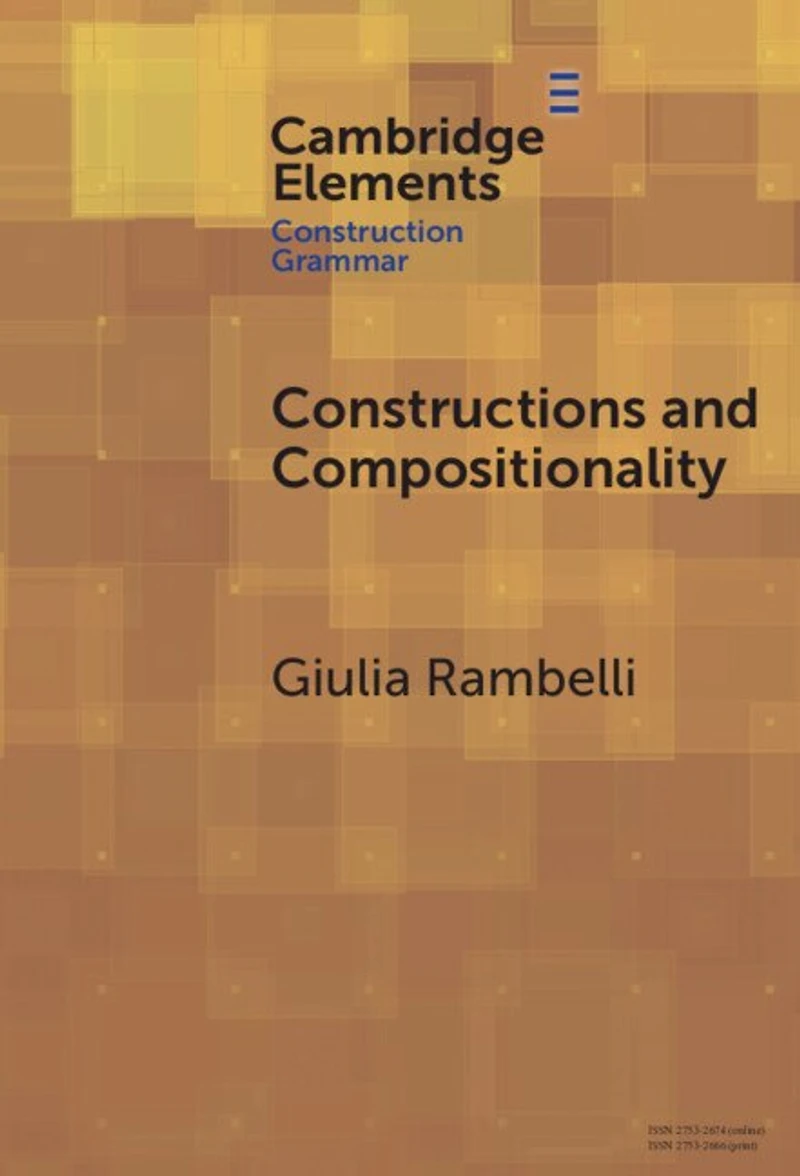
Constructions and Compositionality: Cognitive Computational Explorations in Ottawa, ON
Current price: $94.73

Constructions and Compositionality: Cognitive Computational Explorations in Ottawa, ON
Current price: $94.73
Loading Inventory...
Size: Hardcover
*Product information may vary - to confirm product availability, pricing, shipping and return information please contact Coles
How do we understand any sentence, from the most ordinary to the most creative? The traditional assumption is that we rely on formal rules combining words (compositionality). However, psycho- and neuro-linguistic studies point to a linguistic representation model that aligns with the assumptions of Construction Grammar: there is no sharp boundary between stored sequences and productive patterns. Evidence suggests that interpretation alternates compositional (incremental) and noncompositional (global) strategies. Accordingly, systematic processes of language productivity are explainable by analogical inferences rather than compositional operations: novel expressions are understood 'on the fly' by analogy with familiar ones. This Element discusses compositionality, alternative mechanisms in language processing, and explains why Construction Grammar is the most suitable approach for formalizing language comprehension.
How do we understand any sentence, from the most ordinary to the most creative? The traditional assumption is that we rely on formal rules combining words (compositionality). However, psycho- and neuro-linguistic studies point to a linguistic representation model that aligns with the assumptions of Construction Grammar: there is no sharp boundary between stored sequences and productive patterns. Evidence suggests that interpretation alternates compositional (incremental) and noncompositional (global) strategies. Accordingly, systematic processes of language productivity are explainable by analogical inferences rather than compositional operations: novel expressions are understood 'on the fly' by analogy with familiar ones. This Element discusses compositionality, alternative mechanisms in language processing, and explains why Construction Grammar is the most suitable approach for formalizing language comprehension.
You May Also Like














More About Coles at Bayshore Shopping Centre
Coles is renowned for its outstanding customer service and great selection of books. Along with the vast array of magazines, stationary, audio-books, children's literature, fiction, non-fiction and reference books, you can find accessories to make your reading experience more pleasurable. We can recommend the very best in reading today. We will help you search our titles for exactly what you need, and if we do not have it in stock, we will order it for you.
100 Bayshore Dr, Nepean, ON K2B 8C1, Canada
Find Coles at Bayshore Shopping Centre in Ottawa, ON
Visit Coles at Bayshore Shopping Centre in Ottawa, ON