

Give the Gift of Choice!
Too many options? Treat your friends and family to their favourite stores with a Bayshore Shopping Centre gift card, redeemable at participating retailers throughout the centre. Click below to purchase yours today!Purchase HereHome
Critical Theory, Poststructuralism and 'Nietzsche's Paradox': The Missing Debate Between Adorno Deleuze Over Dialectics
Coles
Loading Inventory...
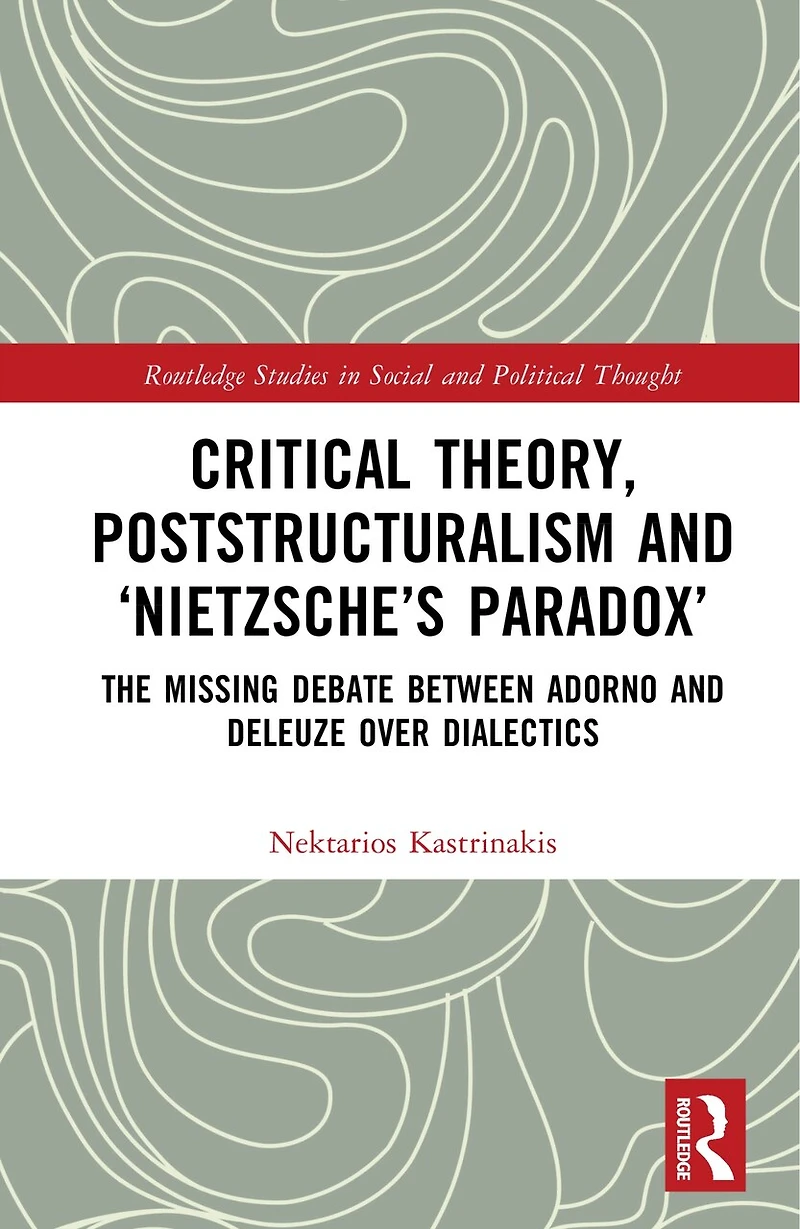
Critical Theory, Poststructuralism and 'Nietzsche's Paradox': The Missing Debate Between Adorno Deleuze Over Dialectics in Ottawa, ON
Current price: $296.50

Critical Theory, Poststructuralism and 'Nietzsche's Paradox': The Missing Debate Between Adorno Deleuze Over Dialectics in Ottawa, ON
Current price: $296.50
Loading Inventory...
Size: Hardcover
*Product information may vary - to confirm product availability, pricing, shipping and return information please contact Coles
Critical Theory, Poststructuralism and 'Nietzsche's Paradox' addresses a fundamental question in the exchange between Critical Theory and poststructuralism: is poststructuralism justified in its critique of dialectical thinking and in the conclusion of this critique that we need to leave dialectics behind us to properly understand the social world? When Deleuze's book Nietzsche and Philosophy was first published back in 1962, it caused a sensation in France, and its Nietzschean critique of Hegelian dialectics played a pivotal role in the emergence of the current of thought we call poststructuralism. However, to what extent is this critique valid and justified? This question has never been adequately investigated. With this book, Nektarios Kastrinakis attempts such an investigation through the exploration of the influence of Nietzsche in both Deleuze and Adorno. More specifically, he investigates a paradox in 20th-century philosophy, the 'paradox of Nietzsche': Nietzsche is claimed by Deleuze to be a fierce critic of Hegel's dialectics and by authors like Gillian Rose and Karin Bauer to be the originator of Adorno's negative dialectics. Kastrinakis argues that there are in fact at least 'two Nietzsches,' one with an irrationalistic and one with a rationalistic critique of identity thinking, on which both poststructuralism/Deleuze and Critical Theory/Adorno, respectively, lay a legitimate claim. He moreover enacts the missing in the literature debate between Adorno and Deleuze, which concludes that Adorno's critique of identity thinking (his negative dialectics), when modified to include an affirmative moment at its heart, unacknowledged by Adorno himself, can effectively challenge Deleuze's Nietzschean critique of dialectics. Critical Theory, Poststructuralism and 'Nietzsche's Paradox' intervenes in the boundary between political philosophy and philosophy and will be of interest to scholars of Nietzsche, Deleuze, Adorno but also generally of poststructuralism and Critical Theory in these disciplines.
Critical Theory, Poststructuralism and 'Nietzsche's Paradox' addresses a fundamental question in the exchange between Critical Theory and poststructuralism: is poststructuralism justified in its critique of dialectical thinking and in the conclusion of this critique that we need to leave dialectics behind us to properly understand the social world? When Deleuze's book Nietzsche and Philosophy was first published back in 1962, it caused a sensation in France, and its Nietzschean critique of Hegelian dialectics played a pivotal role in the emergence of the current of thought we call poststructuralism. However, to what extent is this critique valid and justified? This question has never been adequately investigated. With this book, Nektarios Kastrinakis attempts such an investigation through the exploration of the influence of Nietzsche in both Deleuze and Adorno. More specifically, he investigates a paradox in 20th-century philosophy, the 'paradox of Nietzsche': Nietzsche is claimed by Deleuze to be a fierce critic of Hegel's dialectics and by authors like Gillian Rose and Karin Bauer to be the originator of Adorno's negative dialectics. Kastrinakis argues that there are in fact at least 'two Nietzsches,' one with an irrationalistic and one with a rationalistic critique of identity thinking, on which both poststructuralism/Deleuze and Critical Theory/Adorno, respectively, lay a legitimate claim. He moreover enacts the missing in the literature debate between Adorno and Deleuze, which concludes that Adorno's critique of identity thinking (his negative dialectics), when modified to include an affirmative moment at its heart, unacknowledged by Adorno himself, can effectively challenge Deleuze's Nietzschean critique of dialectics. Critical Theory, Poststructuralism and 'Nietzsche's Paradox' intervenes in the boundary between political philosophy and philosophy and will be of interest to scholars of Nietzsche, Deleuze, Adorno but also generally of poststructuralism and Critical Theory in these disciplines.
You May Also Like







More About Coles at Bayshore Shopping Centre
Coles is renowned for its outstanding customer service and great selection of books. Along with the vast array of magazines, stationary, audio-books, children's literature, fiction, non-fiction and reference books, you can find accessories to make your reading experience more pleasurable. We can recommend the very best in reading today. We will help you search our titles for exactly what you need, and if we do not have it in stock, we will order it for you.
100 Bayshore Dr, Nepean, ON K2B 8C1, Canada
Find Coles at Bayshore Shopping Centre in Ottawa, ON
Visit Coles at Bayshore Shopping Centre in Ottawa, ON