

Give the Gift of Choice!
Too many options? Treat your friends and family to their favourite stores with a Bayshore Shopping Centre gift card, redeemable at participating retailers throughout the centre. Click below to purchase yours today!Purchase HereHome
Decolonizing Science Latin American Art
Coles
Loading Inventory...
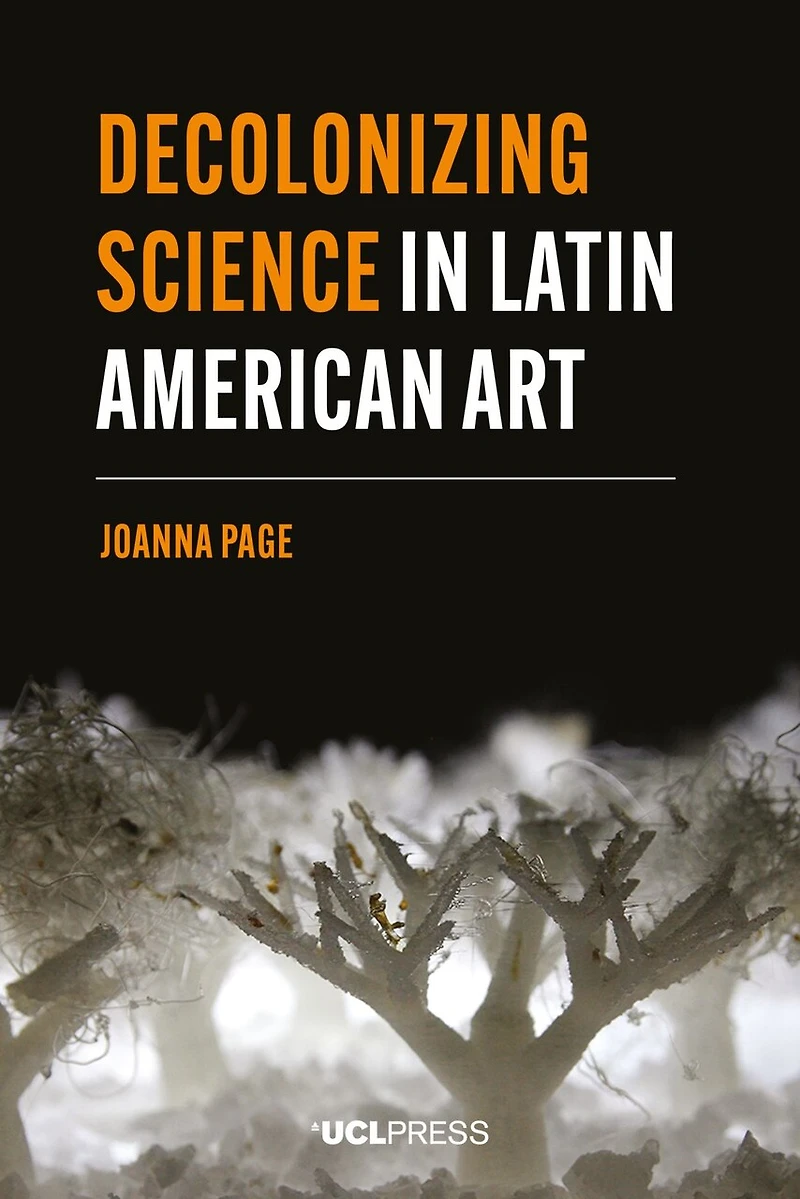
Decolonizing Science Latin American Art in Ottawa, ON
Current price: $97.50

Decolonizing Science Latin American Art in Ottawa, ON
Current price: $97.50
Loading Inventory...
Size: Hardcover
*Product information may vary - to confirm product availability, pricing, shipping and return information please contact Coles
An assembly of a new corpus of art-science projects by Latin American artists.
Projects that bring the sciences into art are increasingly being exhibited in galleries and museums across the world. In a surge of publications on the subject, few have focused on regions beyond the Global North. This book assembles a new corpus of art-science projects by Latin American artists, ranging from big-budget collaborations with NASA and MIT to homegrown experiments in artists’ kitchens. Page shows how these artworks also “decolonize” science by resisting the exploitation of the natural world that has attended the creation of knowledge in western contexts. Instead, the artists featured in this volume emphasize the subjectivity and intelligence of other species, staging new forms of collaboration and co-creativity beyond the human. Establishing critical dialogues between Western science and indigenous thought, this book interrogates how artistic practices may communicate, extend, supplement, and challenge scientific ideas.
An assembly of a new corpus of art-science projects by Latin American artists.
Projects that bring the sciences into art are increasingly being exhibited in galleries and museums across the world. In a surge of publications on the subject, few have focused on regions beyond the Global North. This book assembles a new corpus of art-science projects by Latin American artists, ranging from big-budget collaborations with NASA and MIT to homegrown experiments in artists’ kitchens. Page shows how these artworks also “decolonize” science by resisting the exploitation of the natural world that has attended the creation of knowledge in western contexts. Instead, the artists featured in this volume emphasize the subjectivity and intelligence of other species, staging new forms of collaboration and co-creativity beyond the human. Establishing critical dialogues between Western science and indigenous thought, this book interrogates how artistic practices may communicate, extend, supplement, and challenge scientific ideas.
You May Also Like










More About Coles at Bayshore Shopping Centre
Coles is renowned for its outstanding customer service and great selection of books. Along with the vast array of magazines, stationary, audio-books, children's literature, fiction, non-fiction and reference books, you can find accessories to make your reading experience more pleasurable. We can recommend the very best in reading today. We will help you search our titles for exactly what you need, and if we do not have it in stock, we will order it for you.
100 Bayshore Dr, Nepean, ON K2B 8C1, Canada
Find Coles at Bayshore Shopping Centre in Ottawa, ON
Visit Coles at Bayshore Shopping Centre in Ottawa, ON