

Give the Gift of Choice!
Too many options? Treat your friends and family to their favourite stores with a Bayshore Shopping Centre gift card, redeemable at participating retailers throughout the centre. Click below to purchase yours today!Purchase HereHome
Democracy and Growth The Twenty-first Century: Diverging Cases of China Italy
Coles
Loading Inventory...
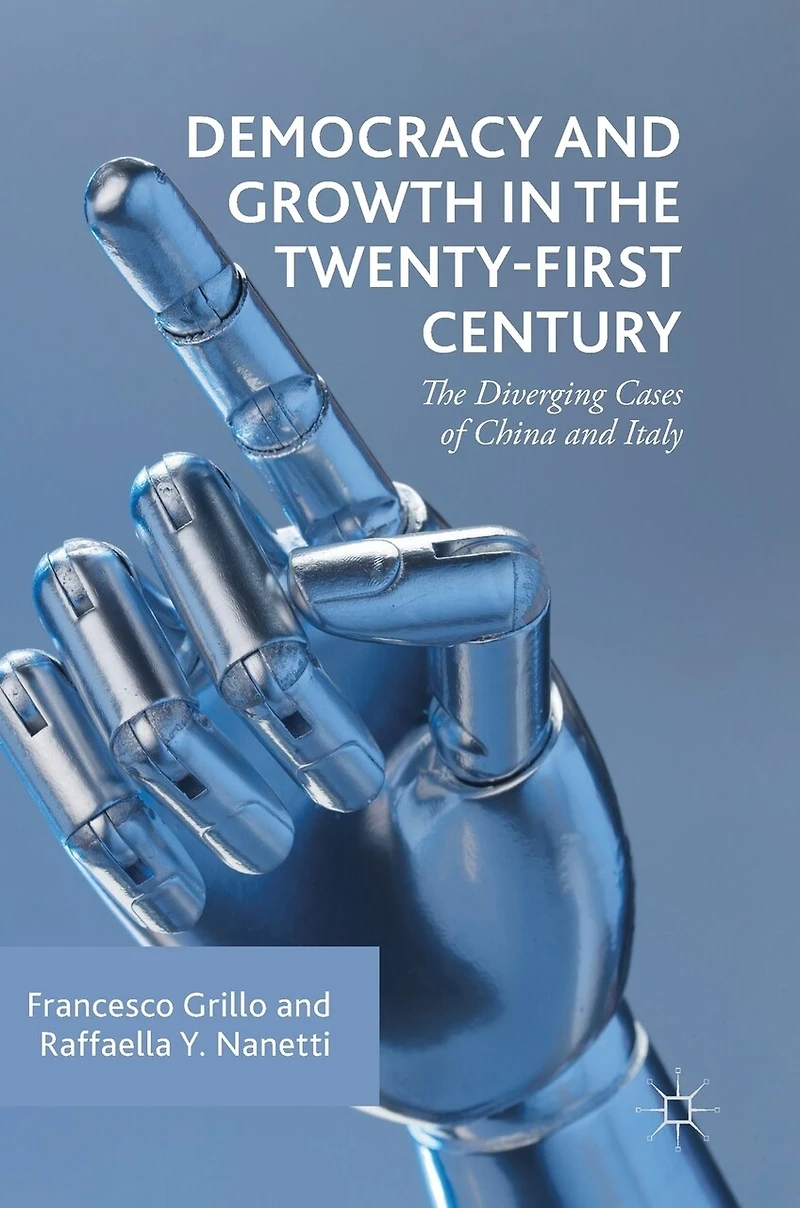
Democracy and Growth The Twenty-first Century: Diverging Cases of China Italy in Ottawa, ON
Current price: $160.95

Democracy and Growth The Twenty-first Century: Diverging Cases of China Italy in Ottawa, ON
Current price: $160.95
Loading Inventory...
Size: Hardcover
*Product information may vary - to confirm product availability, pricing, shipping and return information please contact Coles
Is democracy still the best political regime for countries to adapt to economic and technological pressures and increase their level of prosperity? While the West seems to have stagnated in an environment of political mistrust, increasing inequality and low growth, the rise of the East has shown that it may not be liberal democracy that is best at accommodating the social mutations that technologies have triggered.
The cases of China and Italy form the research focus as two extremes in growth performance. China is the star of globalisation in the East, while Italy is the laggard of globalisation in the West and a laboratory of creeping political meltdown now shared by other major Western economies. But is this forever? Introducing the 'innovation paradox' as the main challenge to the West and the notion of 'knowledge democracy' as key to sustainable growth, this book presents a new side to the debate on theFourth Industrial Revolution (or fifth as the authors argue). It is a vital reading for all those questioning what kind of democracy positively impacts innovation as the force whose speed and direction transforms societies and economies.
Is democracy still the best political regime for countries to adapt to economic and technological pressures and increase their level of prosperity? While the West seems to have stagnated in an environment of political mistrust, increasing inequality and low growth, the rise of the East has shown that it may not be liberal democracy that is best at accommodating the social mutations that technologies have triggered.
The cases of China and Italy form the research focus as two extremes in growth performance. China is the star of globalisation in the East, while Italy is the laggard of globalisation in the West and a laboratory of creeping political meltdown now shared by other major Western economies. But is this forever? Introducing the 'innovation paradox' as the main challenge to the West and the notion of 'knowledge democracy' as key to sustainable growth, this book presents a new side to the debate on theFourth Industrial Revolution (or fifth as the authors argue). It is a vital reading for all those questioning what kind of democracy positively impacts innovation as the force whose speed and direction transforms societies and economies.
You May Also Like













More About Coles at Bayshore Shopping Centre
Coles is renowned for its outstanding customer service and great selection of books. Along with the vast array of magazines, stationary, audio-books, children's literature, fiction, non-fiction and reference books, you can find accessories to make your reading experience more pleasurable. We can recommend the very best in reading today. We will help you search our titles for exactly what you need, and if we do not have it in stock, we will order it for you.
100 Bayshore Dr, Nepean, ON K2B 8C1, Canada
Find Coles at Bayshore Shopping Centre in Ottawa, ON
Visit Coles at Bayshore Shopping Centre in Ottawa, ON