

Give the Gift of Choice!
Too many options? Treat your friends and family to their favourite stores with a Bayshore Shopping Centre gift card, redeemable at participating retailers throughout the centre. Click below to purchase yours today!Purchase HereHome
Development Of A Simplified Sustainable Facilities Guide
Coles
Loading Inventory...
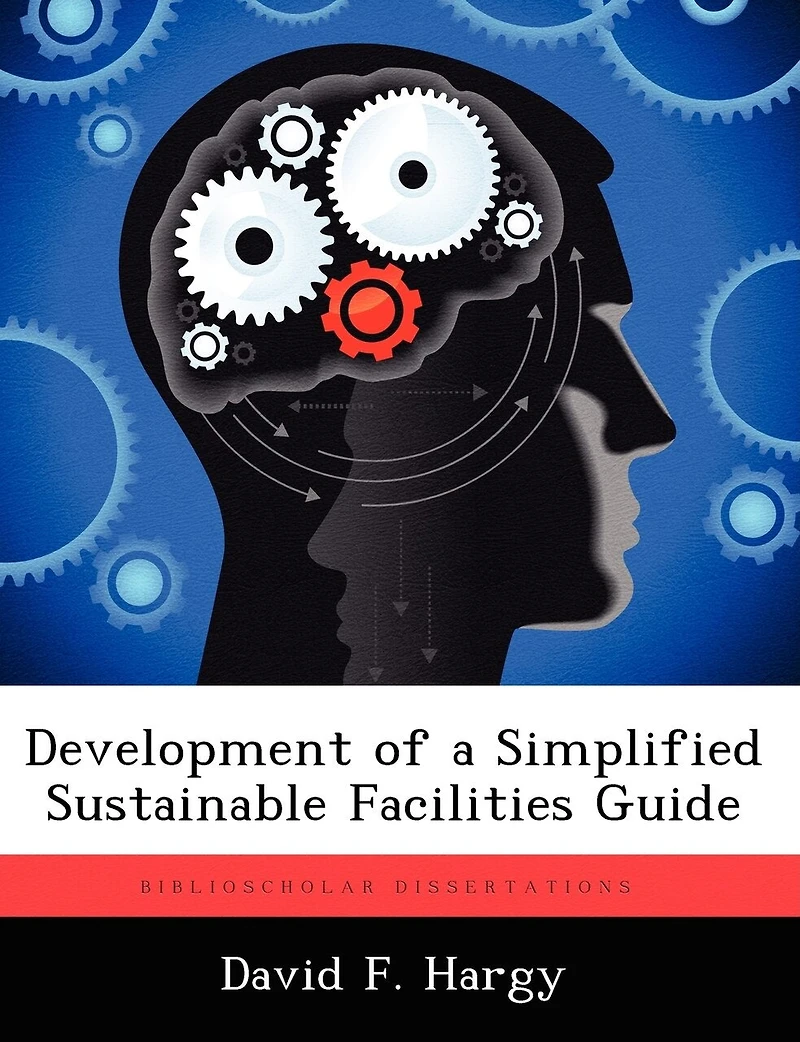
Development Of A Simplified Sustainable Facilities Guide in Ottawa, ON
Current price: $25.85

Development Of A Simplified Sustainable Facilities Guide in Ottawa, ON
Current price: $25.85
Loading Inventory...
Size: Paperback
*Product information may vary - to confirm product availability, pricing, shipping and return information please contact Coles
The Air Force has adopted the United States Green Building Council's Leadership in Energy and Environmental Design (LEED(TM)) Green Building Rating System as the preferred self-assessment metric for sustainable development. LEED(TM) is designed for new construction and major renovations, and, within the Air Force, is most applicable for Military Construction (MILCON) projects. The Air Force Center for Environmental Excellence developed the Air Force Sustainable Facilities Guide to provide guidance and strategies to meet LEED(TM) requirements. The Air Force has not adopted a sustainable development guide or rating system that is most applicable for construction projects that are relatively low (compared to MILCON projects) in cost or complexity. This research developed a Simplified Sustainable Facilities Guide that can identify and assess sustainable development opportunities in all facility and infrastructure projects. This guide, modeled after the Air Force Sustainable Facilities Guide, simplifies most LEED(TM) requirements to reduce the time, cost, and expertise level required to incorporate sustainable development concepts while preserving the intent of LEED(TM). This guide is designed to quickly identify opportunities in projects that are relatively low in cost and complexity; where using the more robust LEED(TM) requirements may not be justified. The Simplified Sustainable Facilities Guide, in conjunction with existing Air Force guidance, provides a means to address sustainable development issues in all facility and construction projects regardless of cost or complexity. This work has been selected by scholars as being culturally important, and is part of the knowledge base of civilization as we know it. This work was reproduced from the original artifact, and remains as true to the original work as possible. Therefore, you will see the original copyright references, library stamps (as most of these works have been housed in our most important libraries around the world), and other notations in the work. This work is in the public domain in the United States of America, and possibly other nations. Within the United States, you may freely copy and distribute this work, as no entity (individual or corporate) has a copyright on the body of the work. As a reproduction of a historical artifact, this work may contain missing or blurred pages, poor pictures, errant marks, etc. Scholars believe, and we concur, that this work is important enough to be preserved, reproduced, and made generally available to the public. We appreciate your support of the preservation process, and thank you for being an important part of keeping this knowledge alive and relevant.
The Air Force has adopted the United States Green Building Council's Leadership in Energy and Environmental Design (LEED(TM)) Green Building Rating System as the preferred self-assessment metric for sustainable development. LEED(TM) is designed for new construction and major renovations, and, within the Air Force, is most applicable for Military Construction (MILCON) projects. The Air Force Center for Environmental Excellence developed the Air Force Sustainable Facilities Guide to provide guidance and strategies to meet LEED(TM) requirements. The Air Force has not adopted a sustainable development guide or rating system that is most applicable for construction projects that are relatively low (compared to MILCON projects) in cost or complexity. This research developed a Simplified Sustainable Facilities Guide that can identify and assess sustainable development opportunities in all facility and infrastructure projects. This guide, modeled after the Air Force Sustainable Facilities Guide, simplifies most LEED(TM) requirements to reduce the time, cost, and expertise level required to incorporate sustainable development concepts while preserving the intent of LEED(TM). This guide is designed to quickly identify opportunities in projects that are relatively low in cost and complexity; where using the more robust LEED(TM) requirements may not be justified. The Simplified Sustainable Facilities Guide, in conjunction with existing Air Force guidance, provides a means to address sustainable development issues in all facility and construction projects regardless of cost or complexity. This work has been selected by scholars as being culturally important, and is part of the knowledge base of civilization as we know it. This work was reproduced from the original artifact, and remains as true to the original work as possible. Therefore, you will see the original copyright references, library stamps (as most of these works have been housed in our most important libraries around the world), and other notations in the work. This work is in the public domain in the United States of America, and possibly other nations. Within the United States, you may freely copy and distribute this work, as no entity (individual or corporate) has a copyright on the body of the work. As a reproduction of a historical artifact, this work may contain missing or blurred pages, poor pictures, errant marks, etc. Scholars believe, and we concur, that this work is important enough to be preserved, reproduced, and made generally available to the public. We appreciate your support of the preservation process, and thank you for being an important part of keeping this knowledge alive and relevant.
You May Also Like








More About Coles at Bayshore Shopping Centre
Coles is renowned for its outstanding customer service and great selection of books. Along with the vast array of magazines, stationary, audio-books, children's literature, fiction, non-fiction and reference books, you can find accessories to make your reading experience more pleasurable. We can recommend the very best in reading today. We will help you search our titles for exactly what you need, and if we do not have it in stock, we will order it for you.
100 Bayshore Dr, Nepean, ON K2B 8C1, Canada
Find Coles at Bayshore Shopping Centre in Ottawa, ON
Visit Coles at Bayshore Shopping Centre in Ottawa, ON