

Give the Gift of Choice!
Too many options? Treat your friends and family to their favourite stores with a Bayshore Shopping Centre gift card, redeemable at participating retailers throughout the centre. Click below to purchase yours today!Purchase HereHome
Diachrony, Synchrony, and Typology of Tense Aspect Old Japanese
Coles
Loading Inventory...
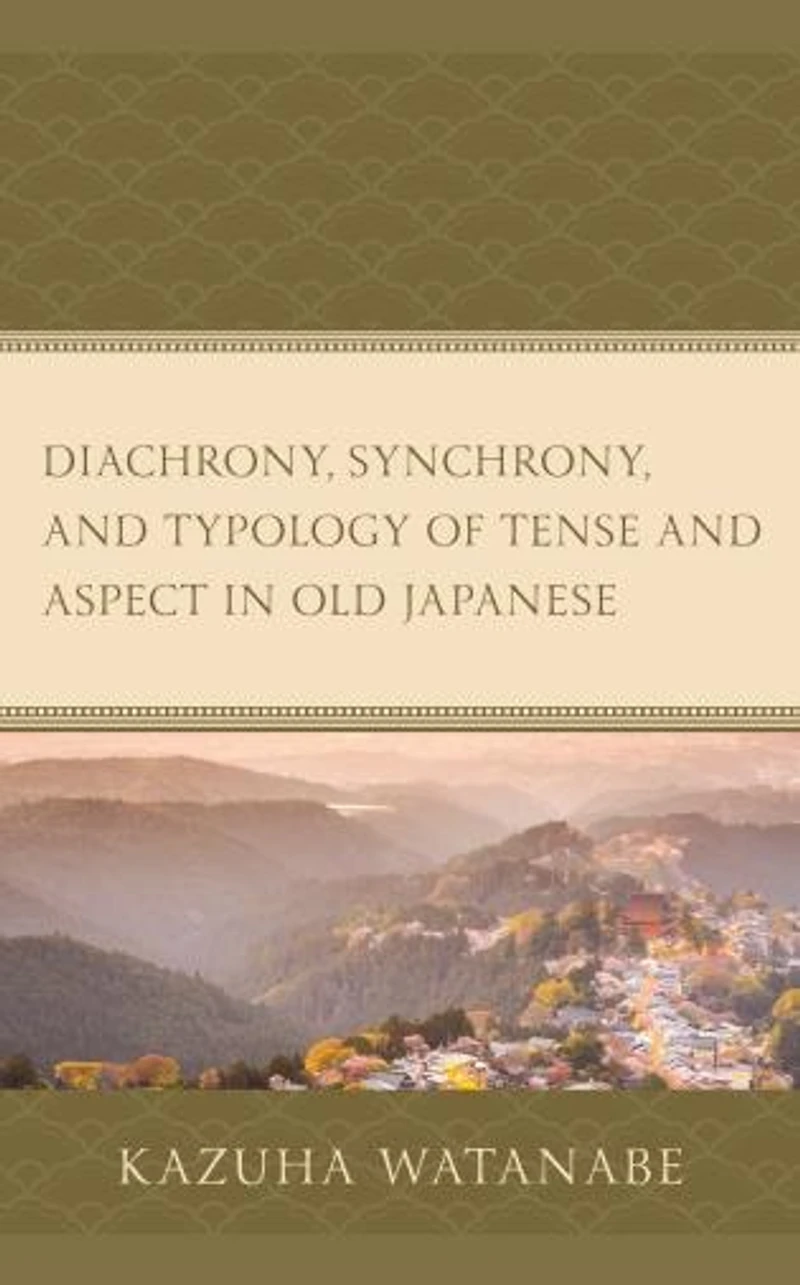
Diachrony, Synchrony, and Typology of Tense Aspect Old Japanese in Ottawa, ON
Current price: $160.95

Diachrony, Synchrony, and Typology of Tense Aspect Old Japanese in Ottawa, ON
Current price: $160.95
Loading Inventory...
Size: Hardcover
*Product information may vary - to confirm product availability, pricing, shipping and return information please contact Coles
Diachrony, Synchrony, and Typology of Tense and Aspect in Old Japanese reconstructs the synchronic system of tense and aspect in Old Japanese, which until now had not been examined using the tools of contemporary linguistic theory. Kazuha Watanabe analyzes syntactic distribution of the temporal suffixes in the Man'yoshu, an eighth-century poetry collection, and compares the results with data from well-attested languages. The author then integrates the semantic property of each suffix into the overall synchronic tense-aspect system of Old Japanese. Watanabe further compares the reconstructed system with the distributions of the same suffixes in Early Modern Japanese using Genji Monogatari, an eleventh-century novel, in order to provide further support for the synchronic analysis of Old Japanese. This approach is fundamentally different from traditional analyses, which identify the meanings of the temporal suffixes based on contextual information. In addition, previous analyses have produced a uniform analysis covering the entire 700-year period from Old to Early Modern Japanese. Instead, Watanabe proposes that Old Japanese had a temporal system distinct from the later period.
Diachrony, Synchrony, and Typology of Tense and Aspect in Old Japanese reconstructs the synchronic system of tense and aspect in Old Japanese, which until now had not been examined using the tools of contemporary linguistic theory. Kazuha Watanabe analyzes syntactic distribution of the temporal suffixes in the Man'yoshu, an eighth-century poetry collection, and compares the results with data from well-attested languages. The author then integrates the semantic property of each suffix into the overall synchronic tense-aspect system of Old Japanese. Watanabe further compares the reconstructed system with the distributions of the same suffixes in Early Modern Japanese using Genji Monogatari, an eleventh-century novel, in order to provide further support for the synchronic analysis of Old Japanese. This approach is fundamentally different from traditional analyses, which identify the meanings of the temporal suffixes based on contextual information. In addition, previous analyses have produced a uniform analysis covering the entire 700-year period from Old to Early Modern Japanese. Instead, Watanabe proposes that Old Japanese had a temporal system distinct from the later period.
You May Also Like










More About Coles at Bayshore Shopping Centre
Coles is renowned for its outstanding customer service and great selection of books. Along with the vast array of magazines, stationary, audio-books, children's literature, fiction, non-fiction and reference books, you can find accessories to make your reading experience more pleasurable. We can recommend the very best in reading today. We will help you search our titles for exactly what you need, and if we do not have it in stock, we will order it for you.
100 Bayshore Dr, Nepean, ON K2B 8C1, Canada
Find Coles at Bayshore Shopping Centre in Ottawa, ON
Visit Coles at Bayshore Shopping Centre in Ottawa, ON