

Give the Gift of Choice!
Too many options? Treat your friends and family to their favourite stores with a Bayshore Shopping Centre gift card, redeemable at participating retailers throughout the centre. Click below to purchase yours today!Purchase HereHome
Dryden And The Tradition Of Panegyric
Coles
Loading Inventory...
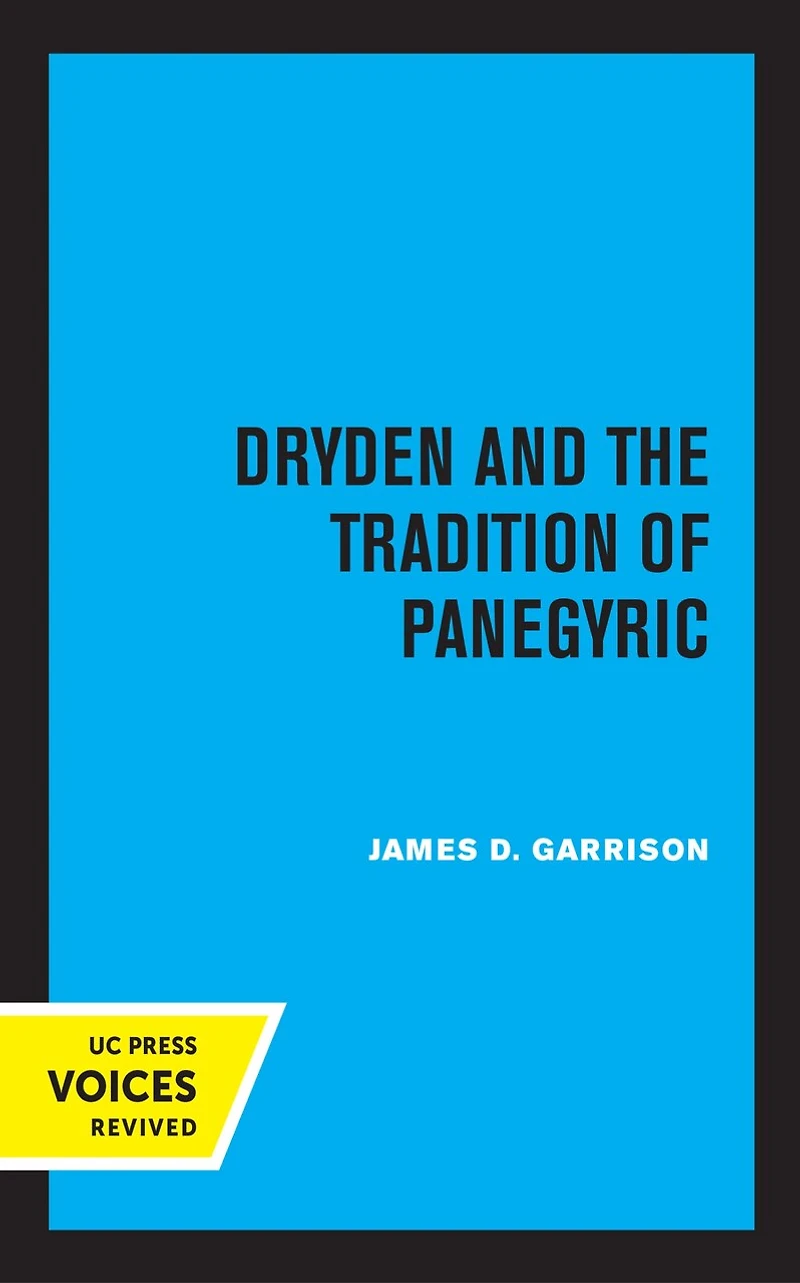
Dryden And The Tradition Of Panegyric in Ottawa, ON
Current price: $122.46

Dryden And The Tradition Of Panegyric in Ottawa, ON
Current price: $122.46
Loading Inventory...
Size: Hardcover
*Product information may vary - to confirm product availability, pricing, shipping and return information please contact Coles
Dryden and the Tradition of Panegyric explores the intriguing relationship between two distinct literary forms: the epic and panegyric. The study begins with a question inspired by a remark made by John Dryden in his Account of Annus Mirabilis , where he suggests that the same images serve equally for the epic poesy, and for the historic and panegyric. This curious observation led the author to investigate the tradition of panegyric in the seventeenth century, which had been largely overlooked. By examining works that claimed to belong to this genre, the study uncovers a literary tradition that warrants serious consideration, particularly for those interested in Dryden's poetry. The book recovers this tradition in chapters 2 and 3, and explores its influence on Dryden’s work in chapters 4 and 5.
The study draws on numerous lesser-known works, and the author includes generous excerpts for analysis. All quotes from Dryden’s poetry are taken from The Poems of John Dryden (1958) by James Kinsley. Classical authors are referenced through The Loeb Classical Library , and neo-Latin authors are cited from specialized editions of the works of figures such as Desiderius Erasmus, Thomas More, and Walter Haddon. The book also offers translations of Latin panegyrics and critical commentary on them, with most translations prepared by Salle Ann Schlueter. This work sheds new light on Dryden's connection to the tradition of panegyric and offers readers a deeper understanding of its role in his poetry and its broader significance in literary history.
This title is part of UC Press's Voices Revived program, which commemorates University of California Press’s mission to seek out and cultivate the brightest minds and give them voice, reach, and impact. Drawing on a backlist dating to 1893, Voices Revived makes high-quality, peer-reviewed scholarship accessible once again using print-on-demand technology. This title was originally published in 1975.
Dryden and the Tradition of Panegyric explores the intriguing relationship between two distinct literary forms: the epic and panegyric. The study begins with a question inspired by a remark made by John Dryden in his Account of Annus Mirabilis , where he suggests that the same images serve equally for the epic poesy, and for the historic and panegyric. This curious observation led the author to investigate the tradition of panegyric in the seventeenth century, which had been largely overlooked. By examining works that claimed to belong to this genre, the study uncovers a literary tradition that warrants serious consideration, particularly for those interested in Dryden's poetry. The book recovers this tradition in chapters 2 and 3, and explores its influence on Dryden’s work in chapters 4 and 5.
The study draws on numerous lesser-known works, and the author includes generous excerpts for analysis. All quotes from Dryden’s poetry are taken from The Poems of John Dryden (1958) by James Kinsley. Classical authors are referenced through The Loeb Classical Library , and neo-Latin authors are cited from specialized editions of the works of figures such as Desiderius Erasmus, Thomas More, and Walter Haddon. The book also offers translations of Latin panegyrics and critical commentary on them, with most translations prepared by Salle Ann Schlueter. This work sheds new light on Dryden's connection to the tradition of panegyric and offers readers a deeper understanding of its role in his poetry and its broader significance in literary history.
This title is part of UC Press's Voices Revived program, which commemorates University of California Press’s mission to seek out and cultivate the brightest minds and give them voice, reach, and impact. Drawing on a backlist dating to 1893, Voices Revived makes high-quality, peer-reviewed scholarship accessible once again using print-on-demand technology. This title was originally published in 1975.
You May Also Like










More About Coles at Bayshore Shopping Centre
Coles is renowned for its outstanding customer service and great selection of books. Along with the vast array of magazines, stationary, audio-books, children's literature, fiction, non-fiction and reference books, you can find accessories to make your reading experience more pleasurable. We can recommend the very best in reading today. We will help you search our titles for exactly what you need, and if we do not have it in stock, we will order it for you.
100 Bayshore Dr, Nepean, ON K2B 8C1, Canada
Find Coles at Bayshore Shopping Centre in Ottawa, ON
Visit Coles at Bayshore Shopping Centre in Ottawa, ON